


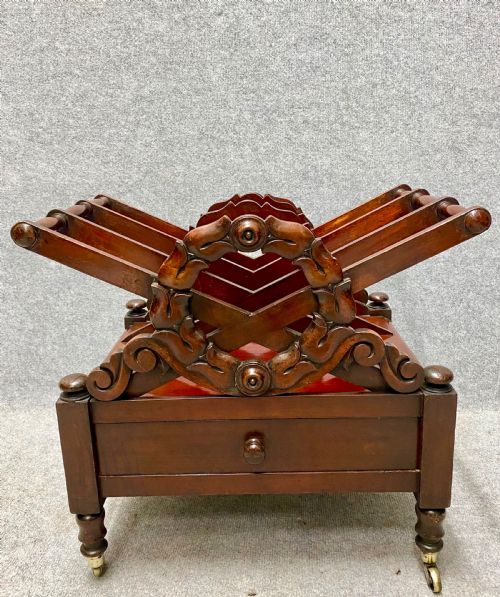

Vintage Brass Castor Magazine Rack
These vintage brass castor magazine rack pieces are classic canterburys and folio stands designed to hold periodicals with mobility.
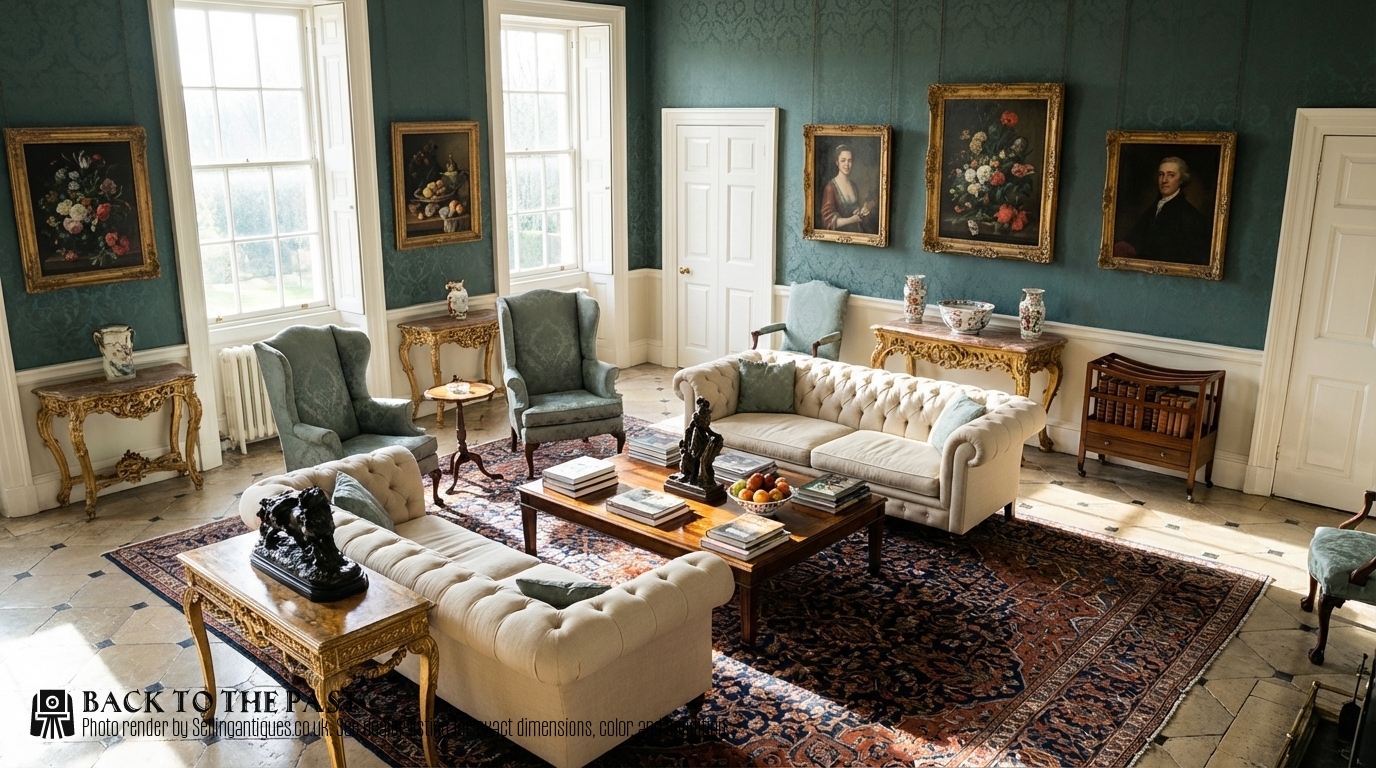
Vintage Brass Castor Magazine Rack
When you search for a vintage brass castor magazine rack, you encounter timber canterburys, music racks, and folio stands originating from the Georgian, Regency, and Victorian periods. These functional furnishings typically feature partitioned compartments above low drawers or slatted bases, mounted on small wheel feet for easy movement across floors.
The versions most commonly met on this page are mahogany and rosewood canterburys built in the Regency and late George III styles, often functioning as newspaper or magazine stands from the nineteenth century. English workshops produced these pieces with distinct vertical divisions to keep papers upright.
Makers such as J.C.Loudon are associated with these designs, reflecting domestic interior arrangements of the eighteen hundreds. Buyers select these items to house contemporary reading material within traditional room layouts.
How they were made
Cabinet makers utilised solid timbers including mahogany and rosewood, shaping boat-shaped frames and rectilinear compartments by hand. Joinery techniques involved precision cutting for the vertical divisions and slatted sides of each canterbury.
Metalworkers cast the brass elements separately before attaching them to small castor wheels fixed beneath the legs. These metal fittings allowed heavy timber stands to glide smoothly across carpets and wooden floorboards.
What varies in quality
The distinction between standard items and superior examples lies in the selection of figured timber veneers and the intricacy of the wood turnings. Finer pieces display carefully matched grain patterns across the partitions and drawer fronts.
Construction rigidity and the original condition of the brass castors also determine the tier of craftsmanship. Robust internal joinery ensures the upright divisions remain stable under the weight of heavy folios.
J.C.Loudon
The Vintage Brass Castor Magazine Rack Glossary
- Canterbury
- A low stand with partitions for holding sheet music, newspapers, or magazines. This furniture form dates back to the eighteenth century and frequently includes a small drawer below.
- Castor
- A small wheel mounted in a swivel housing attached to the feet of furniture. It permits effortless repositioning of heavy timber stands.
- Folio stand
- An adjustable or fixed rack designed to hold large books, prints, or unbound papers. These stands share construction methods with standard canterburys.
- Regency
- An English design style spanning the late eighteenth and early nineteenth centuries. It draws inspiration from classical antiquity.
Vintage Brass Castor Magazine Rack: Frequently Asked Questions
What is a canterbury?
A canterbury is a low, partitioned stand originally built to hold sheet music and papers. Nineteenth-century versions frequently serve as newspaper and magazine racks.
These pieces typically sit on small brass wheels to allow movement between rooms.
How old are these stands?
The listings span the Georgian, Regency, and Victorian eras, primarily covering the nineteenth century. Construction dates range from around eighteen hundred through to eighteen eighty.
Stylistic details and timber choices help indicate the specific period of manufacture.
Can they hold modern magazines?
The vertical divisions easily accommodate contemporary periodicals and newspapers. The original partition spacing suits standard publication widths.
Their sturdy timber construction supports daily domestic use.
What woods were used?
English workshops predominantly used mahogany and rosewood for these pieces. Cabinet makers selected these dense hardwoods for durability and rich grain appearance.
Brass hardware complements the dark timber tones.