
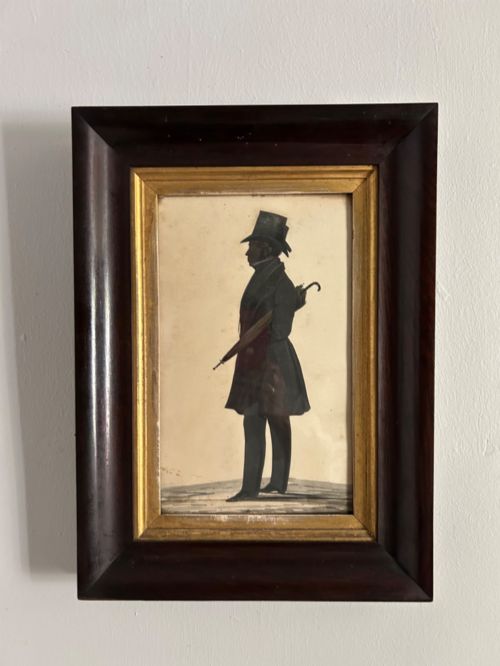


Antique Paper Silhouette
An antique paper silhouette captures a likeness in stark monochrome, offering collectors an intimate profile of Georgian and Victorian life.
Antique Paper Silhouette
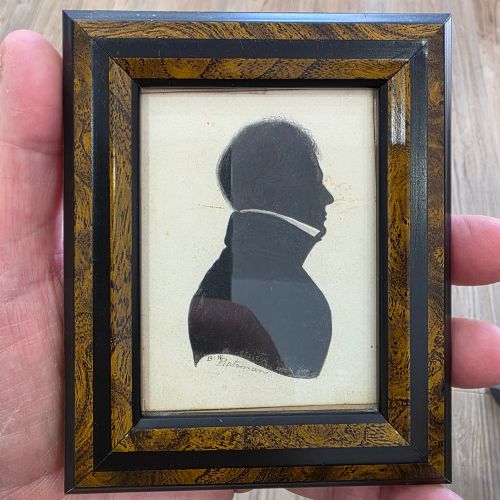
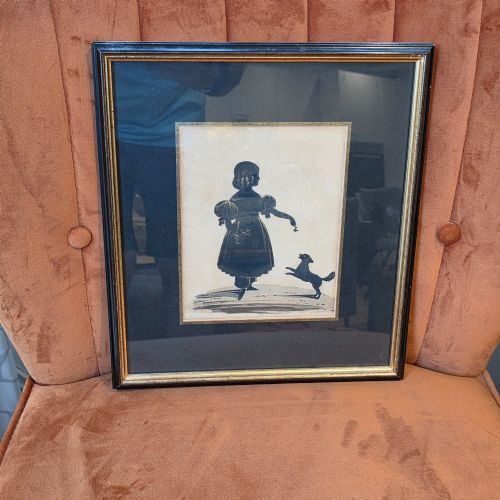
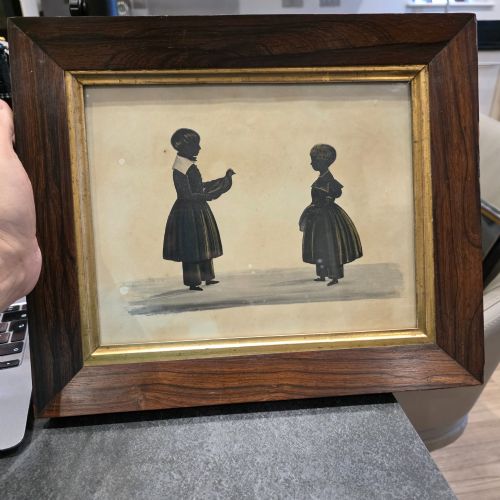
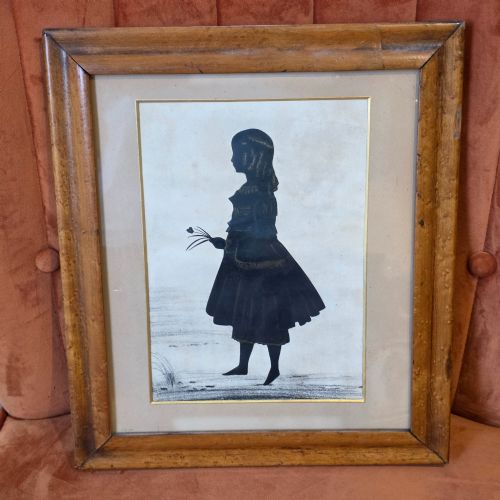
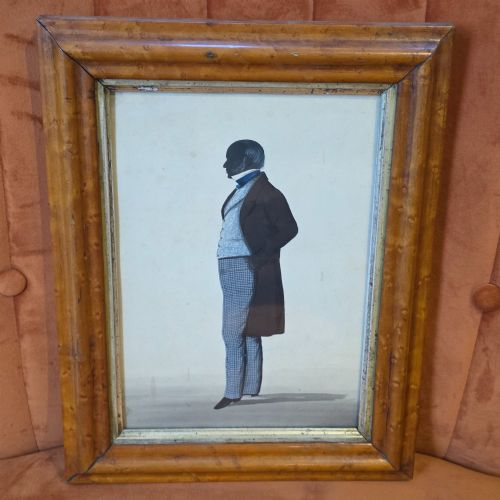
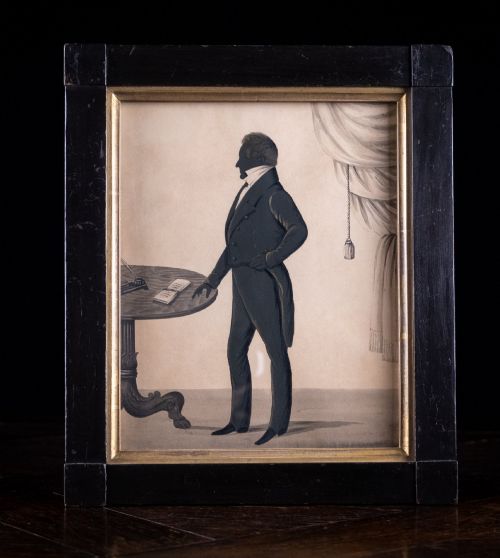
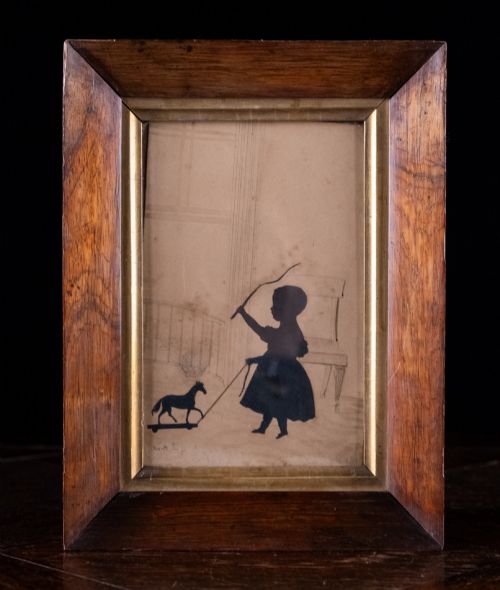
An antique paper silhouette appears in various formats across this selection, ranging from single bust portraits of gentlemen to full-length conversation pieces featuring children and animals. Buyers searching this phrase most commonly meet nineteenth-century framed works, created during the Regency and Victorian eras.
The assortment includes specialised group scenes and single figures set within maple or ebony frames under glass. Examples stretch from eighteenth-century Georgian profiles to later Victorian and Art Nouveau interpretations.
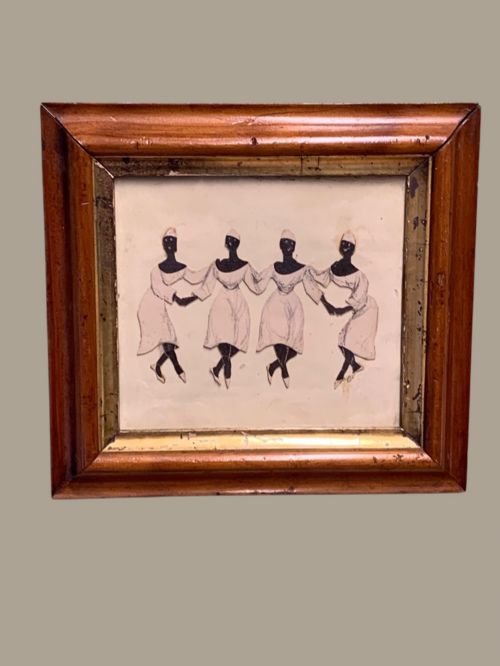
Folk art and collage work also emerge within the category, showing dancing figures and narrative subjects alongside traditional profile portraits. Each piece preserves a direct likeness using simple monochrome media.
Materials and Technique
Makers cut black paper by hand with fine scissors or knives to shape the primary profile, mounting the dark silhouette against a pale background. Artists then added details using ink, watercolour washes, and gold leaf to articulate hair, lace, and clothing.
Many works incorporate glass protection and are housed within wooden frames made of maple or ebony. Gilded accents and brass fittings frequently finish the presentation of Regency and Victorian profiles.
Framed artwork styles span traditional Georgian profiles, folk art collages, and conversation pieces depicting multiple figures and animals.
Judging the Work
The quality of the surrounding frame and the preservation under glass contribute significantly to the appeal of a piece. Original mounts, legible signatures, and well-documented provenance elevate certain profiles above standard anonymous works.
William James Hubard·Augustin Edouart·Frederick Frith·Alfred Darbyshire·George Atkinson·John Smith·Nathaniel Bermingham
The Antique Paper Silhouette Glossary
- Silhouette
- A profile portrait filled in with a solid dark colour, typically black, contrasting against a lighter background. This portrait style gained immense popularity during the eighteenth and nineteenth centuries before the widespread adoption of photography.
- Cut-Paper
- A technique where the profile is meticulously snipped from paper using small scissors or blades rather than drawn with ink. This method demands steady hands and precise control to achieve accurate likenesses.
- Conversation Piece
- An informal group portrait depicting family members or groups engaged in daily activities together. These detailed compositions often include pets, furniture, and domestic settings.
- Gilded Silhouette
- A profile enhanced with applied gold leaf to highlight clothing, jewellery, or hair details. This technique adds luminous contrast to the dark paper cutout.
- Bust
- A portrait representation restricted to the head, shoulders, and chest of the subject. This format is the most common configuration found in antique silhouette framing.
Antique Paper Silhouette: Frequently Asked Questions
What is an antique paper silhouette?
An antique paper silhouette is a hand-cut or painted profile portrait, usually executed in black on a light background. These works captured the likeness of sitters before photography became common.
Craftsmen and professional artists produced them across the Georgian, Regency, and Victorian periods. They were framed under glass and displayed in domestic interiors.
How do I date an antique silhouette?
Dating relies on the costume, hair styling, and framing materials visible in the artwork. Regency and Victorian dress provide clear chronological markers for most profiles.
Signatures, gallery labels on the reverse, and specific framing woods like maple or ebony also help establish the approximate decade of creation.
Were silhouettes made by hand?
Professional artists and travelling silhouettists cut these profiles directly from black paper using fine scissors or knives. Many examples show exceptional dexterity in capturing complex garments and facial expressions without preliminary drawing.
Some makers combined cutting with watercolour painting and gold leaf illumination to add intricate detail to the monochrome figures.
How should I display my silhouette?
Silhouettes should hang away from direct sunlight to prevent the paper and watercolour pigments from fading over time. Maintaining stable indoor humidity protects the paper and the original wooden frames.
Displaying them at eye level allows the viewer to appreciate the fine hand-cut details and subtle ink highlights.
What are Hubard Gallery silhouettes?
The Hubard Gallery was a prominent nineteenth-century establishment known for producing cut paper silhouettes in London and other locations. William James Hubard operated within this tradition, creating distinctive profile portraits.
Works associated with this gallery often feature specific stylistic traits and contemporary documentation that collectors prize.