

Antique Painting of Children
These antique painting of children works capture the innocence of youth across centuries in oil, pastel and watercolour.
Antique Painting of Children
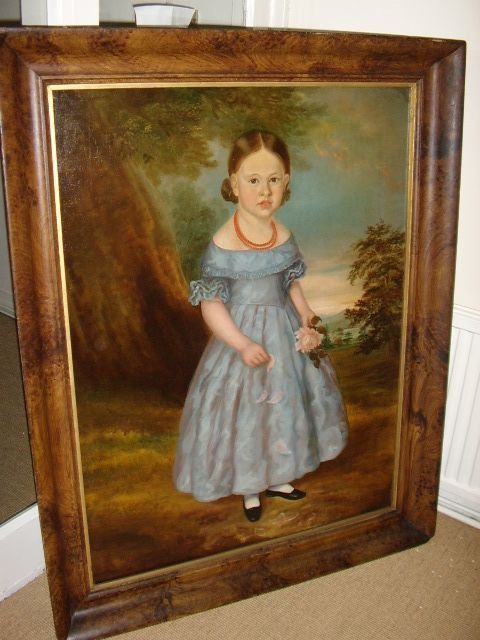
An antique painting of children brings domestic life, portraiture and genre scenes from past centuries into focus. Buyers searching this phrase will find a diverse selection spanning the 16th century through to the mid-20th century, encompassing formal aristocratic portraits and intimate domestic studies.
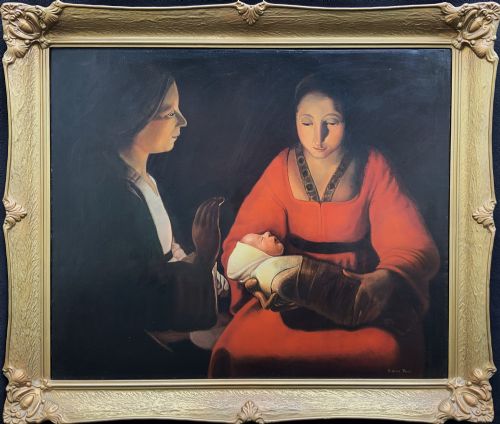
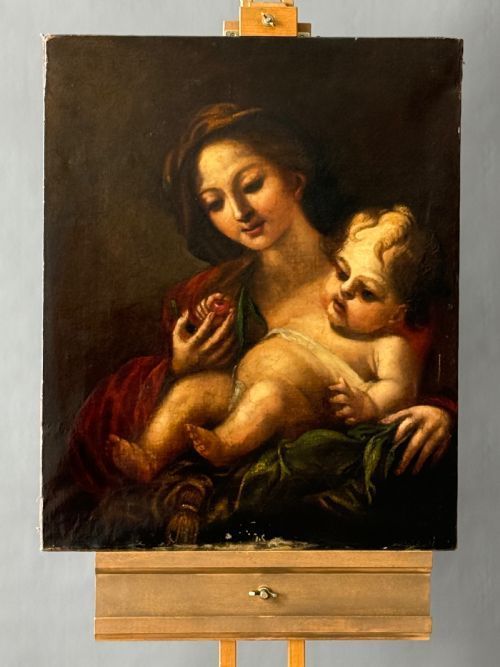
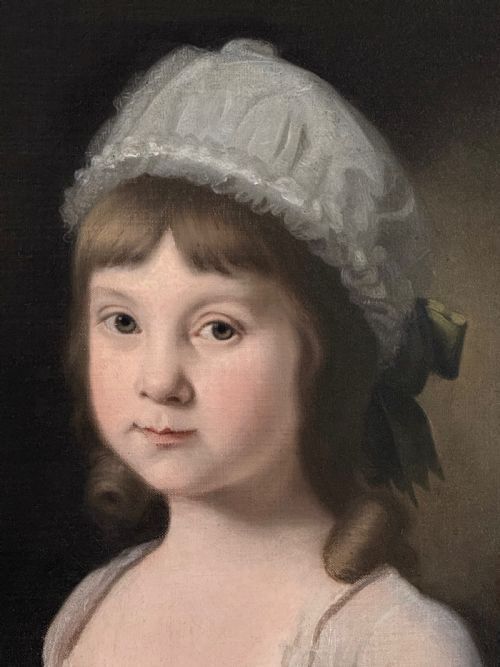
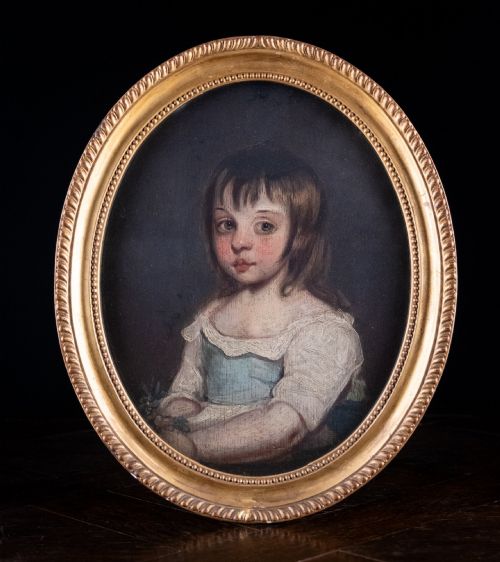
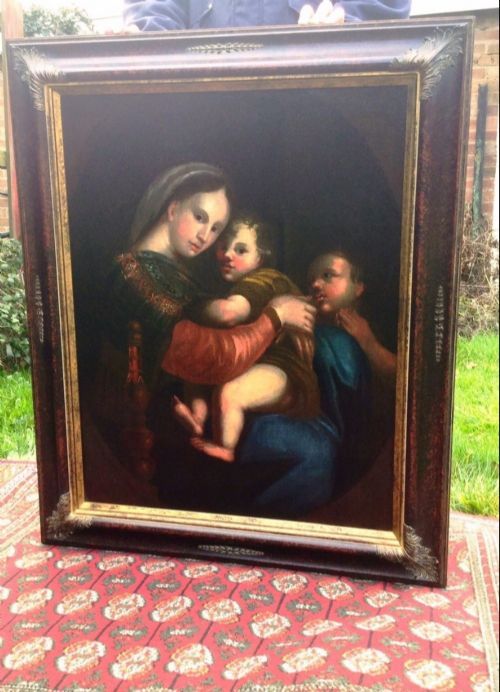
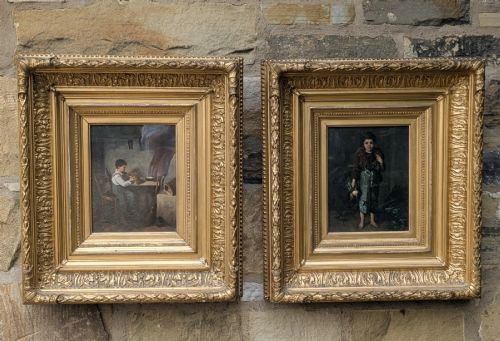
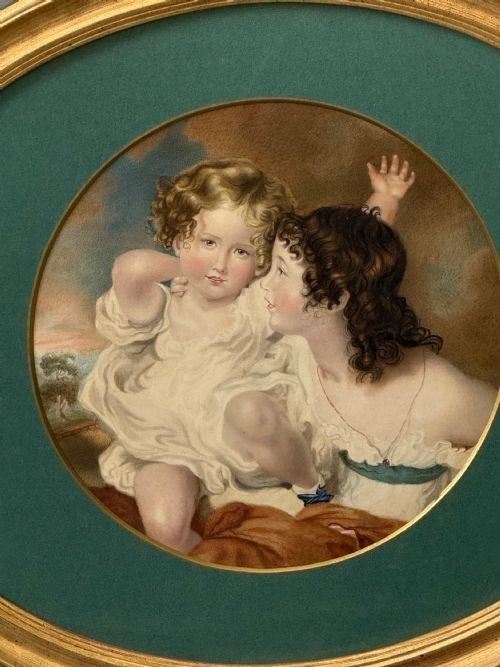
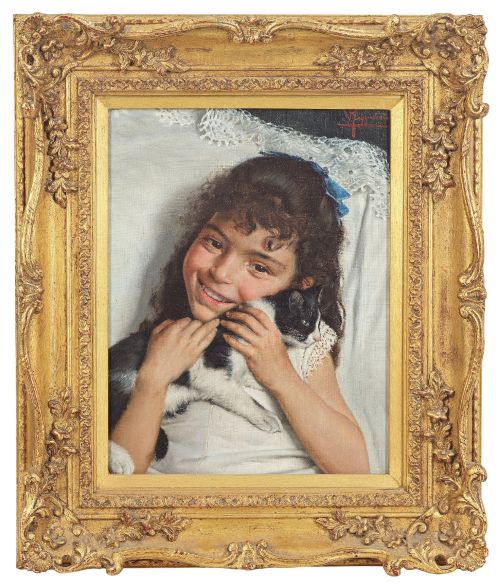
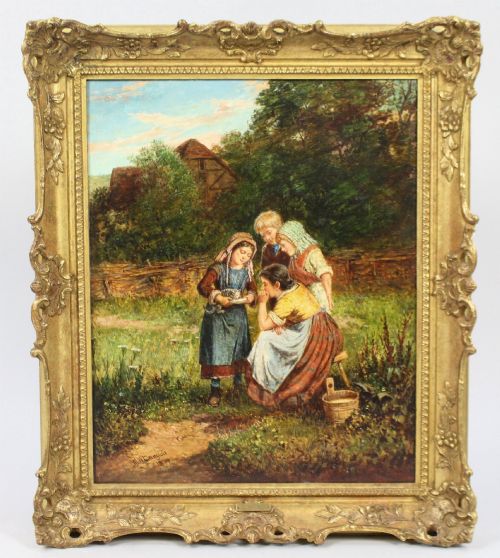
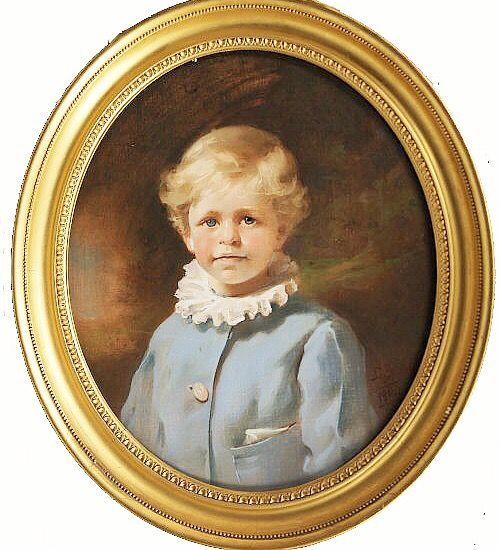
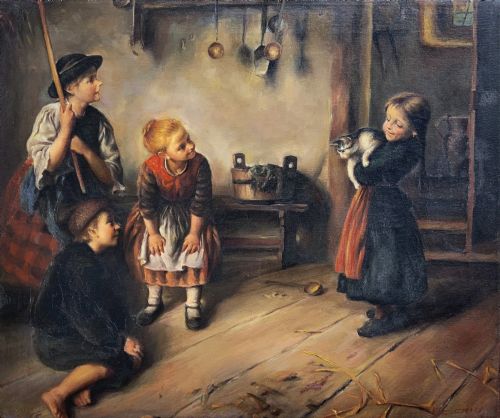
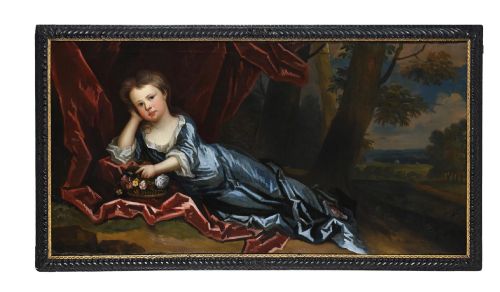
The most common formats met on this page are 19th-century oil paintings on canvas and delicate pastel or watercolour portraits from the Georgian and Victorian eras. Subjects range from solitary youngsters with pets or fruit baskets to narrative group scenes of children at play or religious depictions of the Virgin and Child.
Originating from British, Italian, Dutch and broader European schools, these works reflect shifting societal attitudes towards childhood. Whether executed by noted artists or anonymous folk art hands, each piece provides a tangible window into historical dress, pastimes and family dynamics.
Materials and technique
The physical construction of these works relies heavily on oil paint applied to canvas, often supported by wooden stretchers and framed in period giltwood or gesso mouldings. Canvas provides a durable, textured ground that holds rich pigment layers, while panel supports occasionally appear in earlier pieces.
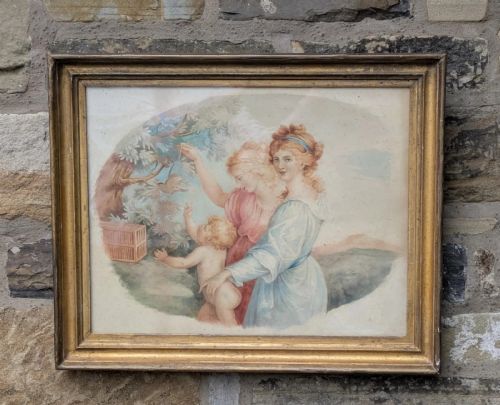
Works on paper utilise watercolour, pastel and gouache to achieve lighter, more immediate tonal effects, frequently protected beneath glass. Frame construction matches the period of the artwork, incorporating hand-carved wood and gilded finishes that complete the presentation.
Recorded subjects include formal portraits, genre scenes of children with animals, and classical religious depictions.
Assessing quality in historical childhood portraiture
Quality rests upon the artist's ability to render the lifelike animation and psychological depth of the young subjects rather than merely copying conventional forms. Finer works display confident brushwork in facial expressions and textiles, whereas simpler naïve pieces offer charm through unpretentious execution.
Emily Eyres·Vittorio Reggianini·Mark William Langlois·Charles D’Agar·George Augustus Holmes
The Antique Painting of Children Glossary
- Genre painting
- Depictions of everyday life and ordinary people engaged in common activities. These scenes often tell a domestic story involving children or family groups.
- Pastel
- A dry drawing medium consisting of pigment mixed with a binder, applied to paper or canvas. It creates soft, velvety colour transitions.
- Gesso
- A plaster-like mixture used as a smooth base for painting or applied to wood before gilding. It provides a stable surface for intricate frame mouldings.
- Giltwood
- Wood that has been thinly coated with gold leaf or gold paint. It is commonly found on traditional frames surrounding fine art.
- Naïve art
- Artwork produced by an artist lacking formal academic training. It is characterised by a childlike perspective and direct simplicity.
Antique Painting of Children: Frequently Asked Questions
What periods do these paintings cover?
The selection spans multiple centuries, reaching from sixteenth-century religious compositions to mid-twentieth-century genre works. Victorian and eighteenth-century examples feature prominently among the available offerings.
Buyers encounter various stylistic movements within this timeline, including Italian Baroque, Georgian portraiture and Victorian folk art.
How were these artworks created?
Artists utilised oil paints on canvas panels, alongside watercolours, pastels and gouache on paper supports. Many pieces retain their original wooden frames finished with giltwood or gesso.
Techniques range from highly finished academic studio portraits to looser, expressive brushwork found in regional and naïve examples.
How can I tell the age of a piece?
Dating relies on stylistic indicators such as the clothing worn by the children, the framing materials and the preparation of the canvas or paper support. Archive records and artist signatures also provide reliable chronological markers.
Examining the reverse of the canvas and the construction of the wooden stretcher offers further clues regarding the period of creation.
How should I display them at home?
These artworks suit traditional and contemporary interiors alike, functioning well as focal points in living spaces, studies or hallways. Proper placement avoids direct sunlight to protect sensitive watercolours and oil pigments.
Matching the period frame to the surrounding wall space ensures the piece integrates harmoniously into your room.