


Antique Painted Bedroom Desk
An antique painted bedroom desk brings lightness to a room, offering a surface for writing and preparation shaped by centuries of changing domestic taste.
Antique Painted Bedroom Desk
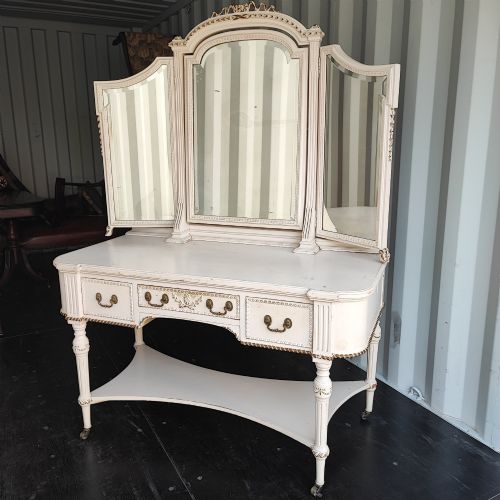
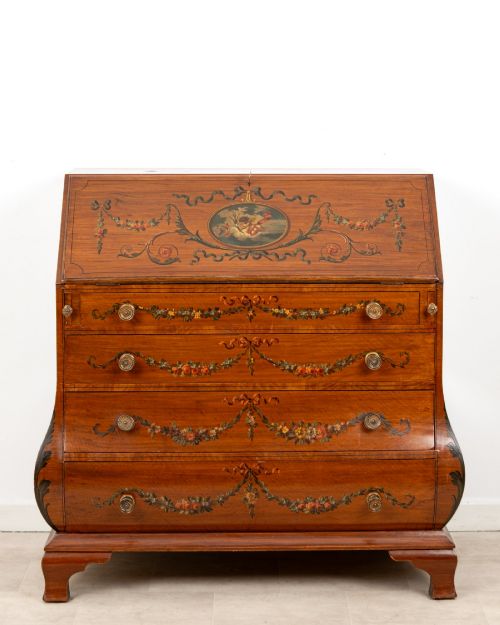
An antique painted bedroom desk covers a variety of intimate furniture forms designed for the sleeping chamber, including dressing tables, writing bureaux, and matching seating. These pieces range from compact Edwardian satinwood writing desks to larger nineteenth-century dressing tables with mirrors and brass embellishments.
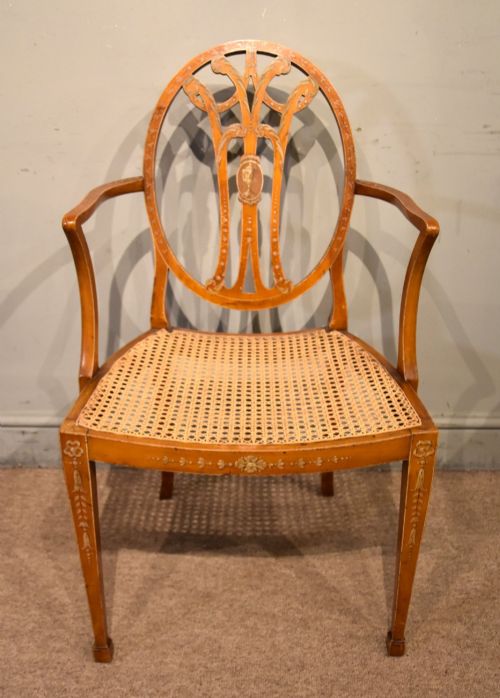
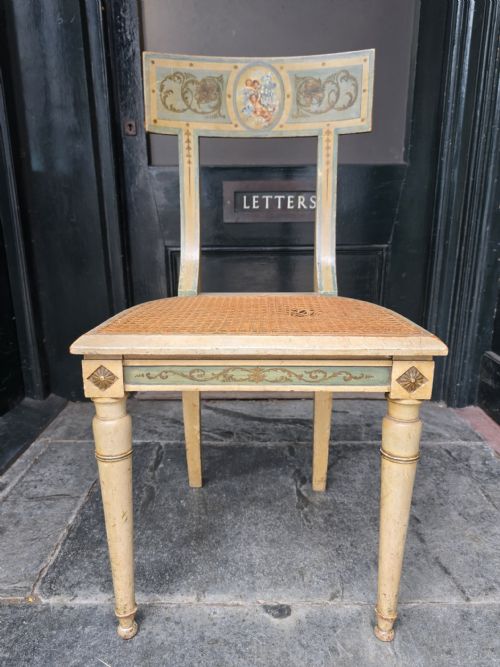
The selection encountered most frequently spans the nineteenth and early twentieth centuries, drawing heavily on Georgian Sheraton revival, Regency, and French neoclassical styles. Alongside dedicated writing surfaces, the inventory includes companion armchairs and side chairs designed to match the dressing furniture.
Origins vary between British workshops, such as London makers, and continental European pieces with distinctive painted decoration. The common thread is a domestic purpose, combining surface utility with decorative surface finishes suited to private apartments.
How they were made
Construction relies upon traditional timbers such as satinwood, walnut, birch, and pine, frequently finished with hand-applied paint, stencils, or decorative motifs. Structural stability is often aided by brass hardware, glass elements, and occasionally cane or upholstered inserts.
Surface decoration is paramount, utilising original paintwork, ebonised details, and delicate gilding rather than purely relying on exposed grain. Makers employed hand-painted flourishes and decorative schemes that reflected contemporary revivals of French and classical design.
What varies in quality
Quality rests primarily in the survival of original decorative paintwork and the crispness of applied stencilling or hand-painted details. Pieces retaining their untouched early surface patination stand apart from those with later overpainting or heavy restoration.
The sophistication of the underlying cabinet work, from serpentine fronts to refined brass embellishments and integrated mirrors, defines the upper tier of the range. Finer examples combine structural integrity with balanced proportions and harmonious stylistic revival details.
Maples of London and Paris·Rowley Gallery
The Antique Painted Bedroom Desk Glossary
- Satinwood
- A lustrous hardwood native to the tropics, prized for its pale golden colour and smooth grain, frequently used in high-status eighteenth and nineteenth-century bedroom furniture.
- Bureau
- A sloping-front desk enclosing fitted compartments and pigeonholes, often raised on legs or integrated into a chest of drawers.
- Sheraton Revival
- A late nineteenth-century design movement inspired by the neoclassical furniture of George Sheraton, characterised by slender proportions, satinwood, and painted decoration.
- Ebonised
- Wood treated with a dark finish to imitate expensive ebony, a technique popular in decorative nineteenth-century seating and frames.
- Serpentine Front
- A furniture front characterised by a wavy contour, curving convexly in the centre and concavely at the sides, demanding high skill from the cabinet maker.
Antique Painted Bedroom Desk: Frequently Asked Questions
What is an antique painted bedroom desk used for?
These pieces served practical roles in private chambers as surfaces for morning correspondence, writing letters, and personal grooming.
They combine the utility of a writing slope or dressing table with ornamental painted finishes intended to complement bedroom interiors.
How do I identify the period of a painted desk?
Dating relies on stylistic clues such as the structural lines of Regency neoclassical frameworks, Edwardian satinwood lightness, or Victorian ebonised details.
The specific painted motifs, handle types, and secondary timbers underneath the paint also point towards the decade of manufacture.
How should I care for original painted furniture?
Original painted surfaces require gentle treatment, avoiding modern chemical solvents or abrasive cleaners that can lift historic decoration.
Keep the timber away from direct sunlight and dramatic humidity changes to preserve the underlying paint and prevent wood movement.
Are matching chairs usually part of the desk suite?
Many dressing tables and writing desks are accompanied by matching armchairs, side chairs, or shield-back seating designed in the same decorative idiom.
These chairs often feature corresponding painted details, upholstery, or cane work intended to create a cohesive bedroom ensemble.