




Antique Outdoor Boot Scraper
An antique outdoor boot scraper clears mud from heavy footwear before you cross the threshold, combining practical utility with robust metalwork.
Antique Outdoor Boot Scraper
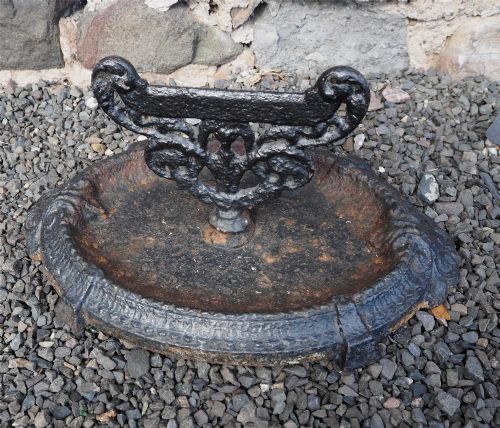
An antique outdoor boot scraper stands by a doorway to scrape mud and dirt from footwear before entering the house. When you search for this phrase, you find heavy metal and stone fixtures designed to anchor permanently outside an entrance.
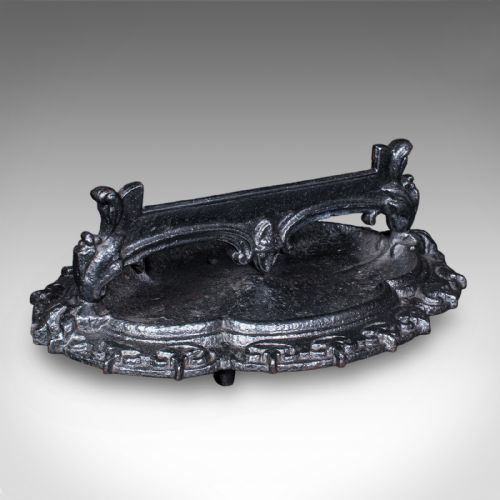
The pieces on this page span the Georgian, Regency, and Victorian periods, stretching from eighteen hundred into the late nineteenth century. You most frequently meet cast iron examples, often mounted into blocks of stone or Yorkstone.
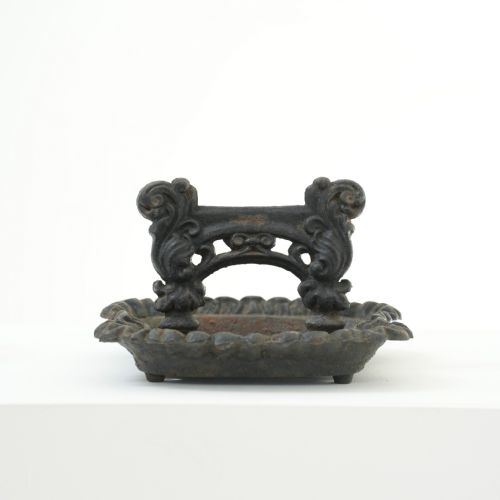
Many items combine the scraper blade with integrated shoe pulls to help remove muddy boots. These utilitarian objects range from simple townhouse models to large country house versions.
How they were made
Foundries shaped these items primarily from cast iron or wrought iron, pouring molten metal into moulds or hammering it into form. This creates rigid, durable structures capable of withstanding constant outdoor use and heavy foot traffic.
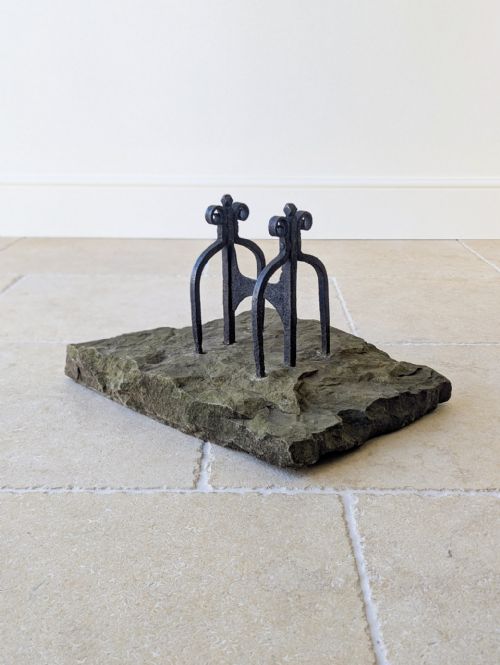
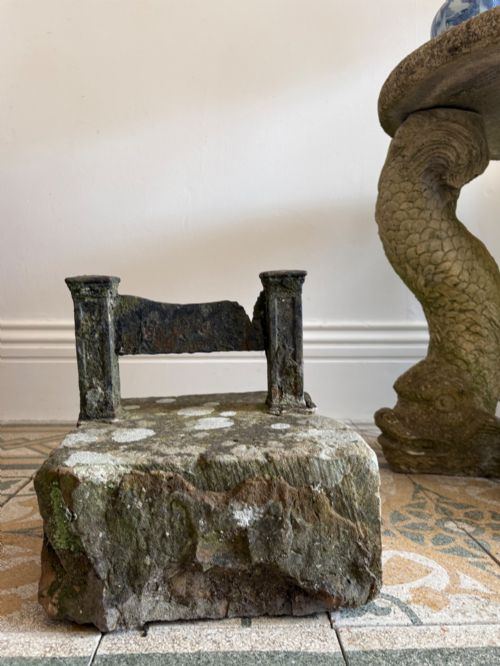
Heavier examples incorporate natural materials like Yorkstone and hewn stone blocks to anchor the iron blade firmly in place. These stone mounts provide the mass needed to keep the scraper steady during use without requiring permanent ground fixings.
Listings feature cast iron, wrought iron, stone, and Yorkstone across Victorian, Georgian, and Regency periods.
What varies in quality
Quality rests in the weight of the metal and the ambition of the design, moving from simple utilitarian workshop output to decorative period styles. Cast iron thickness and the crispness of detailing set finer examples apart.
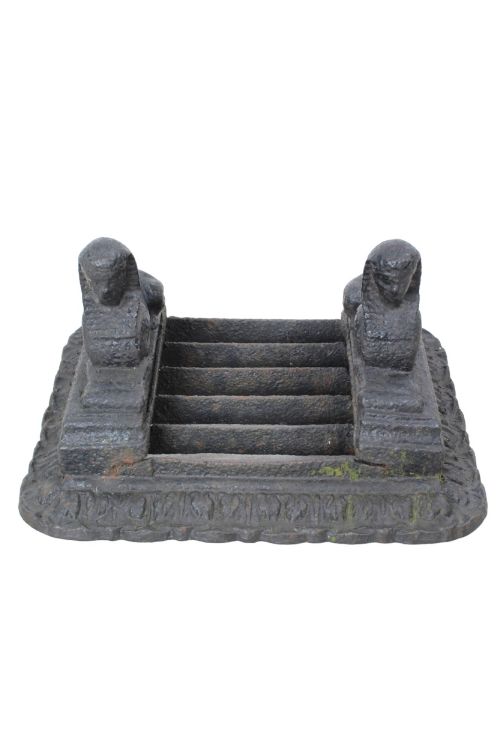
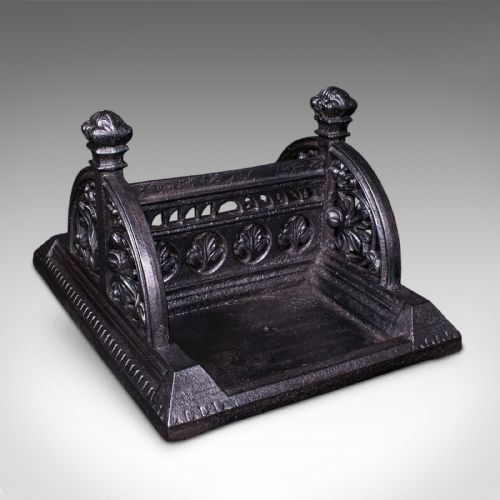
Stylistic ambition distinguishes basic forms from exceptional pieces that incorporate Egyptian Revival or Gothic Revival motifs. The integration of stone bases, such as hewn Yorkstone blocks, adds substantial presence and structural integrity.
Coalbrookdale
The Antique Outdoor Boot Scraper Glossary
- Boot scraper
- A metal blade fixed near a doorway to remove mud and dirt from the soles of shoes. It forms the primary functional element of these pieces.
- Shoe pull
- An upward-pointing loop attached to the frame, used to steady a boot by hand or heel while pulling it off. It often accompanies the main scraper blade.
- Yorkstone
- A tough, durable sandstone quarried in Yorkshire, frequently used as a heavy mounting block for iron scrapers. It provides a stable base at country house entrances.
- Gothic Revival
- An architectural and decorative style drawing on medieval forms, featuring pointed arches and structural tracery. It appears on select nineteenth-century scraper designs.
- Egyptian Revival
- A design style inspired by ancient Egyptian art and architecture, characterised by distinct geometric motifs and ornamentation. It marks more elaborate Victorian pieces.
Antique Outdoor Boot Scraper: Frequently Asked Questions
Where were boot scrapers placed?
These fixtures sit immediately outside exterior doorways, often flanking the main entrance of a townhouse or country house. Their positioning ensures guests and residents clean their footwear before stepping onto interior floors.
They stand directly on the ground or insert into existing masonry and stone steps near the threshold.
How do I install an outdoor scraper?
Many heavier versions rely on their own stone blocks or substantial iron weight to remain stable without fixing. You simply place them on a flat, solid surface near the door.
Lighter models without stone bases may require mounting into paving or a dedicated masonry block for secure daily use.
How do I date a boot scraper?
Dating relies on stylistic clues, manufacturing methods, and material combinations seen across the Georgian and Victorian eras. Earlier Georgian and Regency examples often feature hand-wrought ironwork, while Victorian pieces typically utilise mass-produced cast iron.
Specific decorative motifs like Gothic Revival or Egyptian Revival points help narrow down the period of production.
How do I care for cast iron?
Cast iron and wrought iron benefit from periodic cleaning to remove accumulated dirt and moisture that can encourage surface oxidation. Applying a protective metal wax or suitable exterior treatment helps preserve the metal outdoors.
Keeping the stone bases clear of debris also prevents moisture retention around the iron joints.