






Antique Orientalist Furniture
Antique orientalist furniture encompasses richly inlaid tables, chairs, and cabinets reflecting nineteenth and early twentieth-century fascination with Eastern design.
Antique Orientalist Furniture
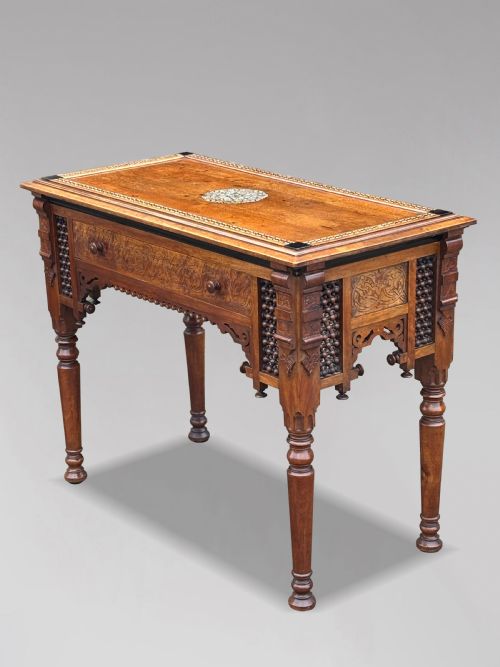
When buyers search for antique orientalist furniture, they encounter pieces defined by Moorish Revival, Mamluk, and Ottoman styles from the nineteenth and early twentieth centuries. Occasional tables and side tables dominate the selection, frequently accompanied by armchairs and stools.
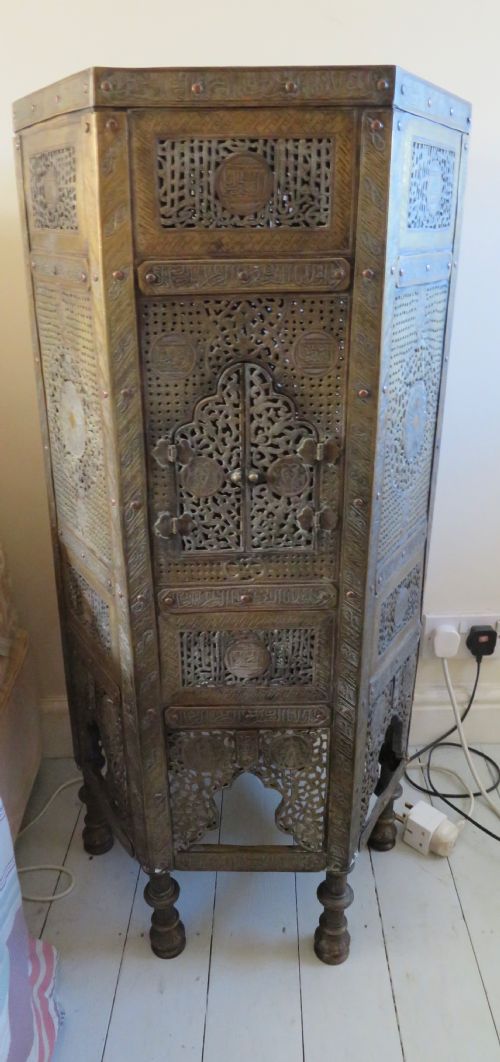
The objects originate from workshops in Syria, Cairo, and Europe, where cabinetmakers interpreted Islamic and Middle Eastern motifs for Western homes. These items range from octagonal occasional tables to folding chairs and music cabinets.
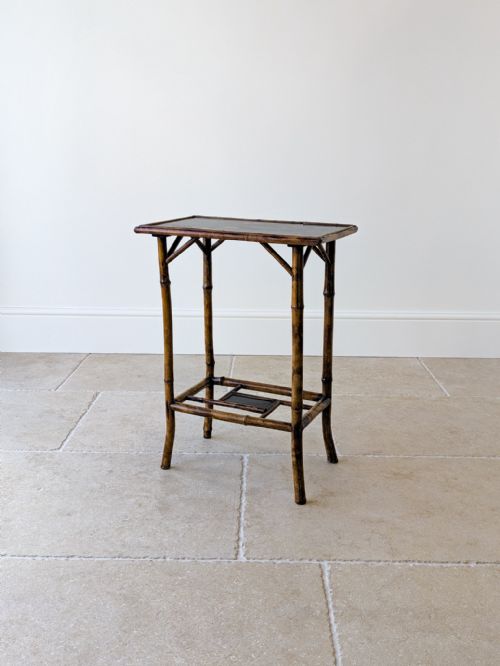
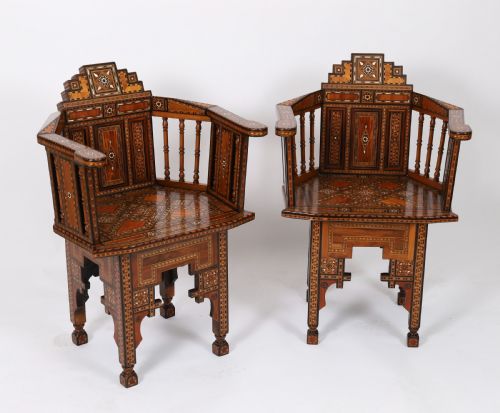
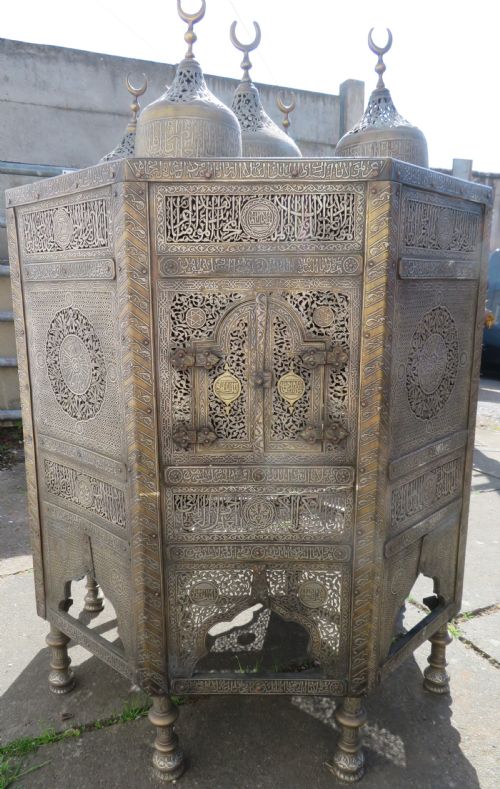
On this page, hexagonal tables and mother-of-pearl inlaid seating represent the most frequent discoveries. Buyers also encounter bamboo occasional tables and ebonised woodwork carrying distinct regional influences.
What varies in quality
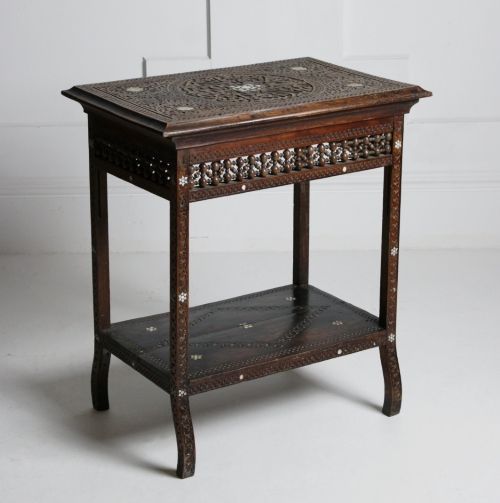
Quality rests upon the precision and complexity of the inlay work, particularly how tightly mother-of-pearl, bone, and metal wire fit within the hardwood or ebonised base. Superior examples display dense, well-aligned geometric parquetry without significant gaps or modern adhesive repairs.
The artistic ambition of the form also dictates standing, separating standard production items from pieces bearing distinctive architectural silhouettes or attributed to notable design houses.
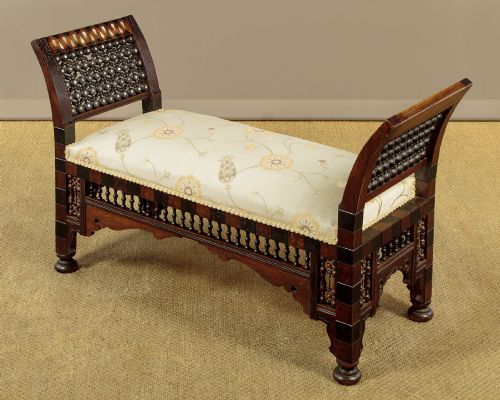
Conversation seats designed so two people could sit facing opposite directions bring a distinct Victorian theatricality to seating.
Gabriel Viardot·Liberty and Co·Maison Krieger·Adriano Brambilla·Carlo Bugatti
The Antique Orientalist Furniture Glossary
- Moorish Revival
- An architectural and decorative style popular in the nineteenth century that incorporates Islamic design elements such as horseshoe arches and intricate geometric woodwork into European furniture.
- Cairoware
- Metalwork pieces originating from Cairo, typically fashioned from brass and inlaid with silver and gold, frequently adapted into occasional tables or Quran stands.
- Parquetry
- A geometric mosaic of wood pieces used for decorative surfacing on tables, chairs, and cabinet doors, often combined with bone or mother-of-pearl.
- Kurisi
- A traditional low octagonal table or Quran stand native to Islamic regions, often utilised in European interiors as an occasional table.
- Japonism
- A nineteenth-century artistic movement reflecting the influence of Japanese art and aesthetics upon European furniture and cabinetmakers.
Antique Orientalist Furniture: Frequently Asked Questions
What is an occasional table?
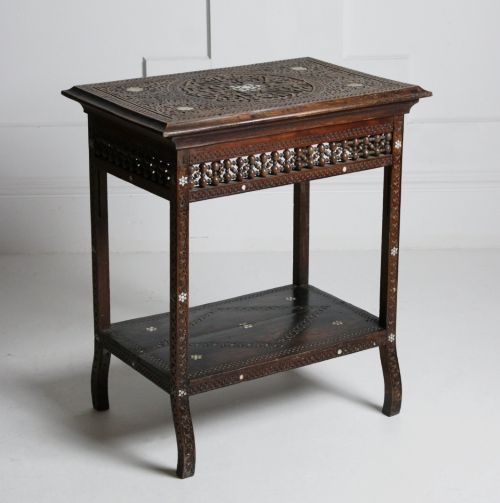
An occasional table is a small, versatile table designed for specific, intermittent use within a room rather than a primary dining or writing purpose. These items include octagonal designs and two-tier Syrian models.
In period interiors, they functioned as display surfaces for decorative objects, lamps, or smoking accessories. Their portable nature allowed owners to move them easily around a drawing room.
How do I identify Moorish style?
Moorish style furniture is recognizable through dense geometric lattice work, star patterns, and intricate inlaid decoration. Pieces often utilise turned wood spindles and horseshoe arches.
Makers applied these motifs to seating, screens, and occasional tables to satisfy Western desires for exotic interior decoration during the Victorian era.
What is mother-of-pearl inlay?
Mother-of-pearl inlay is a decorative technique where thin pieces of iridescent shell are embedded into carved recesses within a wooden surface. Craftsmen secure the segments to form floral or geometric compositions.
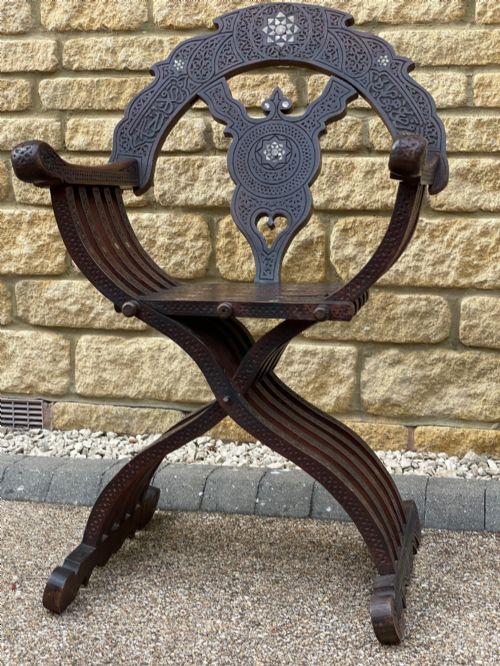
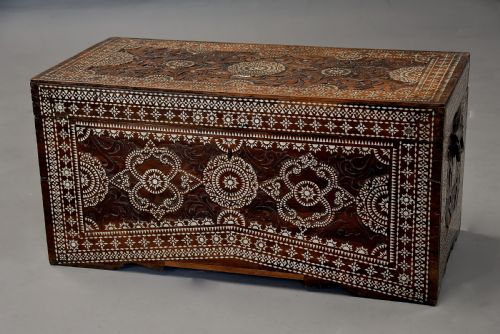
This method appears frequently on Syrian chairs, chests, and tables, creating high contrast against dark hardwoods and ebonised wood.
Where were these pieces used?
These pieces were typically displayed in drawing rooms, smoking rooms, or hallways of Victorian and Edwardian homes. They served as conversation pieces that demonstrated the owner's cosmopolitan taste.
Today, they integrate well into modern interiors as accent tables, bedside stands, or statement chairs that provide textural contrast.