


Antique Oriental Planter
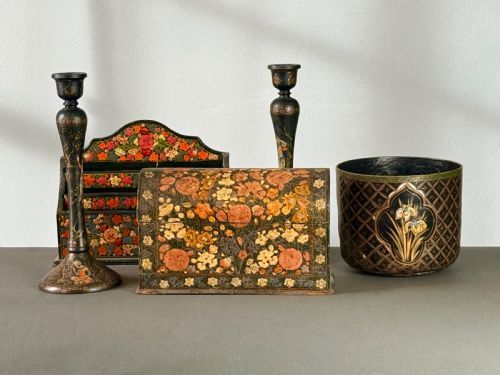
An antique oriental planter brings centuries of craftsmanship into a room, holding greenery and floral displays within vessels of bronze, porcelain, and carved hardwood.
Antique Oriental Planter
An antique oriental planter encompasses heavy bronze vessels, blue and white porcelain jardinières, and carved hardwood stands hailing from nineteenth-century Japan and China. Buyers seeking these pieces encounter items originally designed as temple baths, fish bowls, cachepots, and low display dishes for cut flowers and bonsai.
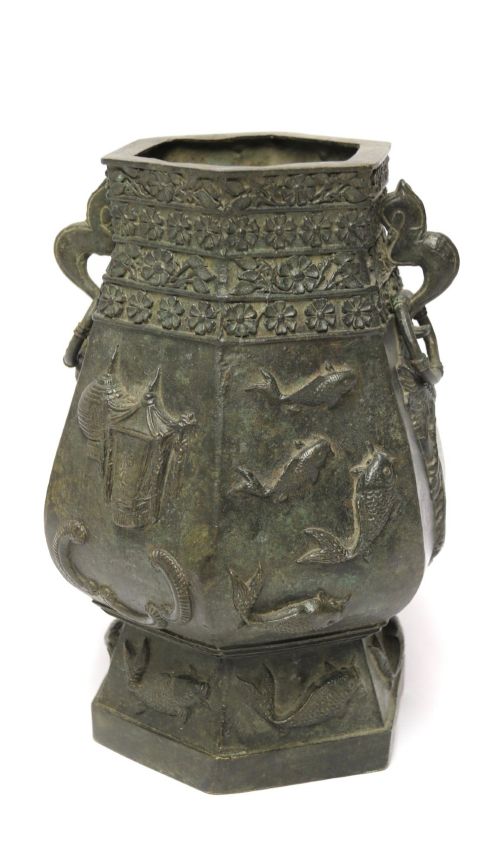
The selections span distinct periods including the Japanese Meiji era and the Chinese Qing Dynasty, alongside Victorian-era interpretations influenced by Eastern design. Forms range from hexagonal vessels and oval planters to tall pedestals meant to elevate botanical displays.
The listings show an abundance of heavy bronze bowls and cobalt-painted porcelain, frequently accompanied by matching stands in ebonised wood or Chinese elm. These vessels bridge decorative arts and practical horticulture, functioning equally well on a desk or as floor-standing garden urns.
How They Were Made
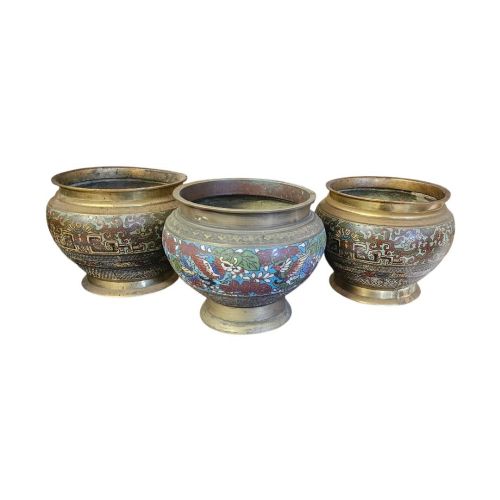
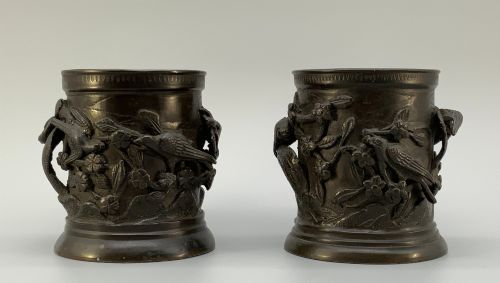
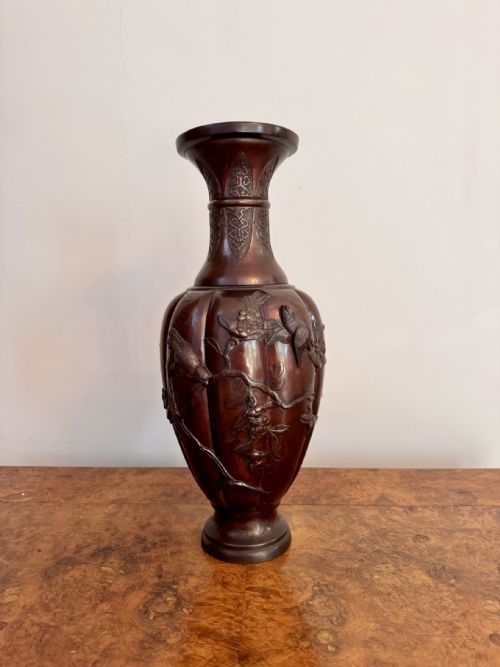
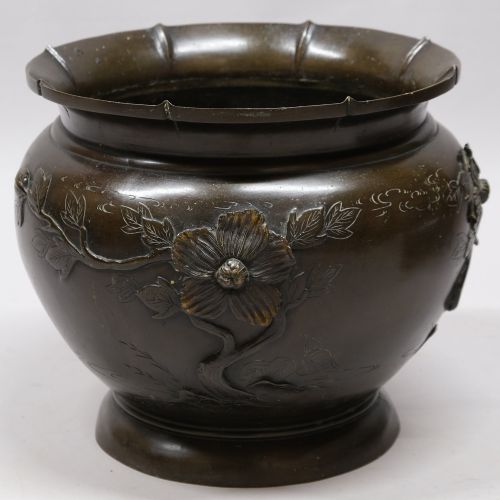
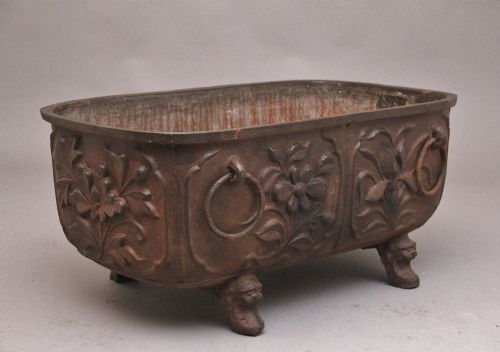
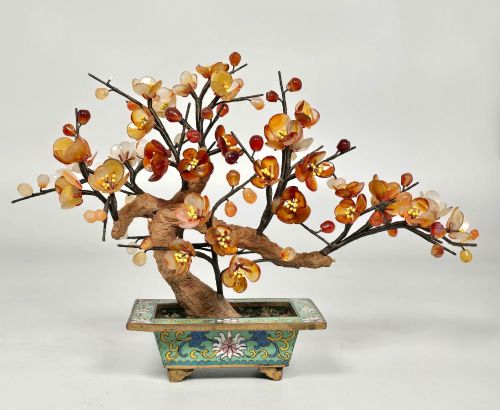
The metal pieces rely on bronze casting, brass fabrication, and patination techniques, sometimes incorporating champlevé enamel or mixed metal decoration to create textured surfaces. Iron vessels also appear, alongside heavy cast bronze bowls finished with high-relief figures and botanical motifs.
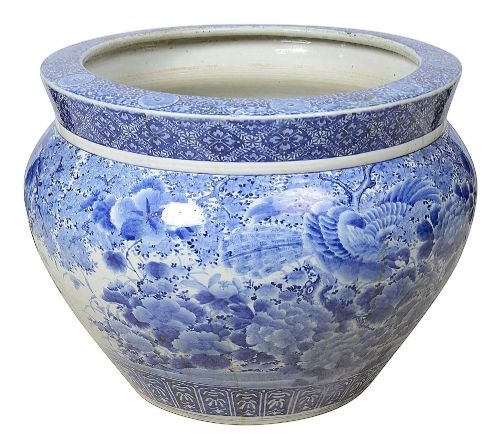
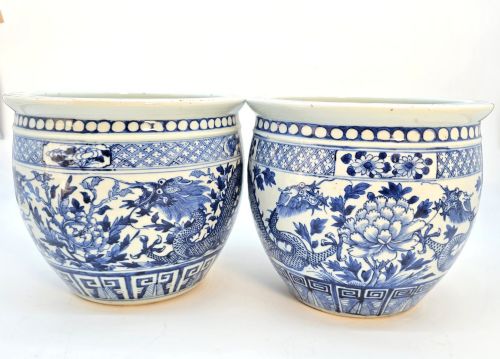
Ceramic examples utilise high-fired porcelain and stoneware bodies finished with cobalt blue painting, famille rose glazes, or crackled glazes. Potters shaped large fish bowls and jardinières by hand or on wheels before applying detailed brushwork depicting birds, blossoms, and narrative scenes.
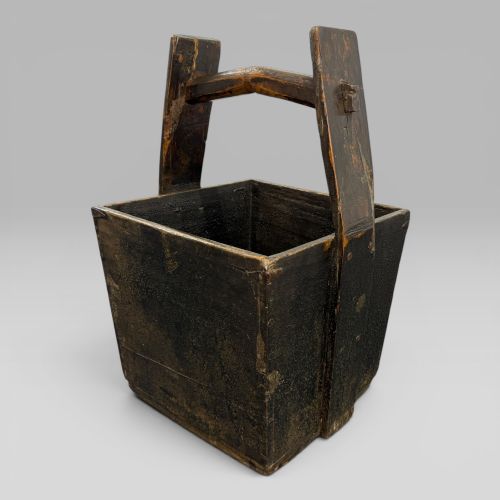
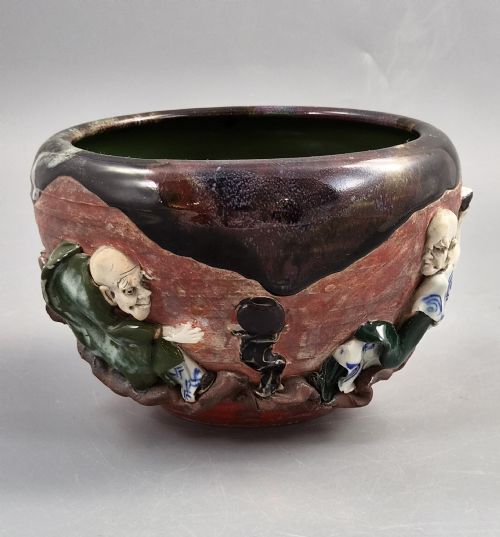
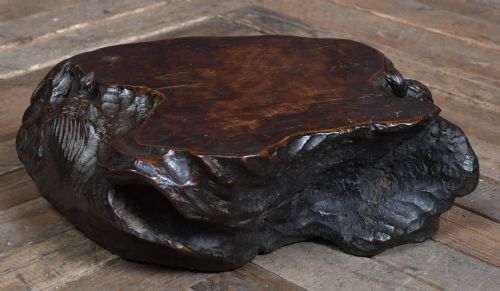
Wood stands and furniture components involve dense hardwoods such as Chinese elm and mahogany, joined through traditional carpentry and carved with intricate borders. Stoneware pieces occasionally integrate modelled figures climbing the sides, as seen in Sumida Gawa pottery.
Materials recur across bronze, porcelain, enamel, hardwood, brass, and glazed ceramic, paired with specialised stands and pedestals.
What Varies in Quality
The caliber of an antique oriental planter rests upon the crispness of its casting or the delicacy of its ceramic painting. Master bronze-workers achieved deep, intentional patination and sharply defined relief details, whereas simpler utilitarian vessels display softer contours and minimal surface ornament.
Porcelain quality divides along the purity of the clay body and the precision of the cobalt or enamel pigments. Fine examples exhibit balanced proportions, vibrant glaze retention, and deliberate brushstrokes that remain clear across large curved surfaces.
The integrity of secondary elements, such as matched hardwood stands and signed artist cartouches, elevates certain specimens above standard production pieces. Heavier bronze walls and substantial cast thickness generally indicate superior original manufacture.
Inoue Ryōsai·Makuzu Kozan II
The Antique Oriental Planter Glossary
- Jardiniere
- A large ornamental pot or bowl intended for holding plants or flowers. These vessels often sit directly on the floor or upon dedicated pedestals.
- Meiji Period
- The era of Japanese history lasting from 1868 to 1912, characterised by a surge in fine metalwork and porcelain exported to the West. Pieces from this time frequently display naturalistic bird and blossom motifs.
- Cloisonne
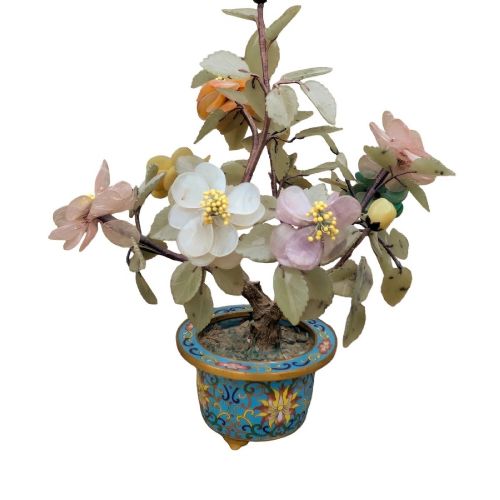
- A metalwork technique where thin wire partitions are soldered to a body to create cells filled with enamel paste and fired. This method produces intricate, multi-coloured decorative patterns across bronze vessels.
- Imari
- A style of Japanese porcelain decorated in underglaze blue and overglaze red, gold, and green. These wares were widely produced for export during the Edo and Meiji periods.
- Suiban
- A shallow Japanese basin used for displaying stones or arranging cut plants in water. They often feature in traditional Ikebana flower arrangements.
Antique Oriental Planter: Frequently Asked Questions
What is the difference between a jardiniere and a fish bowl?
A jardiniere generally serves as a container for potted plants or cut floral arrangements, often featuring a drainage hole or resting on a matching stand. Fish bowls are deeper, heavier porcelain or ceramic vessels traditionally manufactured to hold live carp and goldfish.
While both share similar rounded or straight-sided profiles, fish bowls lack drainage and prioritize watertight interior glazes. Their robust construction allows them to function indoors or within protected garden spaces.
How do I care for a ceramic oriental planter?
Protect antique porcelain and stoneware by placing a modern plastic liner inside the vessel rather than planting directly into the historic body. This prevents moisture from seeping into unglazed interior pores and causing mineral staining or structural stress.
Dust glazed surfaces gently with a soft cloth and avoid abrasive cleaning agents that might damage delicate overglaze enamels. Keep the vessel away from areas subject to sudden temperature fluctuations or heavy foot traffic.
How can I tell the Meiji period from the Qing dynasty?
Meiji period pieces originate from Japan between 1868 and 1912, typically showcasing naturalistic bronze casting, cloisonné enamel, or Imari porcelain. The ornamentation often highlights asymmetrical botanical details, birds, and dynamic relief work.
Qing dynasty pieces hail from China between 1644 and 1912, frequently utilising famille rose palettes, heavy cobalt blue porcelain, or carved hardwood stands. Chinese motifs tend to incorporate formal border patterns, dragons, and symbolic floral arrangements.