
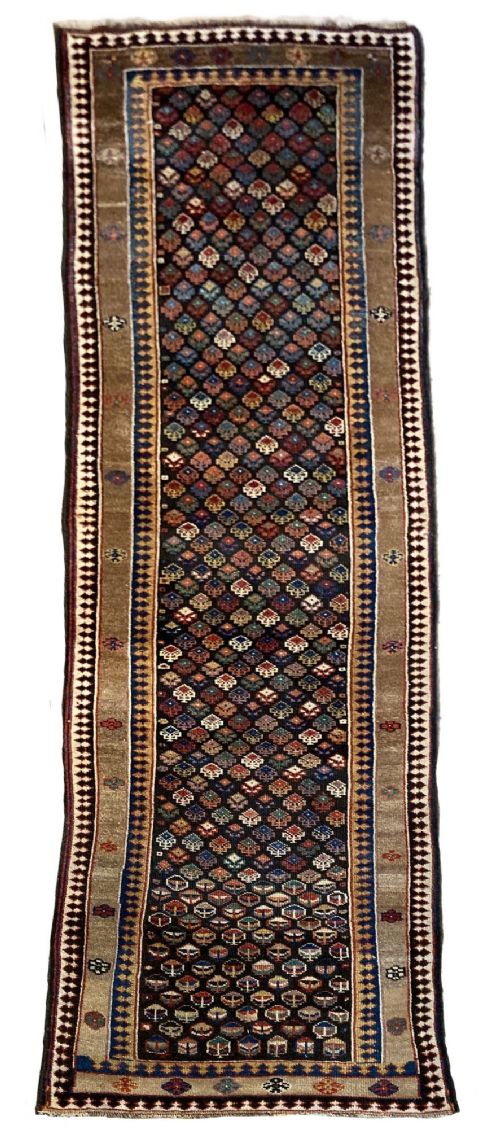


Antique Oriental Passage Rug
An antique oriental passage rug brings floor-spanning geometry and deep regional character to narrow corridors and halls.
Antique Oriental Passage Rug
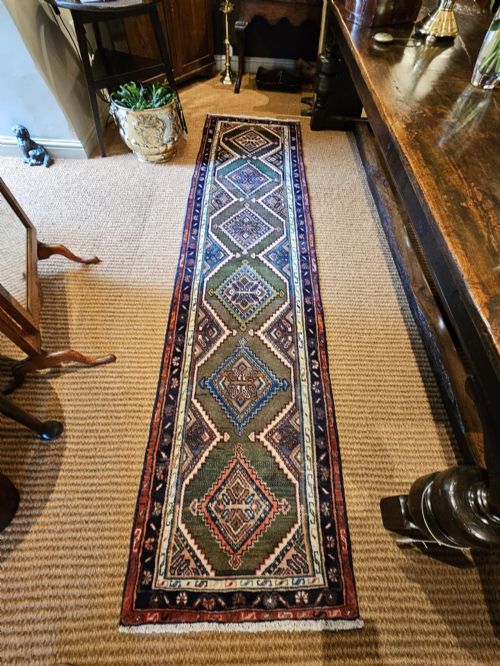
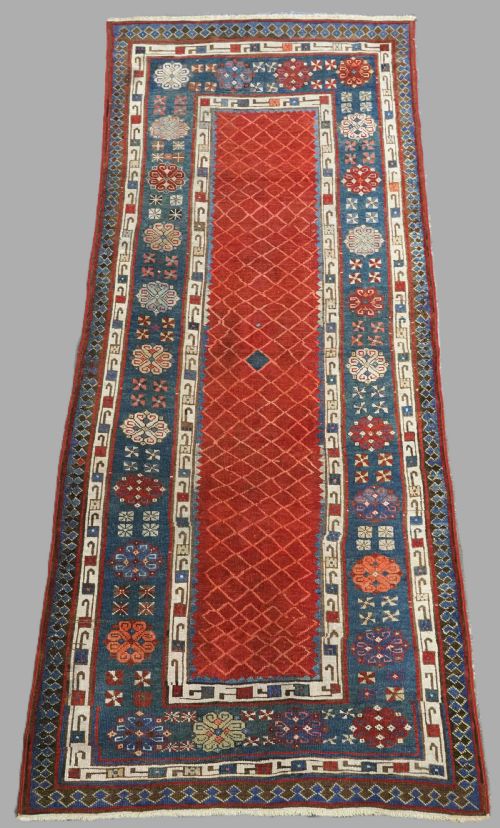
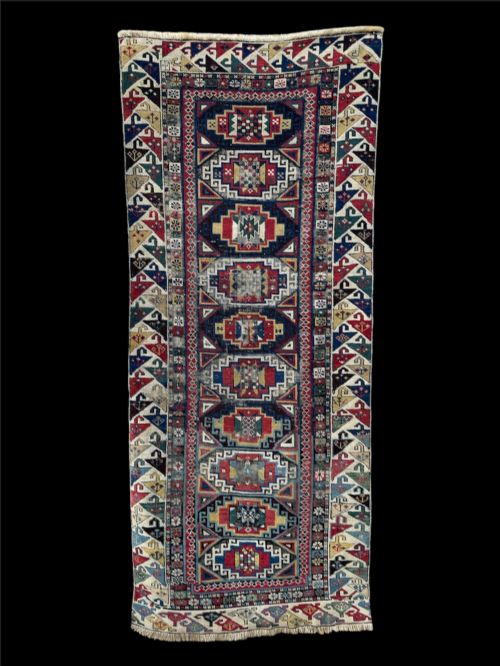
An antique oriental passage rug is a long, narrow format designed specifically for corridors, hallways, and staircases, appearing across this page in nineteenth-century and early twentieth-century editions. These pieces span regional styles originating from Persian weaving centres like Heriz, Bidjar, Ferahan, and Kurdish districts, alongside Caucasian groupings such as Talish, Shirvan, Karabagh, and Gendje.
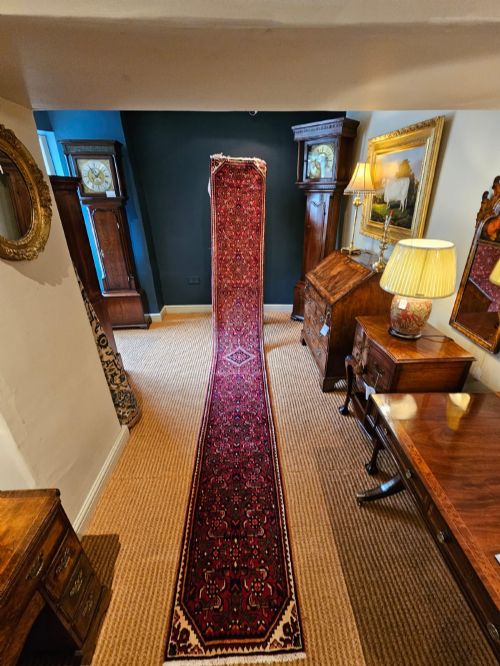
The format prioritises length over width, often measuring several metres long while remaining narrow enough to frame a passage floor properly. Buyers encounter traditional tribal patterns, lattice designs, diagonal stripes, and all-over shrub or garden motifs woven into wool piles.
Materials and construction
The construction of these runners relies on durable wool piles set upon cotton foundations, providing the resilience needed for heavy foot traffic in halls and staircases. Weavers knotted the wool by hand, utilising natural dye sources that yielded mellow colours and rich background tones in olive green, ivory, and blue.
The integration of sturdy cotton warps and wefts helps maintain the straight, elongated proportions of narrow formats like the Ferahan, Talish, and Heriz runners seen across the inventory.
One particularly dedicated household measured a massive pair of Malyor runners extending over twelve metres long.
Distinguishing quality across the range
Quality in these passage rugs rests on the crispness of the geometric drawing, the saturation and balance of the natural dyes, and the density of the hand-knotted wool pile. Pieces retaining an exceptionally full pile and precise lattice or boteh motifs demonstrate superior survival from the nineteenth and early twentieth centuries.
Proportion also defines the upper tier, where unusually long and narrow formats maintain structural integrity and straight outer edges along their entire length without heavy distortion.
The Antique Oriental Passage Rug Glossary
- Runner
- A long, narrow carpet format intended for corridors, hallways, and staircases. These pieces measure significantly longer than they are wide to fit passage spaces.
- Boteh
- A traditional teardrop or paisley motif symbolising life and eternity. It frequently appears repeating across the field of Kurdish and Persian passage rugs.
- Warp
- The vertical foundation threads stretched lengthwise on the loom before knotting begins. Cotton warps provide structural stability to antique oriental runners.
- Lattice
- An intersecting network of diagonal lines forming a grid pattern across the rug field. This geometric layout is characteristic of Caucasian Talish and Shirvan weaves.
Antique Oriental Passage Rug: Frequently Asked Questions
How do I style an antique oriental passage rug?
Place the runner in narrow hallways, corridors, or along straight staircases where the elongated proportions can be fully appreciated.
Keep surrounding furniture minimal to let the geometric designs and natural wool colours remain the focal point of the space.
What periods do these runners come from?
The pieces on this page originate from the nineteenth century and the early decades of the twentieth century, spanning from the 1880s through to the 1930s.
Date attributions rely on stylistic traits, regional weaving structures, and traditional dye palettes typical of those eras.
How do I tell Caucasian and Persian runners apart?
Caucasian runners, such as those from Talish or Shirvan, generally feature bolder, crisper geometric structures, stark medallions, and diagonal stripes.
Persian examples from Heriz, Bidjar, or Kurdish districts often display more curvilinear floral elements, Herati motifs, or dense all-over shrub designs.
Are these rugs suitable for heavy traffic areas?
The dense hand-knotted wool piles set on sturdy cotton foundations were originally built to endure daily foot traffic in busy country houses and family corridors.
Using an appropriate underlay beneath the runner helps absorb impact and keeps the piece securely in place on wooden or tiled floors.