



Antique Oriental Glass Painting
These antique oriental glass painting pieces bring intricate reverse-painted scenes and reflective depth to any room.
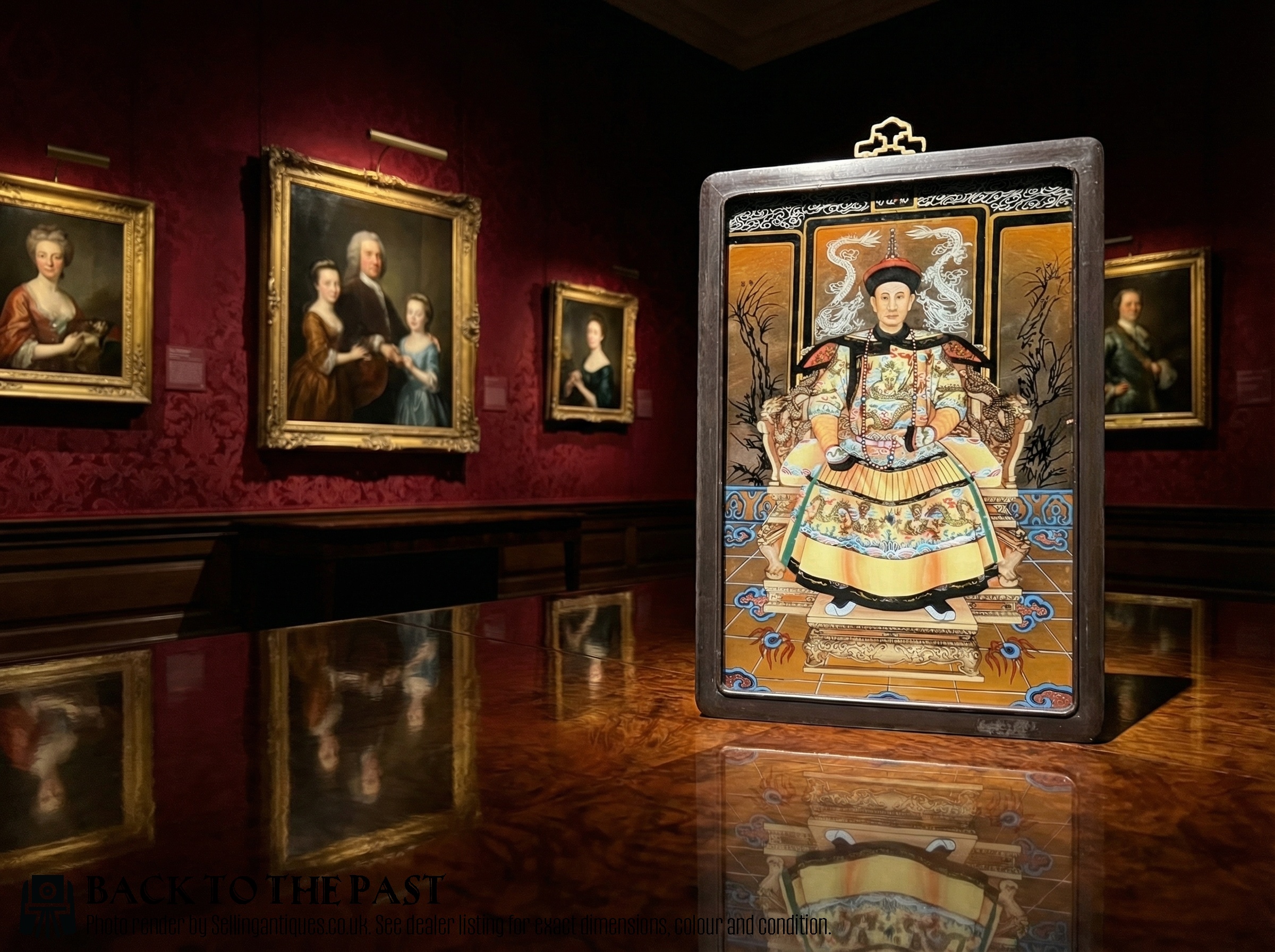
Antique Oriental Glass Painting
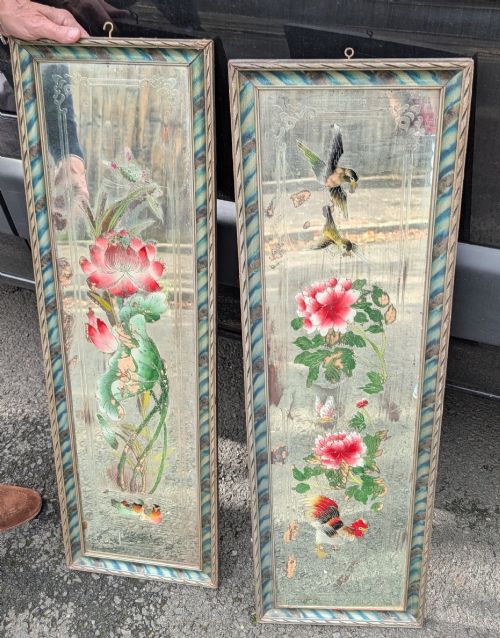
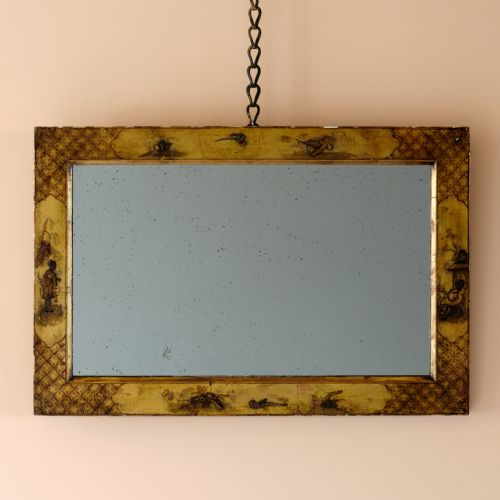
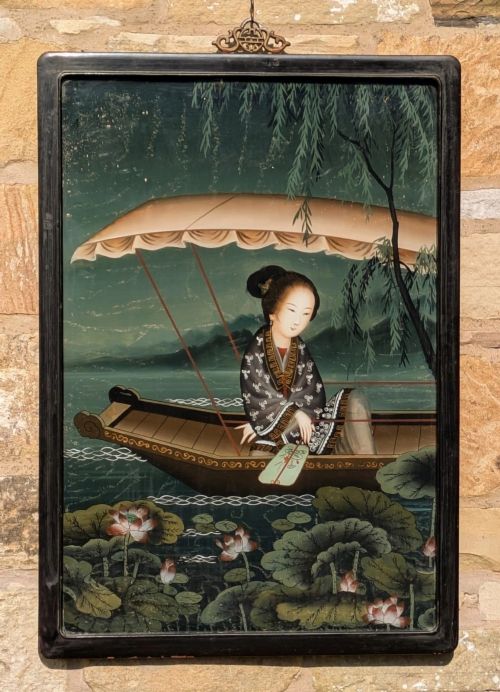
When you search for antique oriental glass painting, you encounter a selection spanning wall mirrors, paintings, barometers, and snuff bottles originating from Chinese export and Japanese traditions. The pieces on this page lean heavily towards nineteenth-century Chinese reverse painted mirror-glass pictures and wall mirrors.
You will also find select twentieth-century Japanese works, such as glass paintings depicting beauty and cat motifs, alongside lacquer and giltwood frames. The nineteenth century yields the strongest representation of reverse glass painting depicting dignitaries and decorative wall art.
How they were made
Maker execution relies on applying pigment directly to the reverse side of glass plates or mirror glass, requiring artists to paint details in reverse order so the final image appears correctly from the front. Wood, giltwood, and lacquer frames frequently house these glass panels, sometimes complemented by brass or metal hardware.
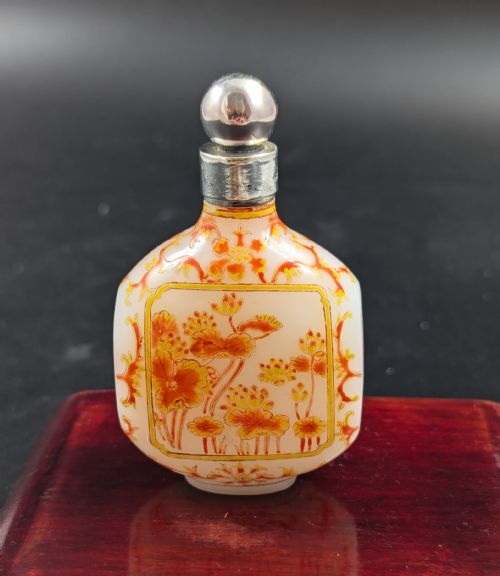
Snuff bottles demonstrate interior miniature painting executed through tiny openings using specialised curved brushes, whilst mirror-glass panels incorporate silvering techniques combined with hand-painted Chinoiserie motifs.
Materials recorded across the inventory include glass, wood, paint, brass, metal, lacquer, mirror glass, and giltwood.
What varies in quality
Quality depends on the precision of brushwork and the complexity of the painted composition, particularly in the rendering of facial expressions on dignitaries or domestic subjects. Superior examples maintain clarity in the mirror glass and stability in the underlying paint layers without heavy disruption.
The sophistication of the framing material, whether elaborate giltwood, carved lacquer, or polished wood, distinguishes standard production from finer export pieces.
Takabatake Kasho·Guyue Xuan
The Antique Oriental Glass Painting Glossary
- Reverse glass painting
- A technique where the artist paints the image backwards on the rear surface of a glass panel so it is viewed correctly from the front. This method protects the pigment from dust and surface wear.
- Chinoiserie
- European interpretations and adaptations of Chinese artistic traditions and motifs, prevalent in decorative arts and furniture. It often appears in mirrors and barometers from the Georgian period.
- Chinese Export
- Goods manufactured in China specifically for Western markets and trade during the Qing dynasty and earlier periods. These items blend Eastern techniques with Western aesthetic preferences.
- Aneroid barometer
- A type of weather-measuring instrument that uses an evacuated metal chamber rather than liquid mercury. These are frequently housed in decorative cases matching period styles.
Antique Oriental Glass Painting: Frequently Asked Questions
How do you hang a heavy glass painting safely?
These pieces require sturdy wall anchors and picture wire rated well above the weight of the frame and glass panel. Ensure the hanging hardware engages directly with wall studs.
Avoid hanging them in direct sunlight or damp environments, as moisture can compromise the backing and the adhesion of the paint layers.
Where were reverse glass paintings typically displayed?
Historically, wealthy households displayed these decorative mirror-glass pictures and wall art in formal reception rooms and parlours. Their reflective qualities helped brighten dimly lit interiors by bouncing natural light around the space.
Smaller items like snuff bottles were kept as personal scholarly objects or carried in pouches by elites during the Qing dynasty.
How do you distinguish nineteenth century pieces?
Nineteenth century examples often exhibit specific frame constructions, hand-beveled mirror edges, and pigment characteristics consistent with Qing dynasty export production. The materials show natural ageing appropriate to the eighteen hundreds.
Examination of the backing boards, fixings, and brushwork under magnification helps confirm the period of manufacture.