
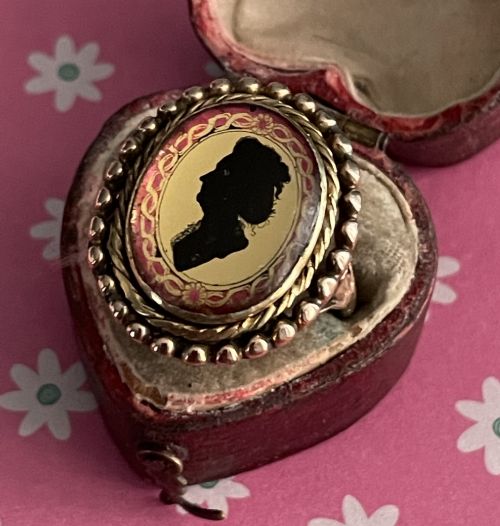
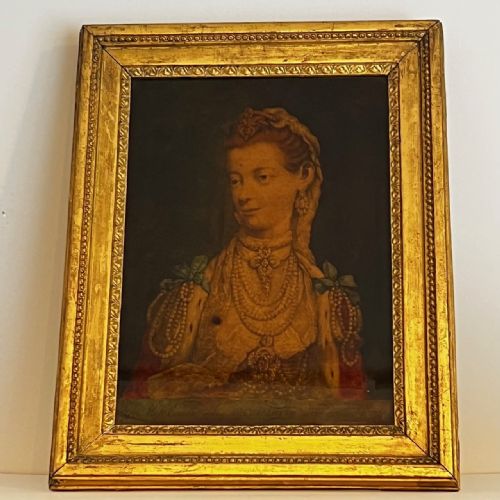


Gold Reverse Painted Glass
Gold reverse painted glass works offer brilliant metallic detail beneath the surface, catching the light across Georgian mirrors, Victorian chrystoleoms and early twentieth century shop signs.
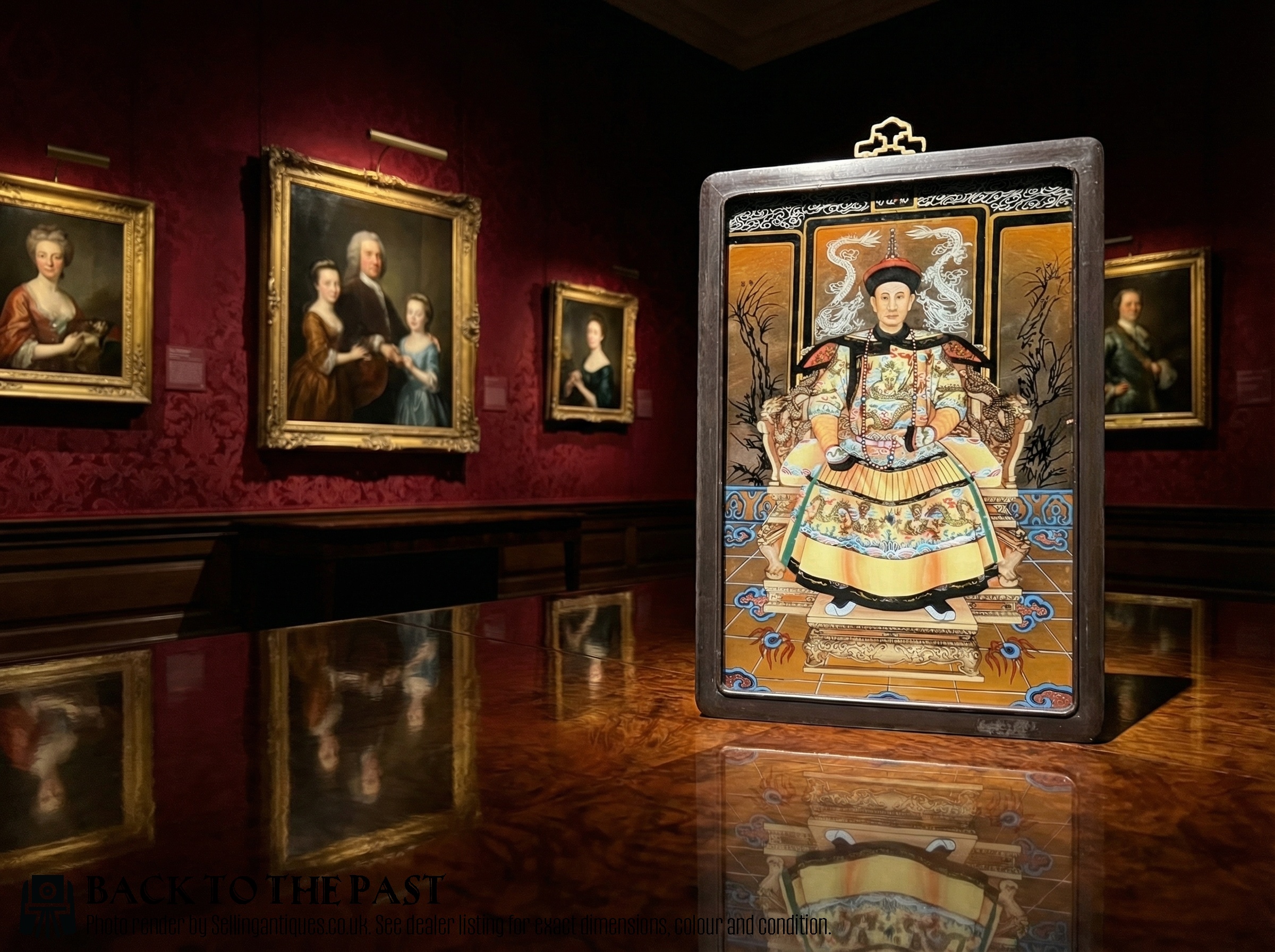
Gold Reverse Painted Glass
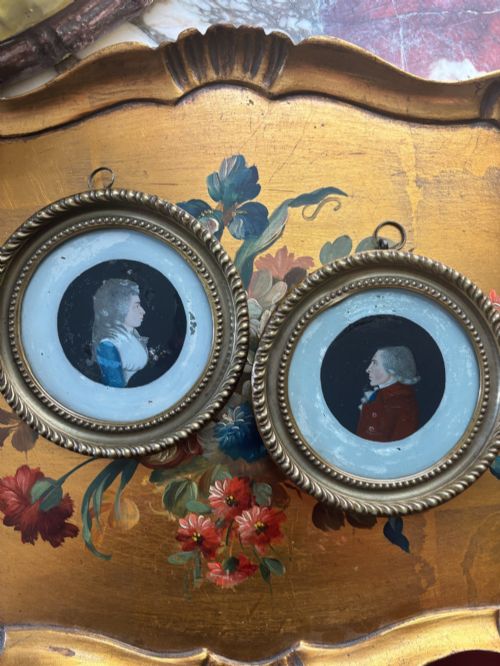
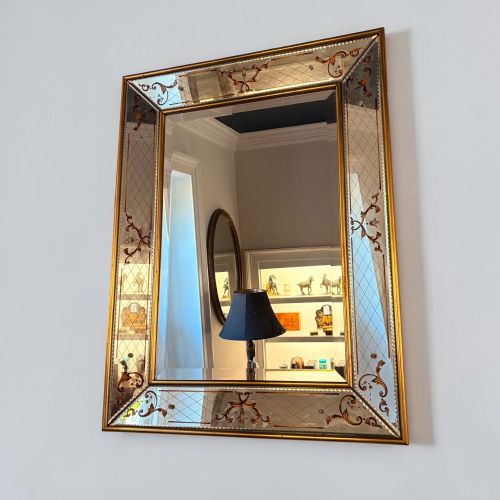
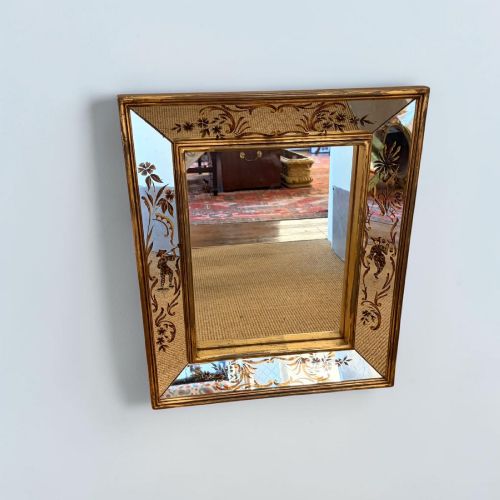
When you search for gold reverse painted glass, you encounter a diverse array of wall mirrors, framed prints, jewellery and decorative signs produced across the Georgian, Regency, Victorian and Edwardian eras. These pieces demonstrate intricate craftsmanship applied directly to the rear of the glass plate so that the design and metallic leaf appear correctly when viewed from the front.
The selections span domestic furnishings like pier mirrors with eglomisé panels and chess boards, alongside Chinese export mirrors and European trade signs. Portrait prints, silhouette rings and chrystoleoms further illustrate the wide scope of objects that utilise this painstaking technique.
Most examples originate from British, French, Chinese and Scandinavian workshops operating between the late eighteenth and early twentieth centuries. Buyers find everything from intimate jewellery items to large wall art and advertising displays.
How they were made
Craftsmen applied gold leaf, paint and paper backing directly to the reverse side of clear glass panels, often working in reverse perspective so that foreground details were painted first. This method protected the delicate pigments and metallic leaf from physical damage and atmospheric tarnishing.
Giltwood frames and carved wooden surrounds frequently housed these glass panels, particularly in Regency and nineteenth century pier mirrors. In the case of chrystoleoms and reverse glass prints, photographs or printed images were pasted face down onto the glass, rendered transparent with oil, and hand-tinted with paint and gold before sealing.
What varies in quality
The precision of the brushwork and the purity of the gold leaf dictate the visual impact of each piece, distinguishing fine studio portraits and Chinese export panels from commercial shop signs. Superior examples retain their original backing papers and suffer minimal flaking or oxidation to the metallic layers.
The complexity of the framing, such as carved giltwood trumeau panels or fitted jewellery mounts in gold, elevates the status of the glass work. Artisanal skill in layering transparent pigments over gold determines the depth and luminosity of the finished surface.
The Gold Reverse Painted Glass Glossary
- Verre Eglomise
- A cold decoration technique involving the application of gold or silver leaf to glass, often etched and painted from the reverse. The term derives from a French eighteenth century decorator named Glomy.
- Chrystoleum
- A method of applying a coloured photograph or print to the inside of a convex glass and hand-painting it with oil paints and gold leaf. Popular during the Victorian and Edwardian periods.
- Trumeau
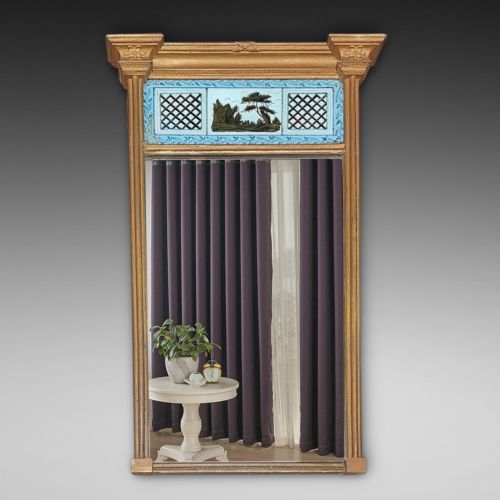
- An architectural wall mirror or panel featuring a painted or eglomisé glass section positioned above the main looking glass. These decorative elements were especially prominent in Regency interiors.
- Pier Mirror
- A tall glass designed to hang on the wall space between windows, frequently incorporating decorated eglomisé panels at the upper or lower section.
- Reverse Glass Painting
- The practice of applying paint directly to the back of a glass sheet so the final image is viewed through the transparent front panel.
Gold Reverse Painted Glass: Frequently Asked Questions
How do I clean gold reverse painted glass?
Dust the surface gently with a soft, dry microfibre cloth to remove accumulated particles without disturbing the glass.
Avoid applying liquid cleaners, water or chemical sprays near the edges or back of the glass, as moisture can seep behind the panel and lift the delicate gold leaf and paint.
Where should I hang a reverse painted mirror?
Position the piece on an interior wall away from direct sunlight and damp conditions to protect the vulnerable metallic leaf and paper backings from degradation.
Ensure the hanging fixings securely support the weight of the heavy wooden frames and glass panels common to these works.
What is the difference between eglomise and a chrystoleum?
Verre eglomise involves applying gold leaf and hand-painted designs directly onto the glass panel, often with chemical etching.
A chrystoleum relies on a paper print adhered to the glass, rendered transparent, and painstakingly hand-tinted with oils from behind.
How can I tell a Georgian mirror from a Victorian one?
Georgian and Regency examples typically feature refined neoclassical motifs, hand-beveled plates and traditional giltwood frames with gesso ornamentation.
Victorian and Edwardian pieces often introduce bolder decorative advertising, chrystoleum portraits or mass-produced glass techniques associated with later nineteenth century workshops.