





Antique Optical Glass
Antique optical glass gathers lenses, mirrors and viewing instruments formed across several centuries to assist the eye.
Antique Optical Glass
When you search for antique optical glass, you encounter a varied group of utilitarian and decorative objects spanning the eighteenth, nineteenth and early twentieth centuries. These pieces encompass scientific lenses, desk accessories, domestic mirrors and portable viewing aids designed for daily utility or theatrical diversion.
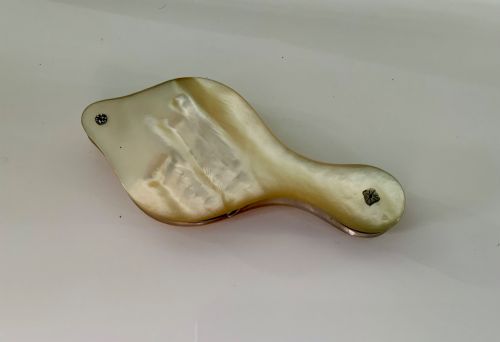
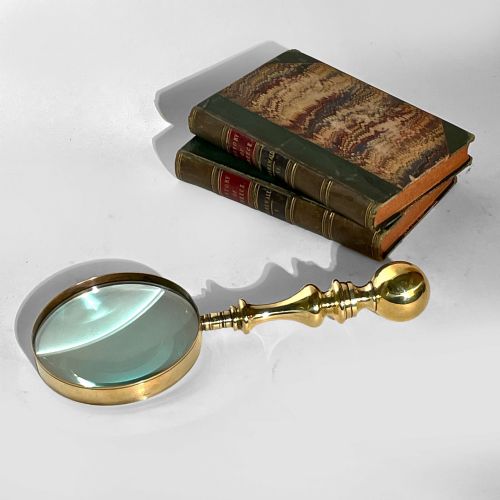
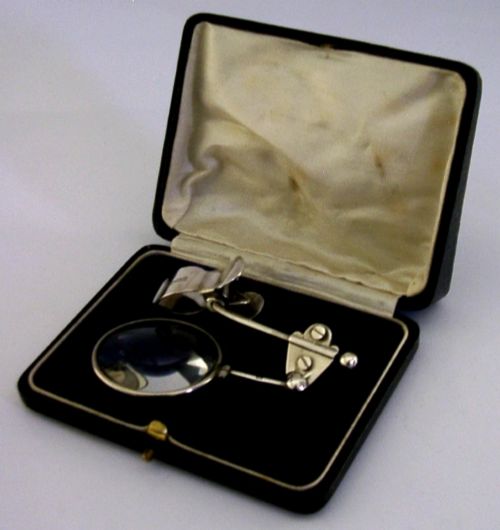
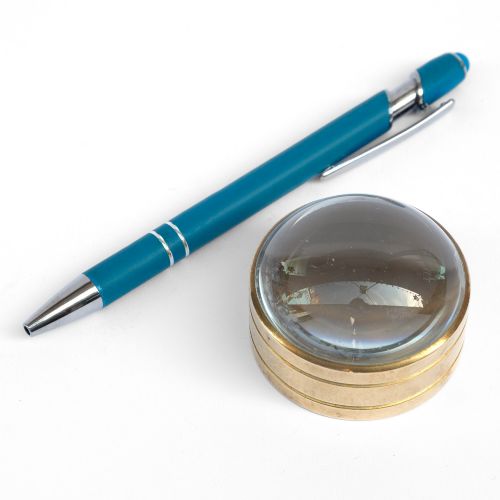
The assortment on this page most frequently includes magnifying glasses mounted in brass or sterling silver, alongside opera glasses finished in mother of pearl, leather or enamel. Scientific items such as test lens kits, telescopes and specialised desk magnifiers also appear across Victorian and Edwardian iterations.
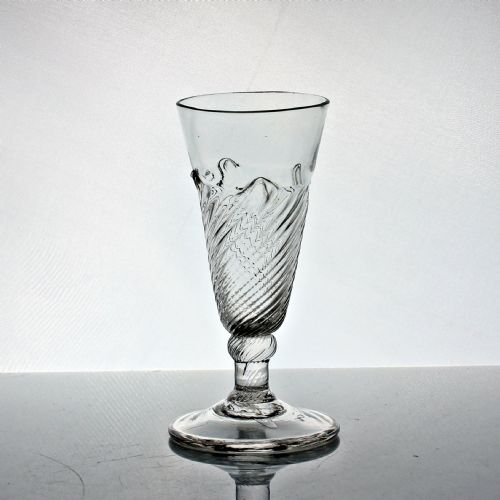
Early domestic examples range from Georgian ale glasses and convex witch's mirrors to intricate Stanhope lenses and scientific optical mirrors. Each surviving piece demonstrates the distinct technological requirements of its period, from navigation and natural history to gentleman's study equipment.
Materials and construction methods
Makers shaped clear optical glass and shaped lenses by hand, housing them in turned brass mounts, carved rosewood or solid sterling silver frames. Portable items often incorporated stitched leather, delicate mother of pearl panels or guilloche enamel to enrich the outer casings.
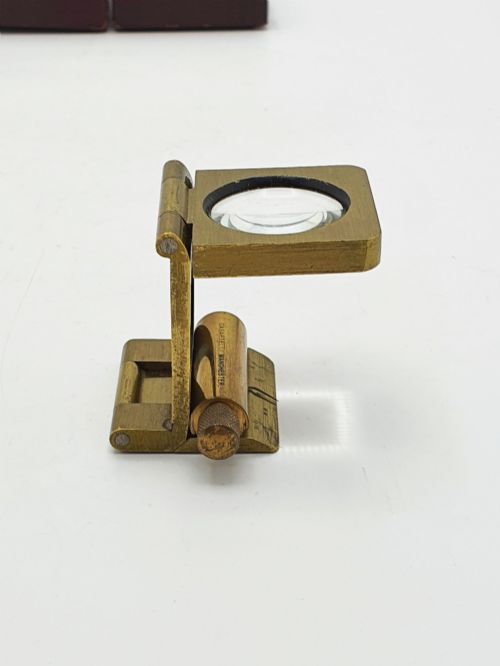
Desk accessories and scientific instruments frequently utilised mahogany and brass components, while pocket-sized lenses employed folding mechanisms and hinged protective cases lined in velvet or leatherette. Precision assembly allowed movable barrels on telescopes and lorgnettes to function smoothly without losing optical alignment.
Antique Optical Glass Retail Price Guide 2026
Typical asking prices for optical glass among the pieces listed under this phrase on Sellingantiques today, from the lower quarter to the upper quarter. They describe what is for sale here now, not the wider market.
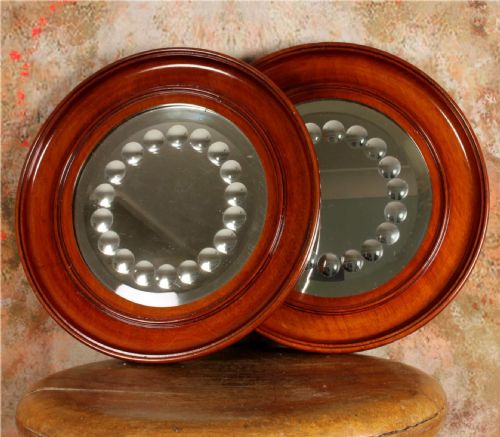
A nineteenth-century sorcerer's mirror gazes back from the wall, originally hung to ward off domestic mischief and survey the entire room in miniature.
Distinctions in grade and execution
The standard of a piece rests upon the optical clarity of the glass lens and the rigidity of its metal or wooden housing. Finer examples retain unmarked glass free of internal distortion, accompanied by robust mechanical mounts that secure the lens firmly.
Execution of decorative elements defines the upper tier of production, visible in crisp hallmarks on sterling silver frames, neatly stitched leather coverings and precisely fitted mother of pearl plates. Signatures from established opticians or retailers on brass barrels and desk instruments add provenance and confirm higher workshop standards.
Casartelli Manchester·Thomas Rubergall·Ross London·Iris Paris·Francis West·CW Dixey London
The Antique Optical Glass Glossary
- Stanhope lens
- A cylindrical optical lens that enables a microscopic photograph to be viewed clearly with the naked eye. This tiny device was frequently mounted into bone, ivory or metal souvenirs.
- Lorgnette
- A pair of spectacles or opera glasses held with a short handle rather than fitted over the ears. They were common accessories during the nineteenth and early twentieth centuries.
- Convex mirror
- A curved glass mirror that reflects a wide, distorted field of vision, historically utilised as a domestic interior accessory. These are often referred to as sorcerer's or witch's mirrors.
- Guilloche enamel
- A decorative technique where a geometric pattern is engraved beneath a translucent layer of coloured enamel. It frequently appears on luxury opera glasses from the Edwardian period.
Antique Optical Glass: Frequently Asked Questions
Were opera glasses used for theatre only?
Opera glasses served patrons in large auditoriums and theatres across the nineteenth century for viewing performances at a distance. Their compact magnification made them essential social accessories for evening entertainment.
Owners also utilised them outdoors at sporting events and horse races. Wealthy travellers carried them as personal viewing aids during public gatherings.
How do I date a brass magnifier?
Examine the weight, casting marks and design style of the brass mount alongside any accompanying storage case. Turn-of-the-century pieces often display cleaner machine-turned threads compared to earlier hand-filed mountings.
Check for maker signatures or city names stamped into the metal rim. Patent dates and hallmarks on attached sterling silver provide precise chronological markers.
Can I use these magnifiers today?
Many antique magnifying glasses remain fully functional for reading small print or inspecting fine details. Their optical lenses retain their original magnification properties if the glass remains unblemished.
Handle folding pocket lenses with care to avoid stressing aged hinges and delicate pivot pins. Desk models with heavy stands require stable placement on flat surfaces.