

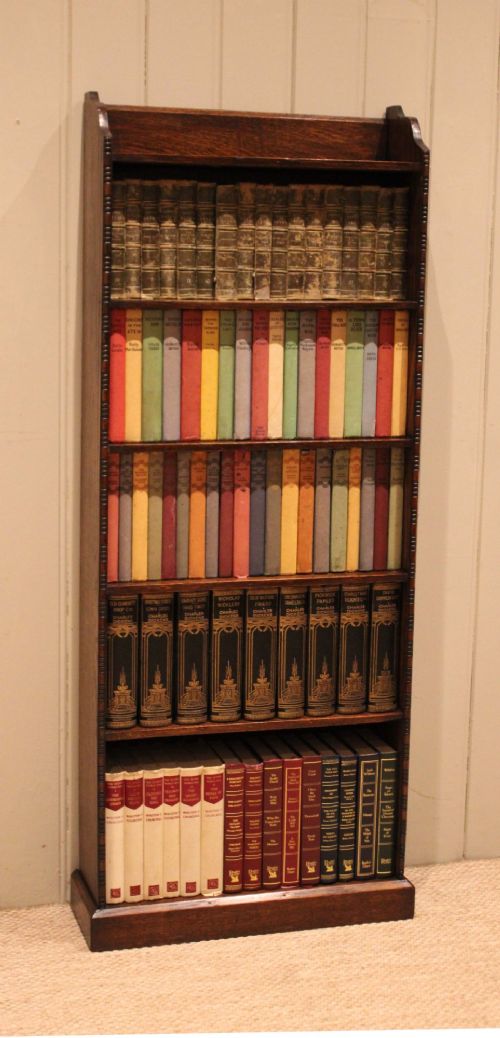
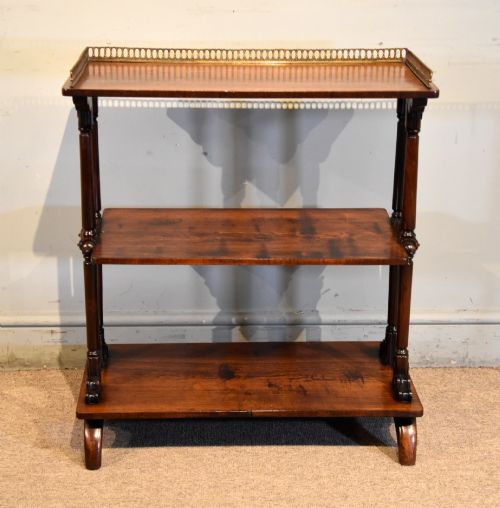
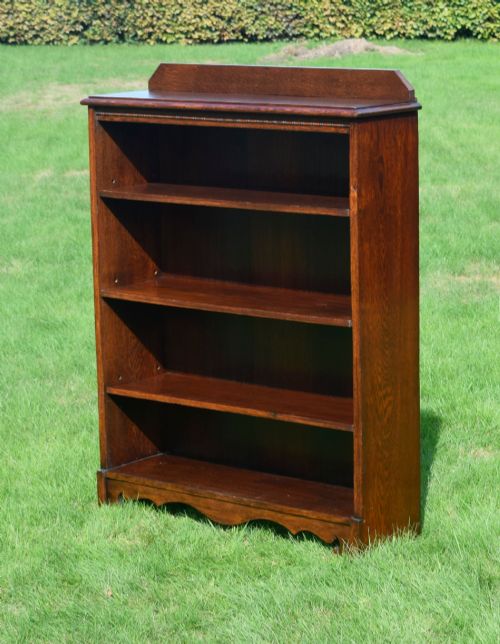
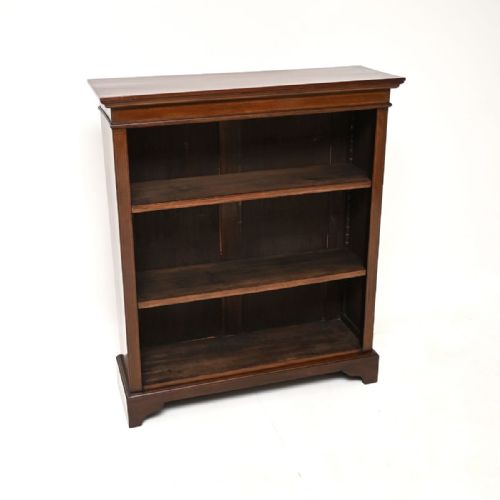


Antique Open Book Rack
An antique open book rack offers accessible, freestanding or wall-hung shelving that keeps volumes close to hand while showing off timber grain and period character.
Antique Open Book Rack
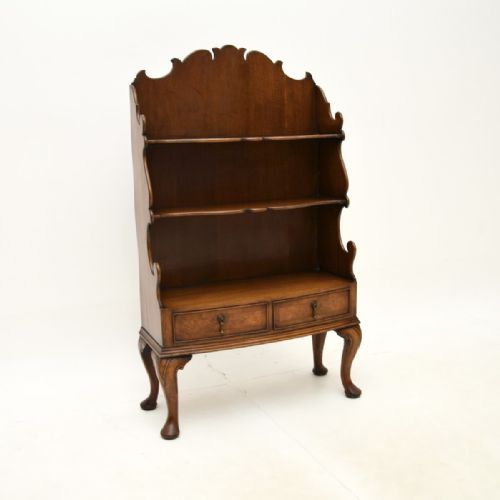
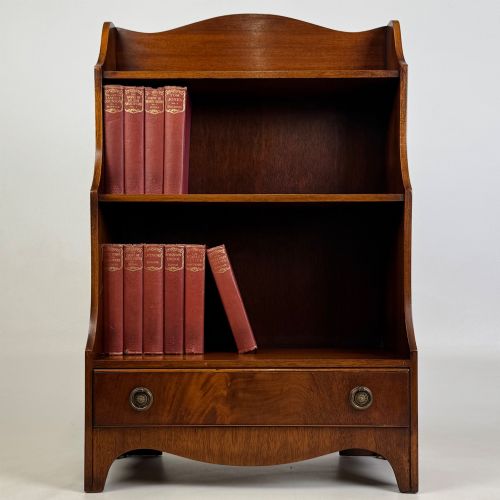
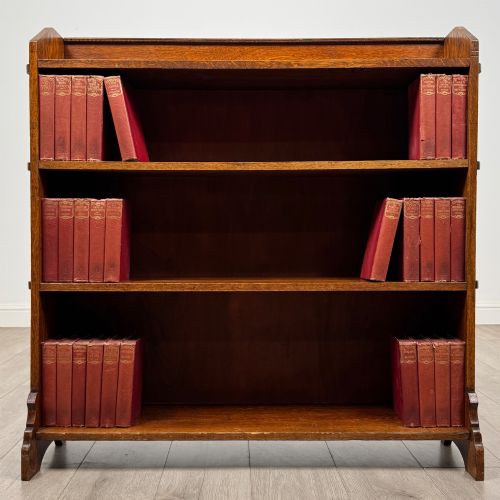
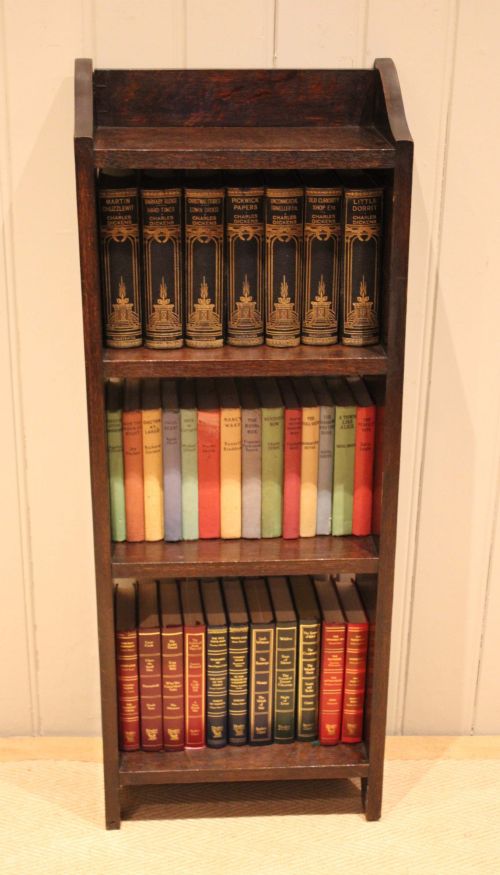
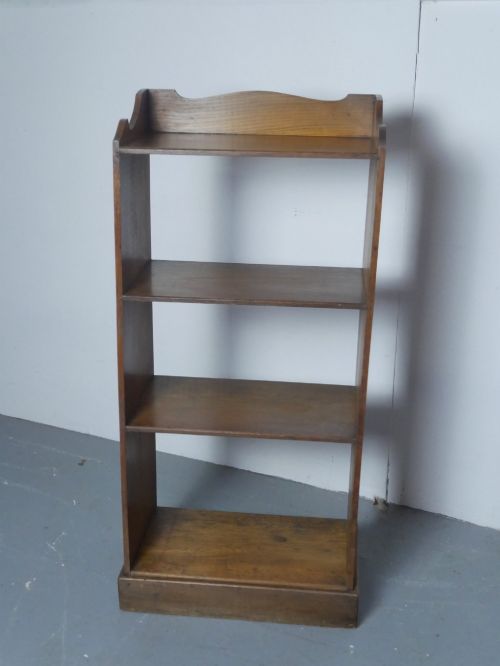
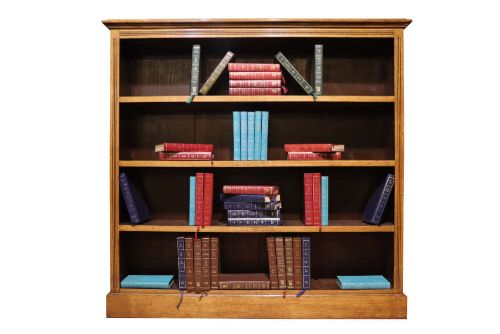
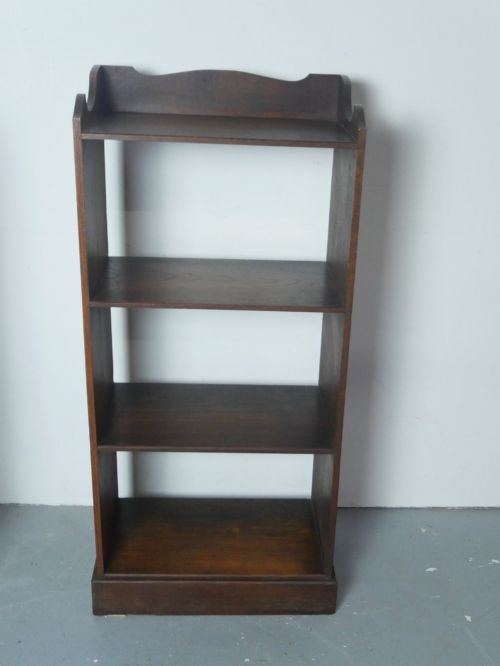
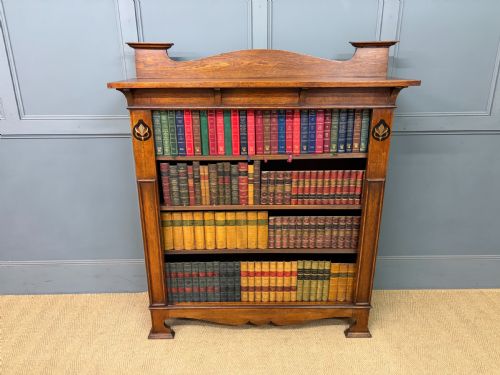
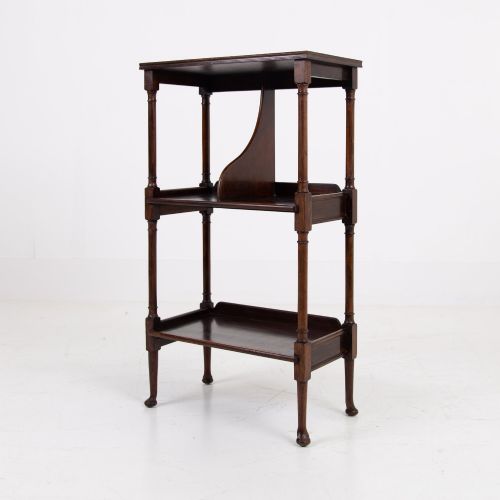
An antique open book rack is a piece of furniture designed to hold books and periodicals without the restriction of glass-fronted doors, offering immediate access to your collection. When you search for this phrase, you encounter various forms including low standing bookcases, wall-hanging shelves, tabletop book troughs, and tiered whatnots.
The pieces on this page span the nineteenth century, the Edwardian era, and the nineteen-twenties, reflecting domestic needs for flexible storage. Oak and mahogany dominate the offerings, appearing alongside walnut, pine, and satinwood in both simple utilitarian formats and decorative revival styles.
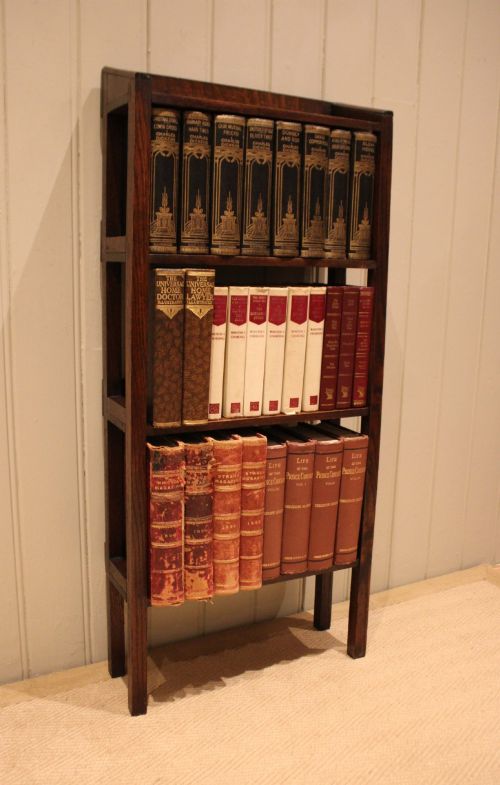
You are most likely to meet straightforward oak and mahogany examples dating from around nineteen hundred, often influenced by Arts and Crafts simplicity or Edwardian practicality. These items range from small bedside or fireside book troughs to tall bookcases and wall shelves suitable for everyday use in any room.
How they were made
Cabinet makers utilised solid oak, mahogany, and pine for these racks, frequently employing sturdy mortise and tenon joints to bear the weight of heavy volumes. Timber selection dictated the character of the piece, with quarter-sawn oak showing distinctive medullary rays and mahogany providing a rich, dark ground for polish.
Decoration on these shelves relies on structural details rather than heavy ornamentation, such as beaded edges, decorative cut-outs, and subtle inlay work in satinwood or brass fittings. Painted finishes appear on certain nineteenth-century pine and display pieces, giving a softer domestic appearance.
Design variations include stepped waterfall tiers, sloping desk-like fronts on book troughs, and adjustable shelving supported by wooden ratchets or brass pins. These construction methods ensured durability while allowing the open frame to remain light enough for domestic rearrangement.
Antique Open Book Rack Retail Price Guide 2026
Typical asking prices for open book rack among the pieces listed under this phrase on Sellingantiques today, from the lower quarter to the upper quarter. They describe what is for sale here now, not the wider market.
The selection here demonstrates that oak and mahogany remained the primary timbers for open shelving from the Victorian period through the nineteen-twenties.
What varies in quality
The standard of a piece rests largely on the quality of the timber preparation and the thickness of the boards used for shelves and uprights. Superior items utilise solid hardwood throughout, including solid backs and drawer linings where applicable, avoiding thin veneered substitutes that warp over time.
Design ambition separates basic utility items from finer examples, with decorative cut-outs, carved panels, and precise inlay marking the work of more skilled cabinet makers. Proportion and balance also distinguish better pieces, ensuring the rack looks settled and harmonious rather than purely functional.
The Antique Open Book Rack Glossary
- Book trough
- A small, open-topped receptacle designed to hold a selection of books upright on a table or beside a chair. They often feature sloping sides for easy title reading.
- Waterfall bookcase
- A set of open shelves that recedes in depth from bottom to top, creating a stepped profile resembling a cascading waterfall. This style gained popularity during the nineteenth and early twentieth centuries.
- Whatnot
- A multi-tiered open piece of furniture used for displaying books, ornaments, or small objects. It typically stands on slender legs and dates frequently from the Victorian and Edwardian periods.
- Arts and Crafts
- A design movement favouring honest construction, visible joinery, and simple materials over mass-produced ornamentation. Pieces from this tradition often feature unadorned oak and hand-wrought brass details.
- Golden oak
- A warm, honey-coloured finish applied to oak timber, commonly seen on pieces produced around nineteen hundred. It highlights the natural grain and growth rings of the wood.
Antique Open Book Rack: Frequently Asked Questions
Where should I place an open book rack?
These pieces suit living rooms, studies, and bedrooms where quick access to reading material matters more than dust protection. Freestanding models work well against walls or beside armchairs, while wall-hanging versions save floor space in smaller rooms.
Because the shelves are open, consider placing them away from direct sunlight and damp exterior walls to protect your books and timber. Their compact footprints also make them useful on tabletops and sideboards.
How do I clean and care for the wood?
Dust the shelves regularly with a soft, dry cloth to prevent grit from accumulating in the grain or carved details. Avoid modern silicone-based sprays, which can build up and dull the finish over time.
Feed dry timber occasionally with a traditional beeswax polish applied sparingly and buffed to a soft sheen. This preserves the natural moisture of the oak, mahogany, or walnut without leaving a sticky residue.
How do I distinguish Edwardian oak from earlier Victorian pieces?
Edwardian oak pieces, particularly those influenced by the Arts and Crafts movement, generally feature lighter finishes, cleaner lines, and simpler structural forms. Victorian pieces often use darker finishes, heavier mouldings, and more elaborate carved or Gothic revival details.
However, stylistic crossover remains common around the turn of the twentieth century as workshops transitioned between eras. Examining the construction methods and hardware can help clarify the exact period.
Can these shelves hold heavy modern books?
Solid oak and mahogany versions possess robust construction capable of supporting substantial volumes, including art monographs and heavy reference sets. Pine and smaller wall-hanging racks suit lighter fiction and paperbacks better.
Check the thickness of the shelves and the sturdiness of the upright supports before loading any rack with heavy folio volumes. Distributing weight evenly across the boards prevents sagging over time.