

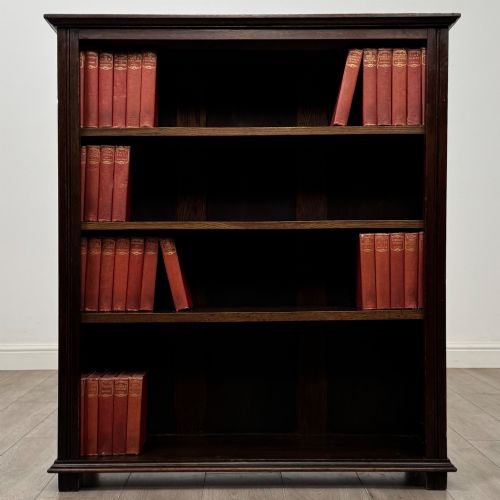
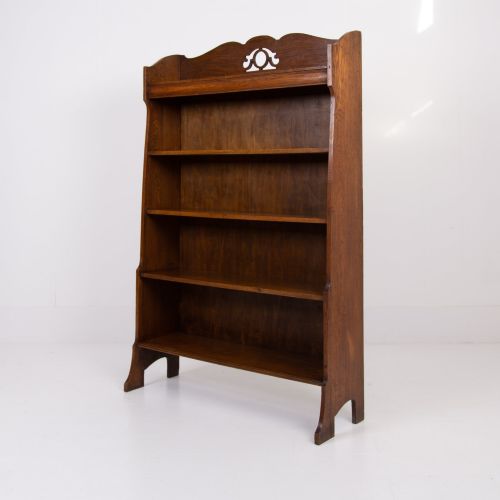
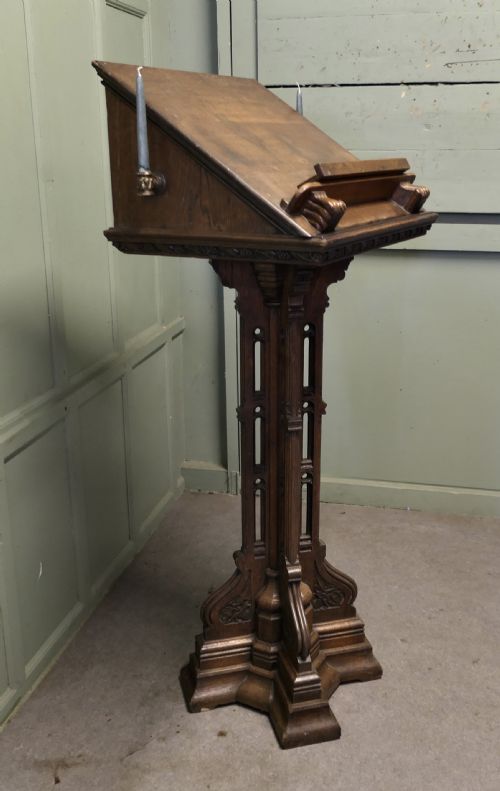
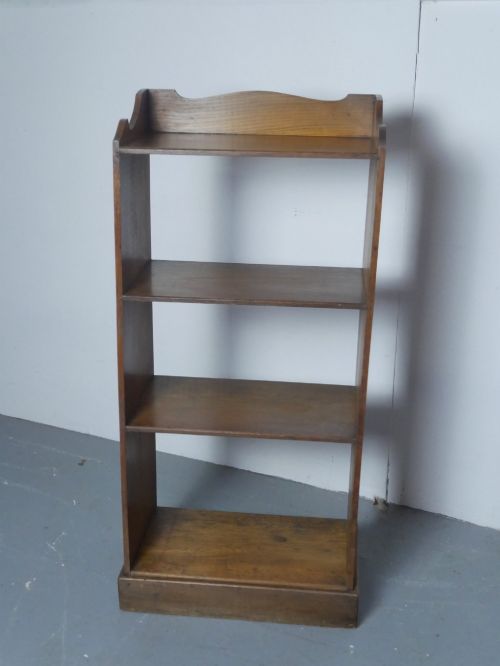
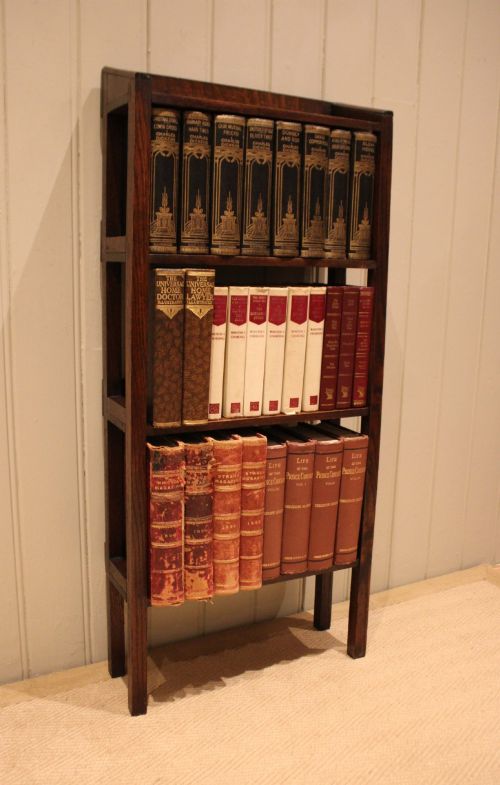

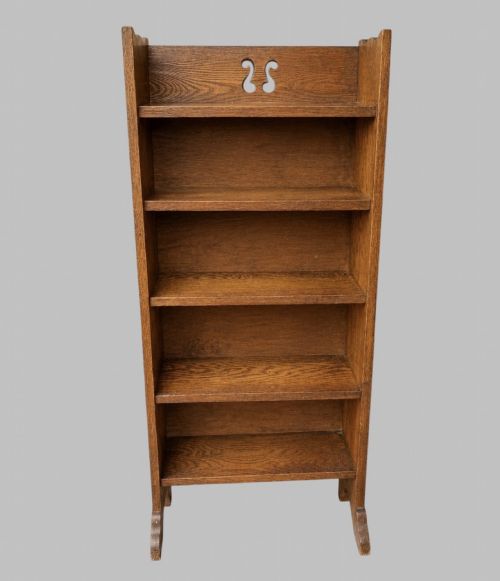
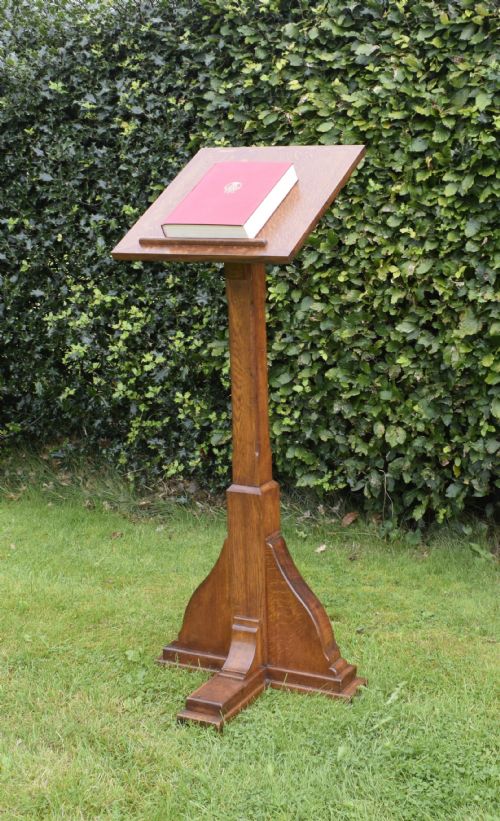
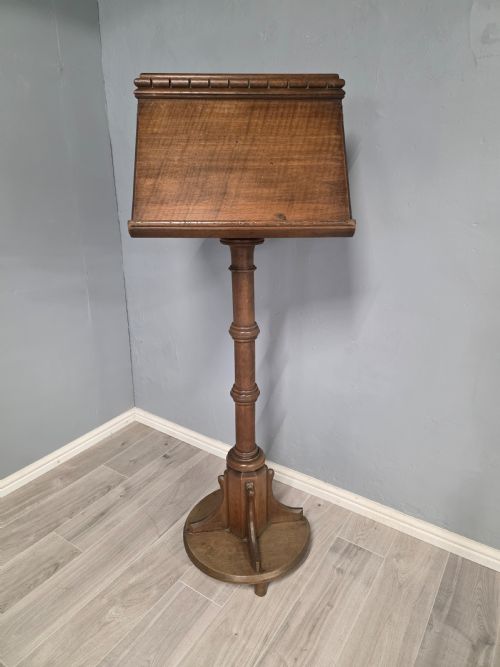


Freestanding Oak Book Stand
A freestanding oak book stand brings robust timber utility to your floor, holding working volumes within easy reach.
Freestanding Oak Book Stand
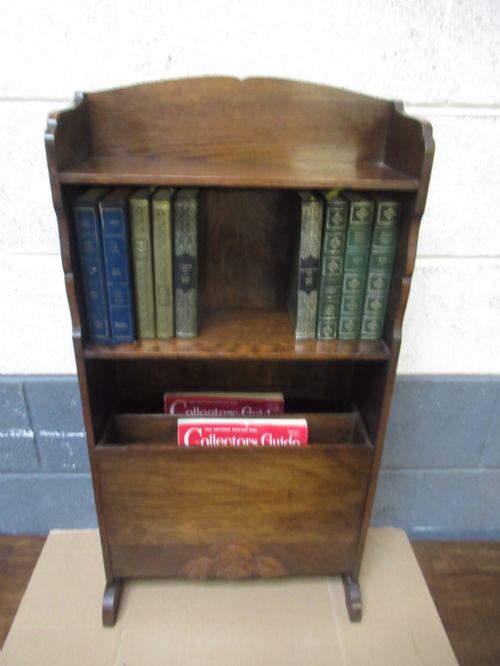
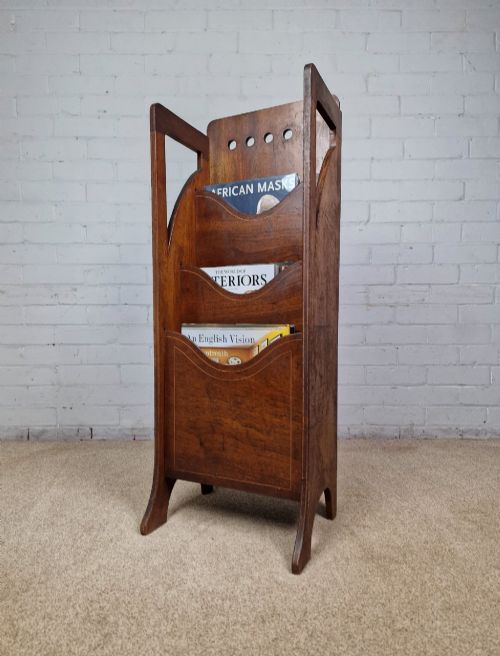
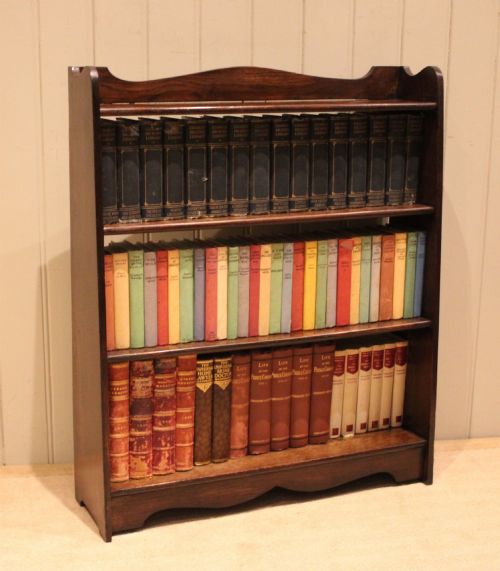
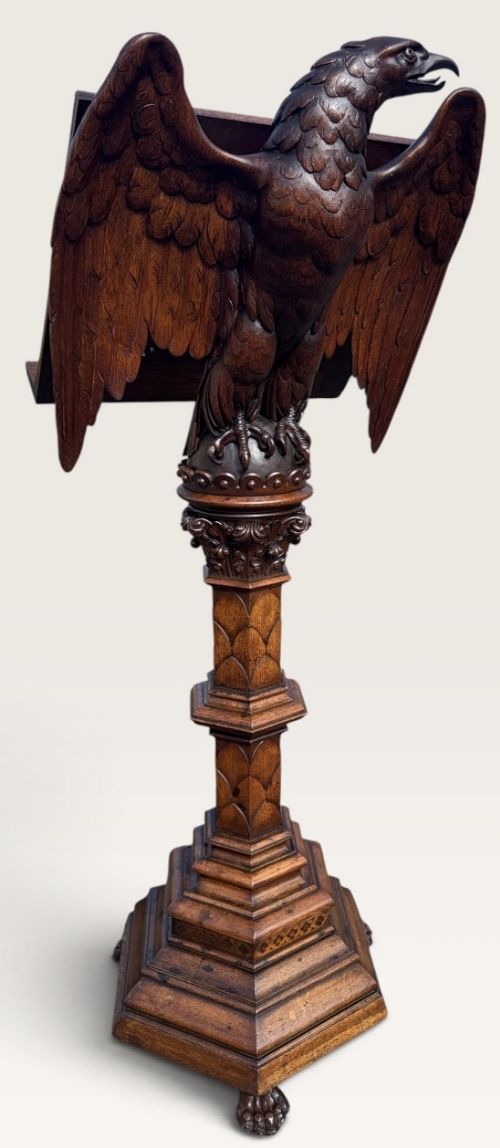
A freestanding oak book stand serves as a portable library piece, designed to hold volumes upright or at an angled reading slant without wall support. The examples you find here span the Victorian, Edwardian, and Art Deco periods, alongside robust Arts and Crafts and Gothic Revival designs.
Materials and construction methods
Carpenters relied primarily on solid oak, frequently finished in a golden or blonde tone that highlights the natural grain. Brass fittings appear regularly, particularly on adjustable mechanisms, castors, and decorative brackets.
Joinery methods range from simple open shelving units to carved panels and decorative cut-outs characteristic of the Arts and Crafts movement. Some pieces incorporate moulding to the front or pivoting revolving mechanisms supported on sturdy timber frames.
Freestanding Oak Book Stand Retail Price Guide 2026
Typical asking prices for freestanding oak book stand among the pieces listed under this phrase on Sellingantiques today, from the lower quarter to the upper quarter. They describe what is for sale here now, not the wider market.
Listings on this site range from nineteenth-century Victorian Gothic Revival pieces to 1930s Art Deco designs in oak and brass.
Factors of distinction
Quality rests in the weight of the timber and the depth of the carving, moving from plain utility pieces to richly detailed Gothic Revival or Arts and Crafts examples. Superior items often feature thoughtful details such as decorative cut-outs, moulded fronts, or functional castors.
The integrity of the construction determines longevity, with solid oak frames holding firm over decades of daily use. Finer pieces demonstrate careful attention to proportions and balanced timber selection across open backs, tiered shelves, and reading slopes.
The Freestanding Oak Book Stand Glossary
- Freestanding
- Designed to stand away from walls on its own base, allowing access from multiple sides. This makes placement flexible in a room.
- Arts and Crafts
- A design movement prioritising traditional craftsmanship and visible construction. It often uses plain oak with subtle decorative cut-outs.
- Lectern
- A slanted reading stand designed to hold a book at a comfortable angle for a speaker or reader. They frequently appear in church or library contexts.
- Revolving bookcase
- A compact shelving unit engineered to rotate on a central pivot base. This mechanism allows a reader to browse multiple directions of volumes from a single spot.
- Gothic Revival
- A nineteenth-century style drawing on medieval architectural motifs. Pieces in this tradition display pointed arches, tracery, and heavy carved details.
Freestanding Oak Book Stand: Frequently Asked Questions
Where should I place a freestanding oak book stand?
These pieces suit placement beside a reading chair, at the end of a desk, or as a room divider since they need no wall support. Their open format keeps everyday reference volumes close at hand.
Ensure the stand has adequate clearance around it if the design includes rotating tiers or slanted reading ledges.
How do I care for oak furniture?
Dust the timber regularly with a dry cloth and keep the piece away from direct heat sources and strong sunlight to prevent the oak from drying out.
Occasional application of suitable wax helps maintain the lustre of the golden or blonde wood grain without buildup.
Are the shelves adjustable?
Many Edwardian and Arts and Crafts examples feature adjustable shelving to accommodate varying book sizes. You simply reposition the shelf supports within the vertical slots.
Fixed shelves appear more frequently on simpler or earlier nineteenth-century utility bookcases.
How do I date an oak book stand?
Look to the decorative vocabulary, such as geometric Art Deco mouldings, medieval Gothic Revival carvings, or simple functional lines typical of the Arts and Crafts movement. Period signatures also emerge in brass castors and the specific tone of the oak.
Victorian pieces often carry heavier carved ornamentation, whereas Edwardian and 1920s designs tend toward lighter open formats.