

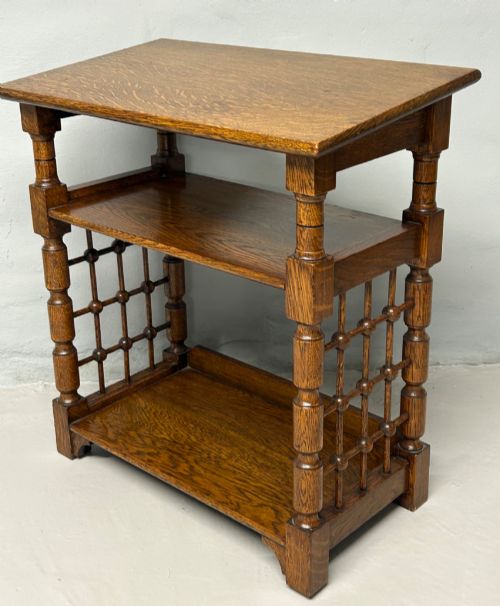


Carved Oak Trough Stand
These carved oak trough stand pieces bring solid timber utility to your home library, offering sturdy support for books and periodicals.
Carved Oak Trough Stand
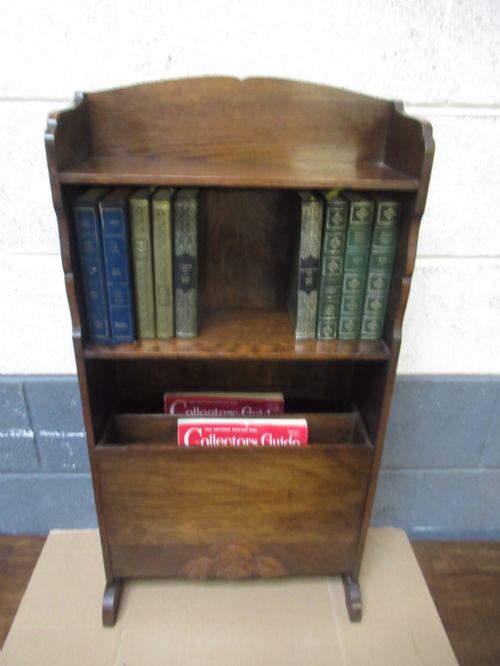
When you search for a carved oak trough stand, you find items designed to hold books, magazines, and other reading material in domestic spaces. These pieces function as book stands, book troughs, magazine racks, and book slides.
The versions you meet on this page hail from the Victorian, Edwardian, and Art Deco periods, alongside 19th-century and 1930s examples. Makers utilised sturdy oak timber for these domestic accessories.
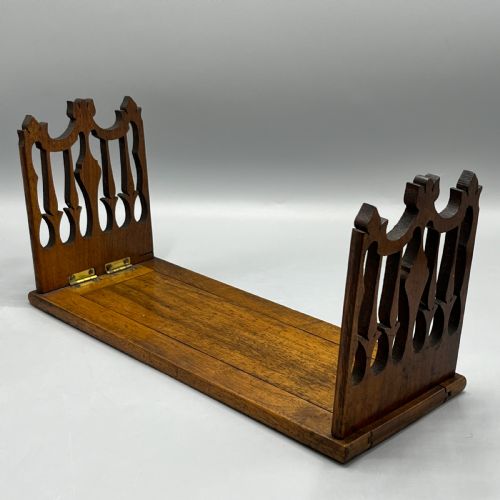
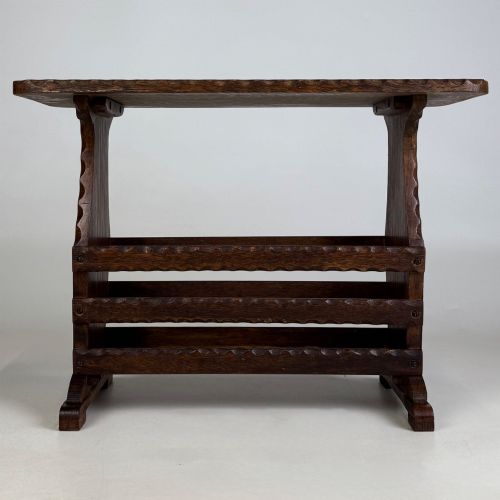
Styles range from Arts and Crafts and Gothic Revival to Art Deco. You encounter table-top revolving bookcases, side tables combined with magazine racks, and extending book slides.
How they were made
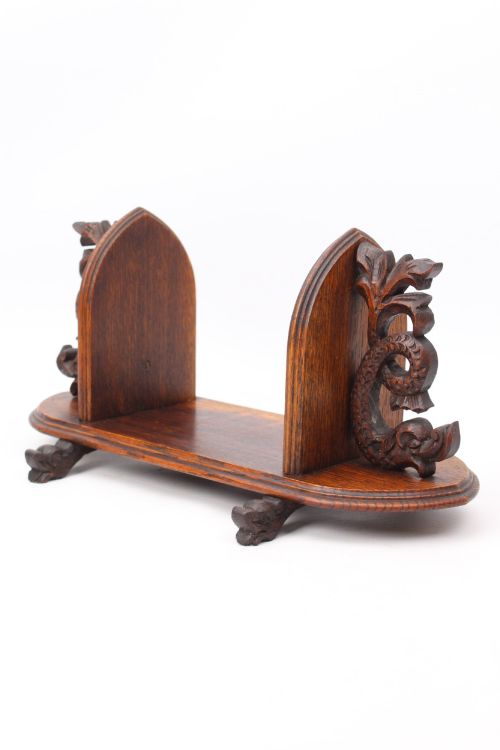
Craftsmen built these items primarily using oak, often incorporating brass details. Carved ornamentation marks many of the examples from the Arts and Crafts and Gothic Revival movements.
Joinery techniques suited to solid timber construction allowed makers to build durable frames for holding heavy volumes and periodicals. Labels occasionally identify specific workshops, such as that of Arthur Simpson.
Carved Oak Trough Stand Retail Price Guide 2026
Typical asking prices for carved oak trough stand among the pieces listed under this phrase on Sellingantiques today, from the lower quarter to the upper quarter. They describe what is for sale here now, not the wider market.
Listings span the Victorian and Edwardian periods into the 1930s, featuring oak construction with brass elements.
What varies in quality
The depth and execution of the carving separate standard items from superior examples. Crisp detailing on Gothic Revival or Arts and Crafts pieces demonstrates a higher level of workshop skill.
The choice of timber grain and the integrity of the oak construction determine the longevity of each book stand or magazine rack. Labeled pieces from known makers add a layer of documented provenance.
Arthur Simpson
The Carved Oak Trough Stand Glossary
- Book trough
- A V-shaped or open-topped receptacle designed to hold books upright on a desk or table. This form keeps volumes organised and accessible in a home library.
- Gothic Revival
- An architectural and decorative style drawing inspiration from medieval forms. Pieces in this taste often feature pointed arches and heavy carved oak.
- Arts and Crafts
- A design movement valuing handcraftsmanship and simple construction. Items from this tradition display honest use of oak timber and understated carved details.
- Book slide
- An extending wooden stand designed to hold a varying number of volumes between two upright ends. It adjusts in length to fit the shelf or table.
Carved Oak Trough Stand: Frequently Asked Questions
What is a carved oak trough stand used for?
These pieces serve as practical holders for books, magazines, and periodicals in studies and sitting rooms. They keep current reading material organised and within arm's reach.
Historically, they sat upon tabletops, side tables, or directly on the floor beside reading chairs. Their open troughs allowed for quick selection of volumes throughout the day.
How do I date an oak book stand?
Dating relies on the prevailing style, construction methods, and any surviving labels or stamps. Victorian and Edwardian pieces often display specific Gothic Revival or Arts and Crafts motifs.
Examining the grain of the oak and the type of fixings used helps distinguish nineteenth-century examples from later 1930s Art Deco pieces.
Are these stands suitable for heavy books?
Solid oak construction provides the necessary strength to support heavy volumes and reference books. The rigid timber frame prevents warping under a load of literature.
Larger bookcases and trough stands handle substantial libraries, while smaller table-top stands suit lighter periodicals and daily reading.
What styles are common in these oak stands?
Arts and Crafts and Gothic Revival styles dominate this category, reflecting popular tastes from the Victorian and Edwardian eras. These designs emphasise natural wood finishes and carved details.
Later pieces from the 1930s occasionally adopt Art Deco forms, introducing different sculptural elements like carved animal figures to the oak framework.