




Antique Opal Band
These antique opal band rings combine fiery stones with precious metal, offering a distinct piece of jewellery history for everyday wear.
Antique Opal Band
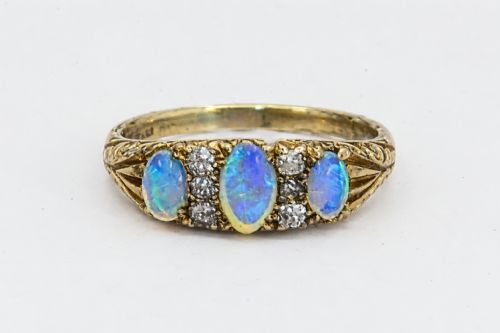
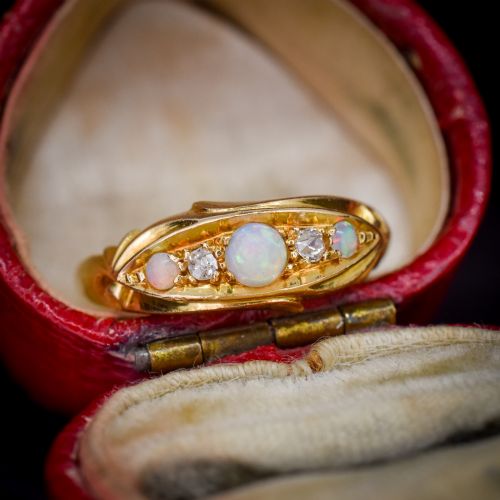
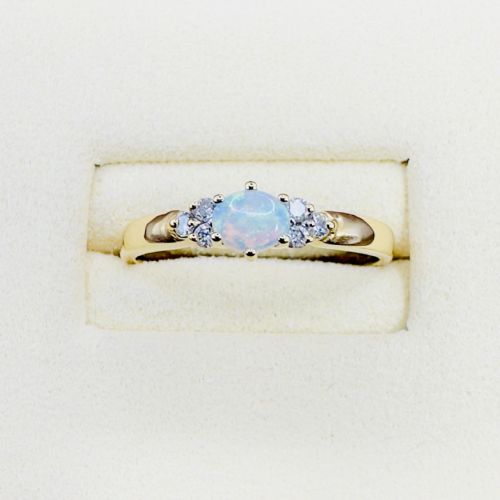
An antique opal band brings together shimmering stones and precious metal in formats that range from simple multi-stone arrangements to boat-shaped settings. When you search for an antique opal band, you encounter pieces primarily from the Victorian and Edwardian eras, alongside select examples from around nineteen hundred. These rings frequently pair opals with diamonds in gold mountings, creating a striking contrast between the play-of-colour in the stones and the warmth of the metal.
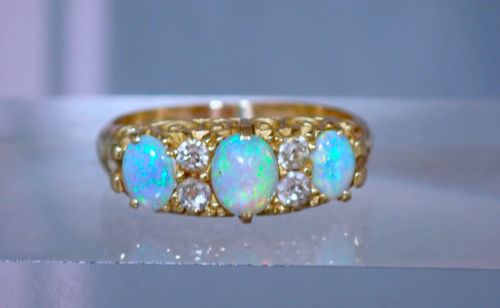
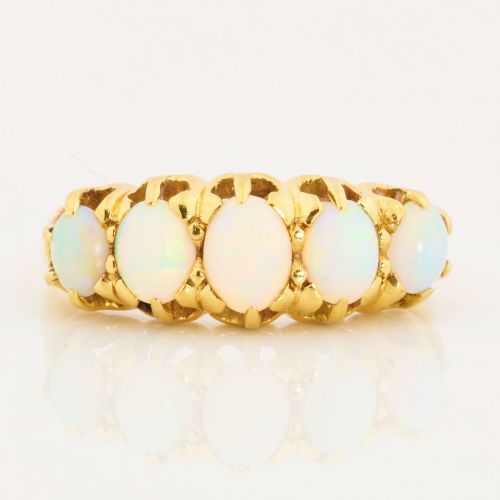
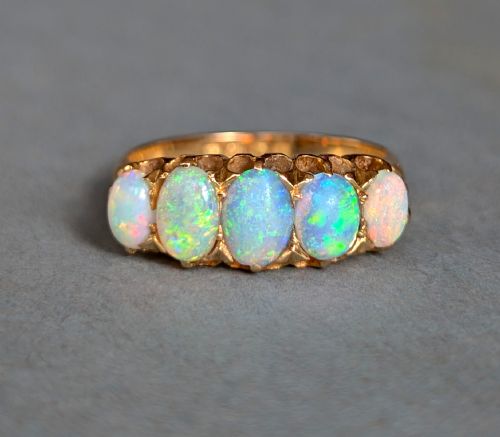
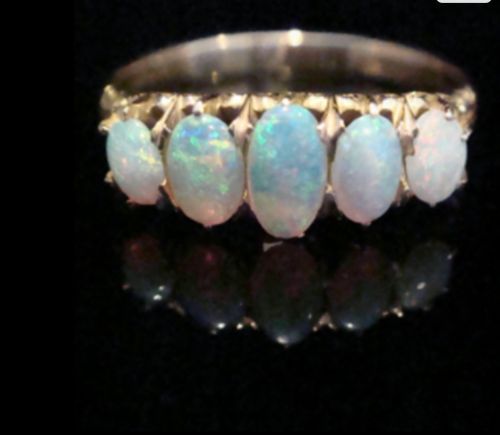
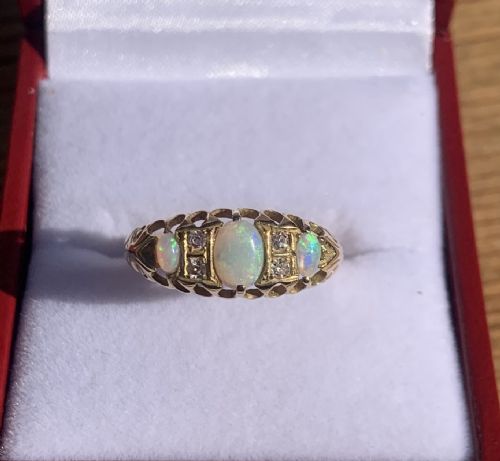
The configurations on this page span five-stone rows, trilogy designs, and stack rings fashioned in yellow gold. Most examples rely on eighteen-carat gold bands to support the gems, whether housing white opals or solid natural stones. Buyers find both delicate child-sized bands and larger rings bearing full hallmarks from assay offices like Chester and Birmingham.
Whilst the selection leans heavily towards turn-of-the-century craftsmanship, occasional Victorian iterations and earlier historical periods appear in the archive. These bands serve as both historic artefacts and wearable ornaments, prized for the shifting spectral colours inherent in genuine opals.
Materials and construction
Craftsmen built these bands predominantly using eighteen-carat yellow gold, shaping the metal to hold natural opals alongside diamonds. The stones are secured in claw or boat settings that showcase the cabochon cut of the opals, allowing light to enter from multiple angles and ignite the internal fire.
Makers incorporated accent stones such as old-cut and rose-cut diamonds to frame the central opals in multi-stone configurations. Hallmarks stamped directly into the gold bands provide traceable evidence of origin, marking the city and year of assay for individual pieces.
Child-sized Edwardian rings occasionally surface alongside standard sizes, offering a glimpse into past gifting traditions.
What sets examples apart
Quality in these rings rests upon the intensity of the play-of-colour within the opal and the integrity of the gold setting. Stones displaying vibrant spectral flashes command greater attention than those with muted or dormant internal colours.
The preservation of the original mountings and the clarity of the assay hallmarks significantly influence the character of each piece. Heavier eighteen-carat gold bands that retain their original gauge and secure stone settings represent the superior end of surviving examples.
The Antique Opal Band Glossary
- Cabochon
- A gemstone shaped and polished with a smooth convex surface rather than faceted. This cut is standard for opals as it best displays their internal play-of-colour.
- Play-of-colour
- The optical phenomenon where a stone flashes shifting spectral colours as light interacts with its internal microscopic structure. This is the defining characteristic of a quality opal.
- Boat ring
- A ring setting shaped like the hull of a boat, curving upwards towards the centre to house a row of graduated stones. This style is common in Edwardian and late-Victorian jewellery.
- Trilogy ring
- A ring featuring three primary stones set in a row, often interpreted symbolically as representing the past, present, and future. These frequently combine opals with flanking diamonds.
- Hallmark
- An official stamp applied to precious metals indicating the purity of the gold and the location and date of assay. These marks provide definitive historical context for antique pieces.
Antique Opal Band: Frequently Asked Questions
Are antique opal bands wearable daily?
Opals possess a moderate hardness and require thoughtful care during routine wear to avoid impact damage against hard surfaces. Owners generally remove them before engaging in strenuous physical tasks.
Selecting a band with a secure setting helps protect the stone from accidental knocks while allowing regular enjoyment of the jewellery.
How do I identify a Victorian opal ring?
Victorian pieces often feature deeper yellow gold tones and heavier mounting styles compared to later Edwardian examples. Examining the overall proportions and setting techniques provides initial clues to the period.
Assay marks stamped inside the band offer the most reliable confirmation of the exact manufacturing date and origin.
What is a five stone opal ring?
A five-stone ring displays a horizontal row of five gems stretching across the top of the finger. In antique pieces, these are frequently interspersed with smaller diamonds.
This symmetrical arrangement was popular around the turn of the twentieth century, creating a balanced band suitable for stacking or standalone wear.
How should I clean an antique opal?
Opals are sensitive to sudden temperature changes and harsh chemical cleaning agents. Wiping the stone gently with a soft, damp cloth is the safest method for removing surface dust.
Immersion in ultrasonic cleaners or chemical dips should be strictly avoided to prevent fracturing the opal or damaging the gold setting.