
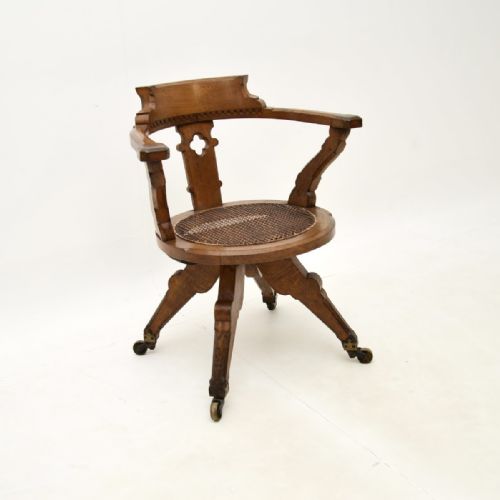


Antique Oak Swivel Chair
An antique oak swivel chair brings sturdy timber rotation to a study, combining mechanical adjustment with traditional office design.
Antique Oak Swivel Chair
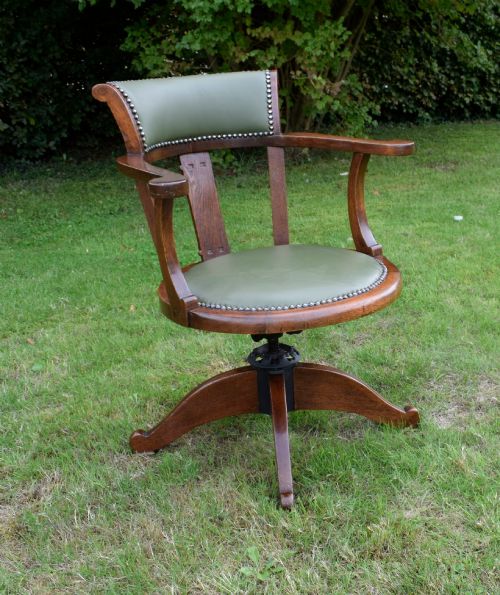
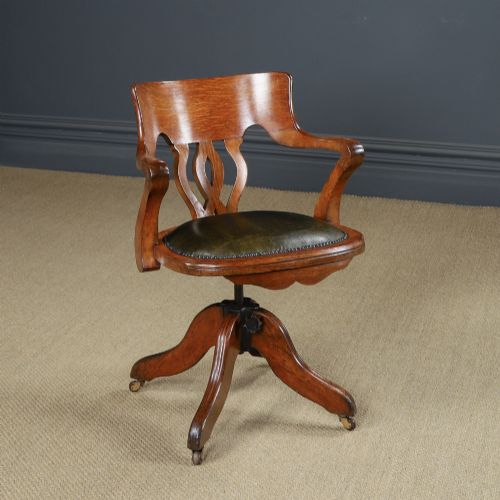
An antique oak swivel chair serves as a practical workspace seat built for rotation and stability. These pieces emerge predominantly from the Victorian, Edwardian and early twentieth-century periods, spanning the decades between eighteen seventy and nineteen thirty.
Buyers will most frequently encounter desk and office variants, though ship chairs and captain's chairs also appear. The timber framework relies firmly on oak, frequently paired with leather, cast iron and brass components.
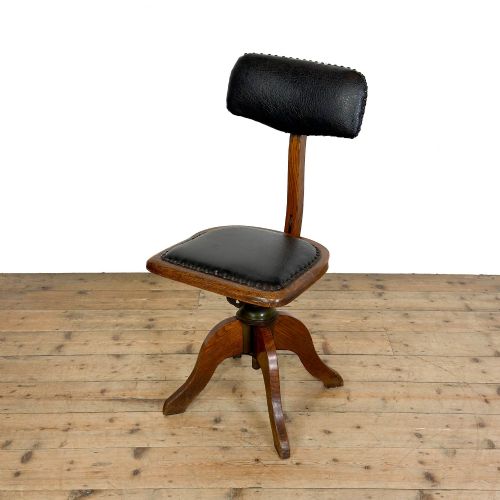
The assortment includes domestic library chairs alongside industrial workshop variants and maritime seating. Such designs reflect the utilitarian demands of late nineteenth and early twentieth-century working environments.
How They Were Made
Construction centres on solid oak timbers, occasionally supplemented by beech, shaped into curved backs and supportive armrests. Craftsmen utilised leather, hide and upholstery for seats, fastening them with metal studs.
Mechanical rotation and height adjustment depend upon cast iron and steel spindles, often accompanied by brass fittings. Some examples incorporate bentwood techniques to form rounded backrests without heavy joints.
Antique Oak Swivel Chair Retail Price Guide 2026
Typical asking prices for oak swivel chair among the pieces listed under this phrase on Sellingantiques today, from the lower quarter to the upper quarter. They describe what is for sale here now, not the wider market.
Listings incorporate oak, leather, cast iron and steel across Victorian and Edwardian desk, office and ship chairs.
What Varies in Quality
The sophistication of the mechanical swivel and tilt mechanism differentiates basic desk chairs from more complex examples. Heavier carving and integrated upholstery systems denote higher grade workshop production.
The selection of materials creates a distinct tier between standard oak frames and those enhanced with specialist leather hides, detailed woodworking, or robust cast iron bases.
S&H Jewell·P & O·Evertaut·Kendrick & Jefferson·Edward William Godwin·Hale & Kilburn
The Antique Oak Swivel Chair Glossary
- Swivel
- A mechanical pivot permitting the chair top to rotate fully around its base. This function allowed clerks and officers to reach different parts of a desk without moving the entire seat.
- Captain's Chair
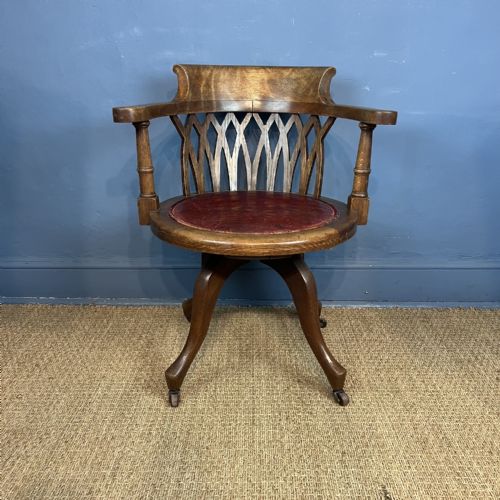
- A low-backed wooden armchair designed for comfort and stability at a desk. These often feature spindle-turned supports and curved back rails.
- Cast Iron
- A sturdy metal alloy utilised for the underframes, bases and adjustment mechanisms of swivel seating. It provided the necessary weight to keep the user balanced during rotation.
- Gothic Revival
- A nineteenth-century design style drawing inspiration from medieval architecture. Pieces from this movement display pointed arches, heavy mouldings and detailed tracery carved into the oak.
- Tilt
- A mechanical function allowing the seat and backrest to lean backward against spring resistance. This movement accommodated different sitting postures during long working hours.
Antique Oak Swivel Chair: Frequently Asked Questions
What periods do these chairs come from?
The available selection primarily spans the Victorian era through the Edwardian period and into the early twentieth century. Most examples date from eighteen seventy to nineteen thirty.
Construction styles shift gradually across these decades, moving from ornate Gothic Revival and carved maritime designs towards simpler industrial and office forms by nineteen thirty.
How do the swivel and tilt mechanisms work?
These seats rely on iron and steel spindles fitted beneath the wooden platform to permit full rotation. Many incorporate a tilt action controlled by springs.
Adjustment mechanisms allow the user to alter the height and tension, reflecting the emerging ergonomics of late Victorian offices and shipboard environments.
What materials are used in these chairs?
Solid oak forms the primary structural timber, occasionally supported by beech components in bending elements. Seats are frequently upholstered in leather, tan hide or green leather.
Metal parts consist of cast iron, brass and steel, particularly within the revolving bases, spindles and fastening hardware.
Were these chairs used in offices or ships?
The designs served multiple environments, appearing in domestic libraries, commercial offices and shipboard cabins. Maritime variants, such as P and O ships chairs, were weighted for stability at sea.
Office and desk chairs prioritised mobility for clerks, while industrial workshop variants utilised simpler metal frames suited to prolonged daily use.