





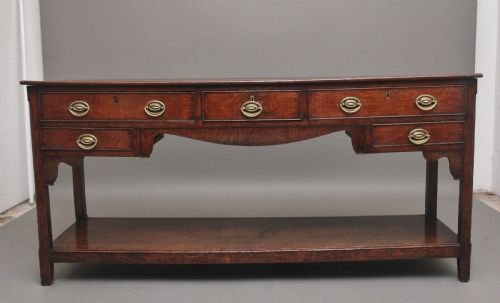

Antique Oak Potboard Table
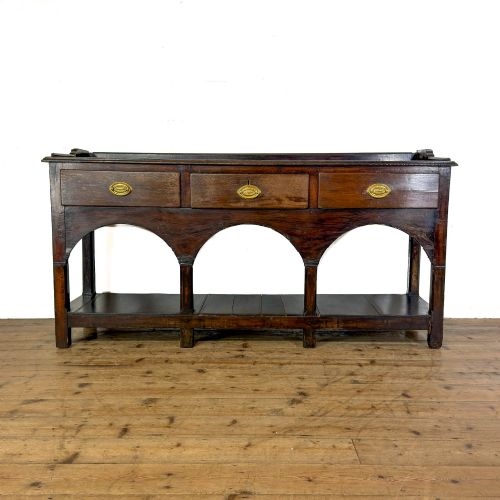
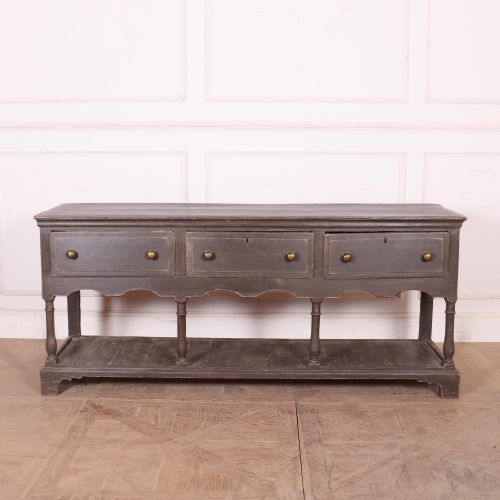
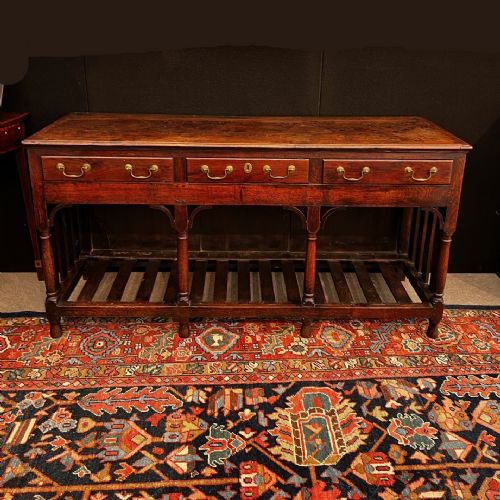
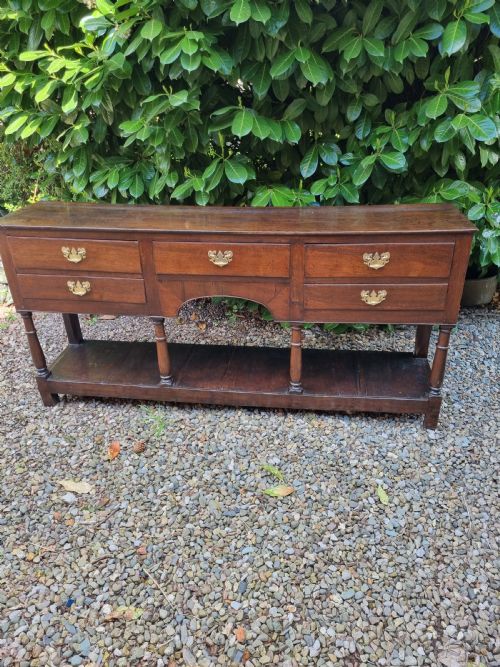
An antique oak potboard table delivers sturdy timber construction with a useful lower shelf for storage.
Antique Oak Potboard Table
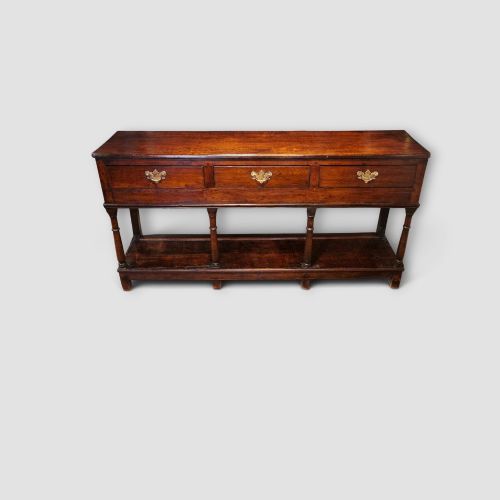
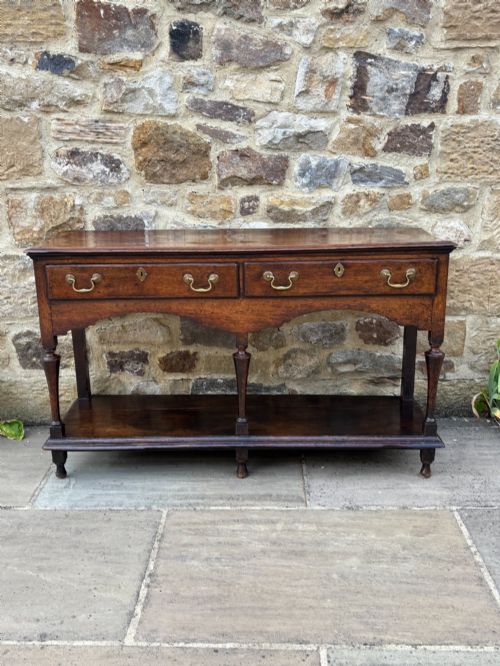
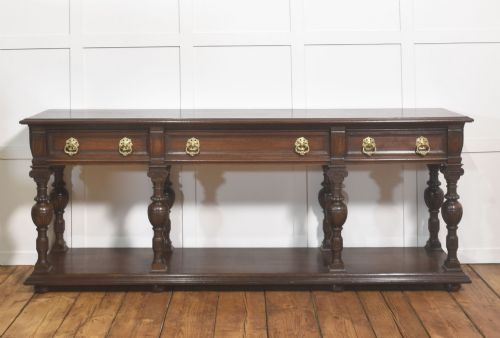
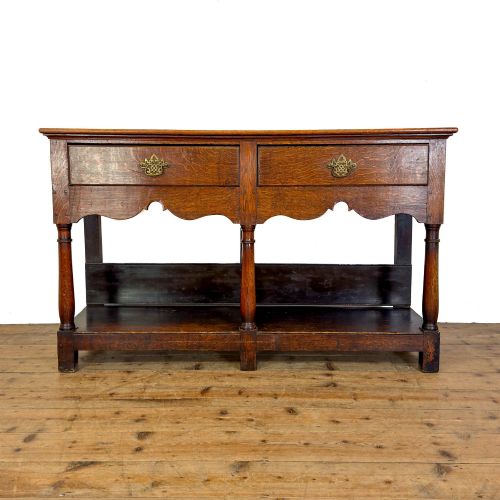
An antique oak potboard table combines a solid timber top with a low open shelf near the floor, historically used for resting pots and utensils. These pieces frequently appear as dresser bases, sideboards, and country tables dating from the eighteenth century onwards.
Most examples originate from English, Welsh, or French regional traditions, often displaying the robust proportions typical of country furniture. Makers utilised local hardwoods to build functional surfaces that served kitchens and dining halls alike.
Buyers encounter variations ranging from plain eighteenth-century Georgian formats to later nineteenth-century interpretations and twentieth-century revival styles. Certain pieces incorporate drawers across the front alongside the characteristic lower potboard tier.
Materials and construction methods
Joiners relied principally on oak, supplemented occasionally by elm for secondary elements or structural boards. Timber surfaces often display natural grain patterns developed through traditional hand planing and sawing techniques.
Selected pieces feature painted finishes or bleached treatments applied during later periods of use or restoration. Brass hardware such as drawer pulls appears on specific Georgian and later examples.
Construction methods involved pegged joints and sturdy framing designed to support heavy domestic use over centuries. Carved detailing on certain panels reflects Jacobean style influences and regional woodworking traditions.
Current listings feature oak as the primary material, alongside elm and painted timber across Georgian, Victorian, and twentieth-century periods.
Assessing quality in regional furniture
The standard of an antique oak potboard table depends heavily on the integrity of its timber and the retention of original structural components. Superior pieces exhibit balanced proportions, such as smaller scale formats, which command greater interest among collectors.
Surface patination plays a central role in the visual appeal, where decades of handling produce a rich, warm tone on the oak. Alterations to the lower potboard or replaced timber elements distinguish utilitarian workshop repairs from untouched original condition.
The Antique Oak Potboard Table Glossary
- Potboard
- The low open shelf positioned near the base of a dresser or table, designed originally to hold heavy pots and earthenware. This lower tier defines the primary utility of the furniture type.
- Dresser base
- The lower portion of a kitchen or dining room storage unit, frequently constructed with drawers above a potboard or cupboards. These items function independently as sideboards or serving tables.
- Patina
- The surface sheen and colour depth acquired by timber through age, light exposure, and regular cleaning over generations. A desirable patina signals genuine antique status.
- Elm
- A tough, interlocking hardwood often utilised alongside oak in regional country furniture for structural parts or secondary boards. Its distinct grain resists splitting under heavy strain.
Antique Oak Potboard Table: Frequently Asked Questions
What is an antique oak potboard table?
It is a heavy wooden table or dresser base featuring a low open shelf near the floor for storage. Regional workshops built these pieces primarily from oak to serve demanding domestic tasks in kitchens and dining spaces.
Over time, these utility surfaces developed rich patinas and varied in format from plain Georgian designs to carved revival styles. The lower potboard distinguishes them from standard side tables.
How do I date an antique oak dresser base?
Dating relies on examining construction marks, timber preparation methods, and stylistic details such as drawer configuration and leg profiles. Eighteenth-century examples often display pegged joinery and hand-planed boards without modern hardware.
Later nineteenth-century and early twentieth-century pieces incorporate revival elements or machine-sawn timber characteristics. Comparing the hardware and overall proportions helps clarify the period of manufacture.
Where were these tables made?
Makers constructed these items across English, Welsh, and French rural workshops to serve local households. Regional variations emerge in the drawer counts, timber selection, and decorative carving styles.
English and Welsh country pieces frequently utilise solid oak and elm, while continental examples show distinct regional framing techniques. Each origin reflects the local materials available to country joiners.
How should I care for oak furniture?
Maintain the timber by keeping it away from direct heat sources and sudden humidity shifts that cause wood to split. Regular dusting with a dry cloth preserves the natural finish without building up heavy wax layers.
Avoid harsh chemical cleaning products that strip the historical patina from the oak surface. Gentle care ensures the joints and boards remain stable for daily use.