
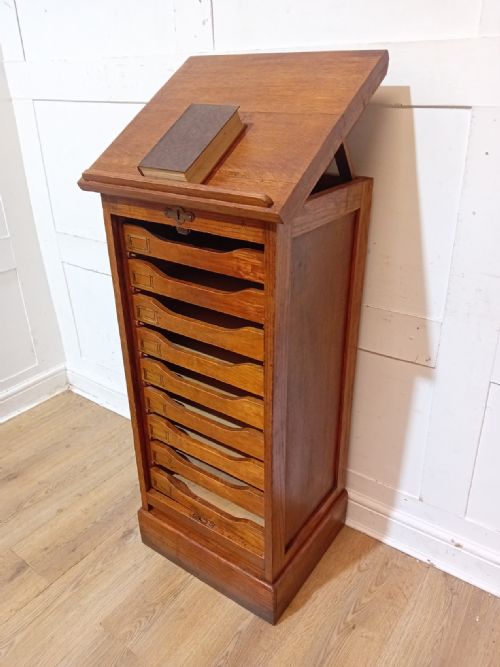


Antique Oak Filing Chest
An antique oak filing chest brings robust workspace utility and handsome quarter-sawn grain into a modern room with effortless gravity.
Antique Oak Filing Chest
An antique oak filing chest offers sturdy storage solutions designed for office and study organisation, drawing on decades from the Victorian era through the mid-twentieth century. Buyers searching this phrase encounter heavy timber constructions intended for letters, documents, and ledgers in professional and domestic settings.
How they were made
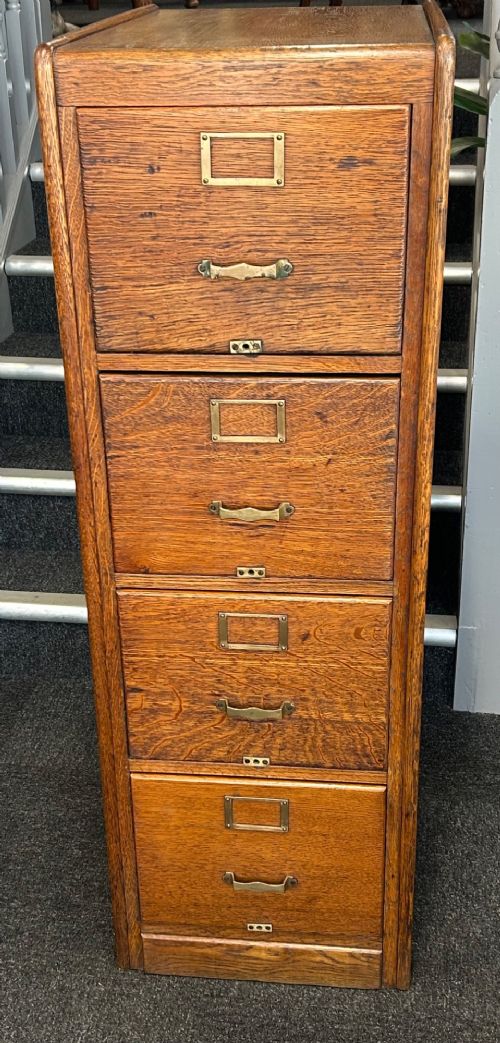
Construction relies primarily on solid oak, chosen for its durability and prominent grain pattern, supplemented by internal pine framing and wood panels. Carcasses are joined with traditional methods to withstand daily office use and heavy paper loads.
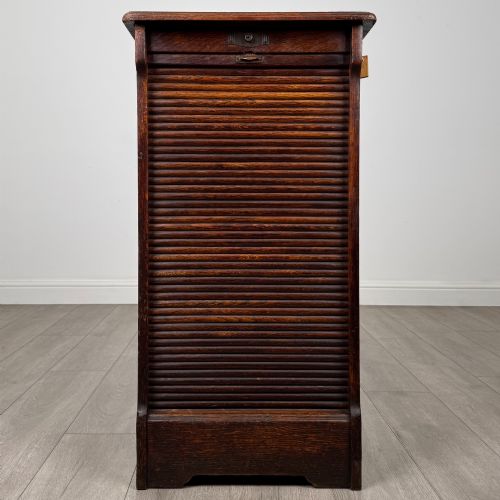
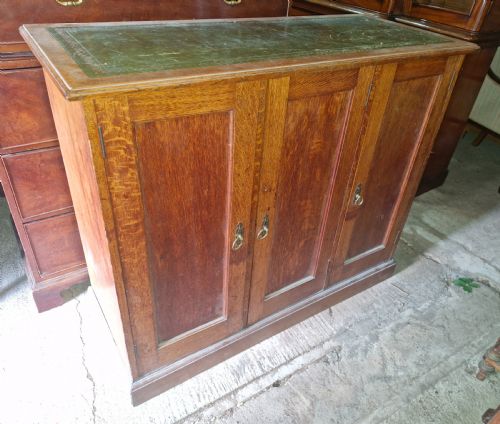
Hardware consists of brass pull handles, metal label holders, and occasionally canvas or leather accents, pairing utilitarian strength with functional metalwork. Tambour doors utilise slatted wooden strips running in tracks to conceal shelving spaces.
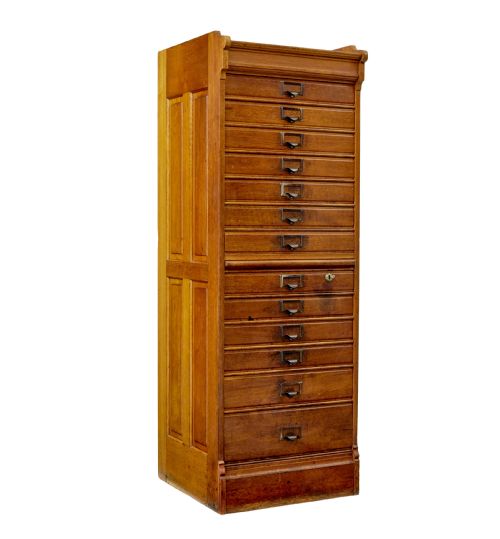
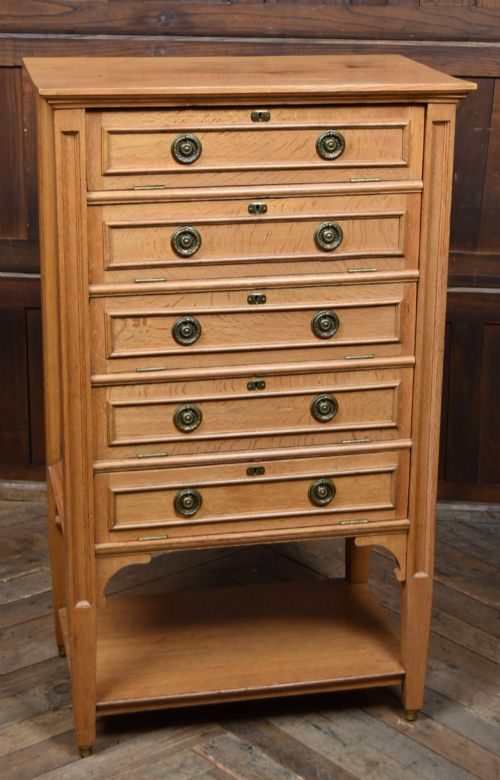
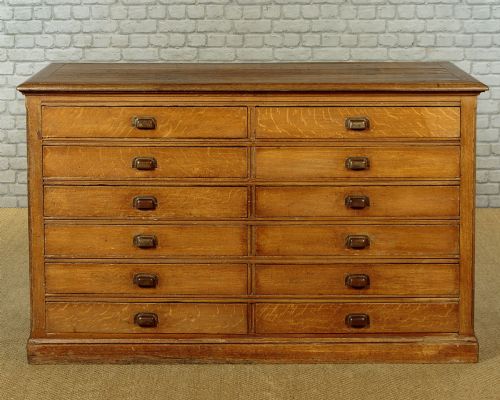
Object forms include music cabinets, tambour units, plan chests, and banks of drawers equipped with period brass handles.
What varies in quality
Quality separates simple utilitarian storage from refined commercial furniture through the complexity of the mechanism, such as patented letter filing systems or smooth-sliding tambour doors. Finer examples display superior timber selection with consistent oak figuring across the entire facade.
The execution of brass hardware and the presence of maker attribution, like specialised cabinet works, elevate specific items above standard office issue. Construction weight and panel thickness also dictate the longevity and substantial feel of the piece.
Maple and Co·Amberg·Shannon
The Antique Oak Filing Chest Glossary
- Tambour cabinet
- A piece featuring flexible wooden shutters that slide in tracks to enclose shelves. This mechanism saves space by eliminating swinging doors in cramped office environments.
- Plan chest
- A wide, shallow set of drawers designed for storing large architectural drawings and maps. These pieces provide expansive flat surfaces paired with low-profile storage.
- Wellington chest
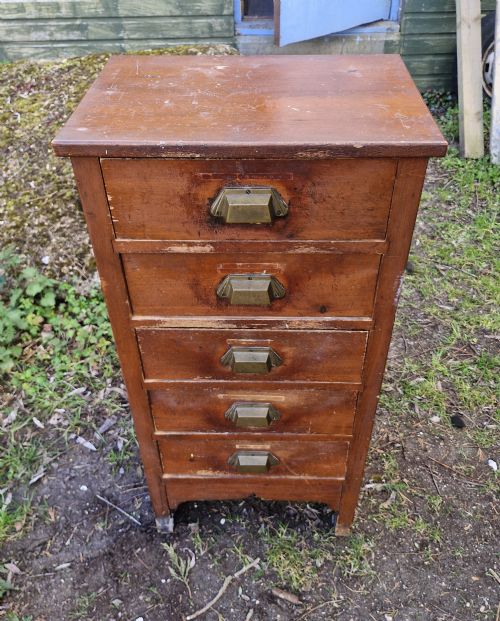
- A tall, slender stack of drawers secured by a locking hinged side pilaster that fastens over the drawer edges. It offers secure vertical storage for documents.
- Haberdashery cabinet
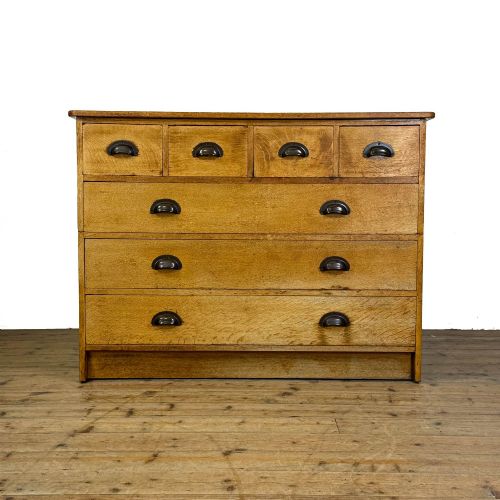
- A multi-drawer unit originally built for retail shops to sort small dry goods. They translate effectively into domestic settings for organising papers and accessories.
- Lecturn top
- A slanted writing surface incorporated into the upper section of a cabinet. This feature combines standing desk functionality with enclosed filing space underneath.
Antique Oak Filing Chest: Frequently Asked Questions
What fits inside an antique oak filing chest?
These chests accommodate standard papers, ledgers, and small office supplies within banks of shallow drawers or specialised letter files. Deeper drawers and plan chests handle larger documents and oversized folios.
Interior configurations vary by model, ranging from narrow card index slots to wide shallow tiers built for architectural sheets. Adjustable shelving inside cupboards offers flexibility for storing books and larger boxes.
How do I care for antique oak office furniture?
Maintain the timber by applying natural beeswax periodically to nourish the dry oak surface and protect the grain. Avoid placing pieces near direct heat sources or in fluctuating humidity to prevent wood movement.
Clean brass hardware gently with a soft cloth without abrasive polishes to preserve the patinated finish. Keep drawers running smoothly by occasionally clearing dust from the runners.
How do I distinguish Edwardian filing chests from Victorian ones?
Victorian filing chests generally exhibit heavier proportions, darker finishes, and more ornate brass handles or lecturn additions. They often reflect robust manufacturing suited to nineteenth-century administrative offices.
Edwardian pieces lean toward slightly lighter oak tones and simpler functional lines suited to modernizing workspaces. Patent locking mechanisms and tambour doors also became more prevalent during the Edwardian period.
Can I use a filing chest in a modern living room?
An antique oak filing chest serves well as a sideboard, media console base, or decorative storage unit in domestic spaces. The rich oak grain and practical drawer layout bring warmth and structured organisation to contemporary interiors.
Lower plan chests function effectively as coffee tables with hidden storage beneath the top surface. Tall cabinets fit neatly into corners or home office corners to conceal clutter.