

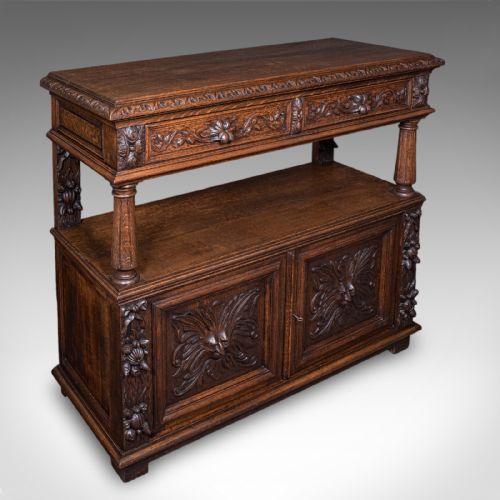


Antique Oak Dining Cupboard
An antique oak dining cupboard brings substantial timber presence to a room, offering heavy carved panels and deep drawers designed for storing silver and linen.
Antique Oak Dining Cupboard
An antique oak dining cupboard encompasses heavy sideboards, servers, dressers, and court cupboards spanning the eighteenth, nineteenth, and early twentieth centuries. These forms served to store and display dining provisions, tableware, and household silver in formal and country settings alike.
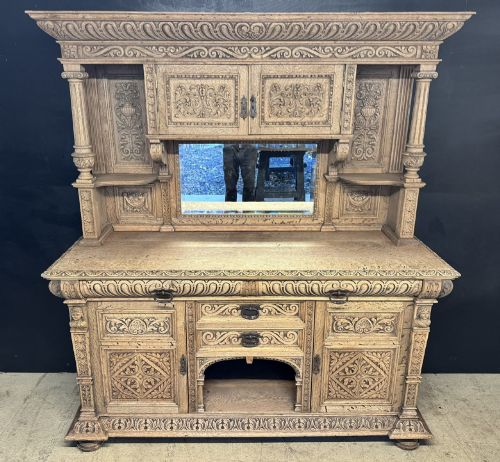
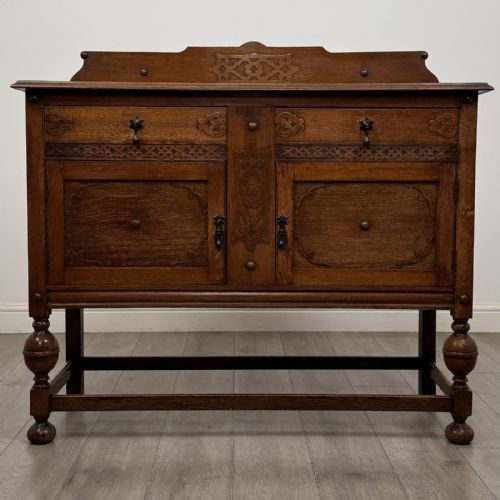
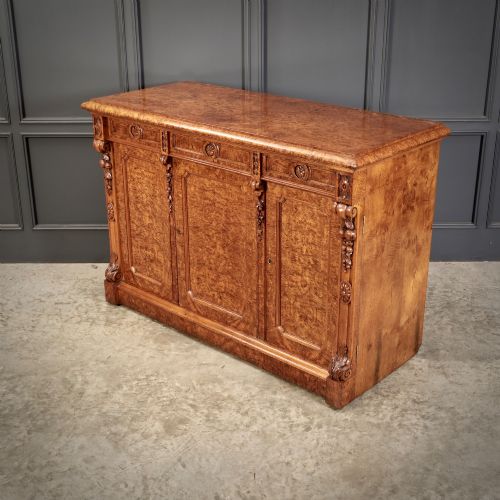
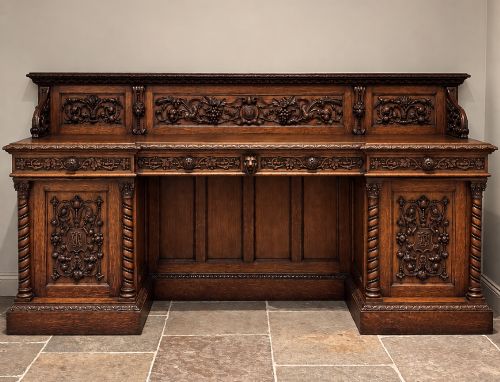
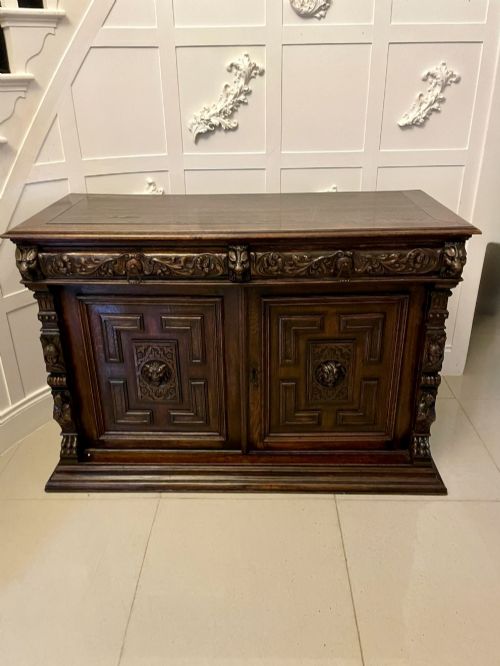
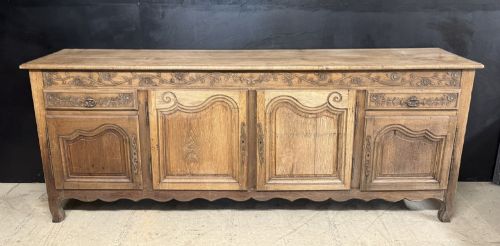
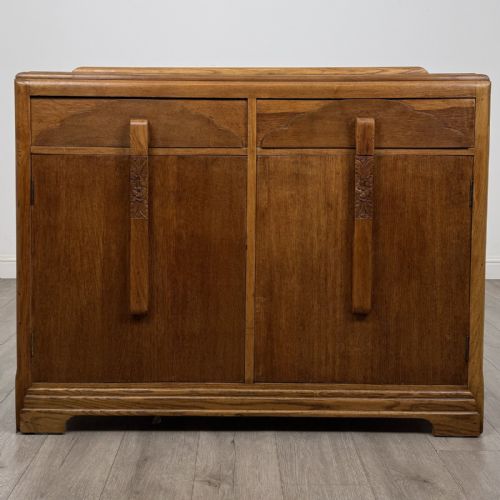
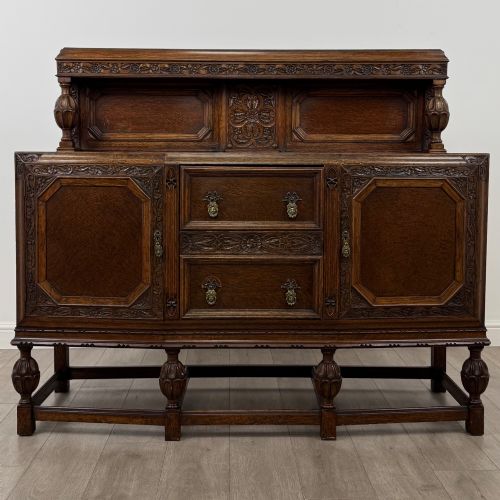
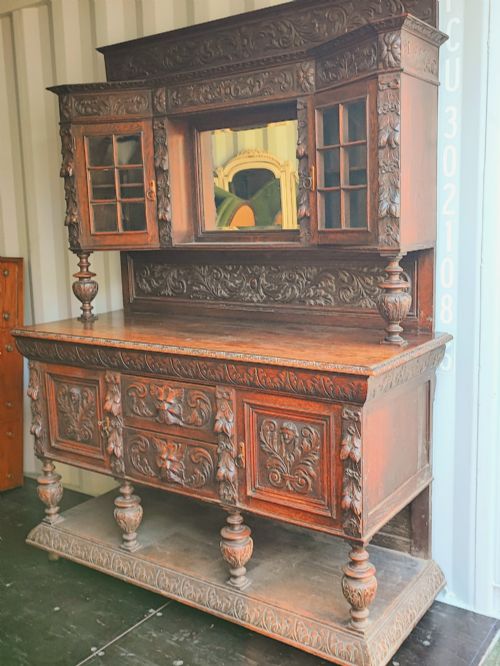
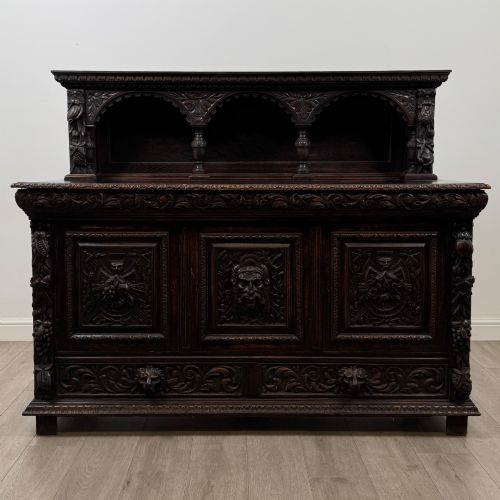
The versions most commonly met on this page include Victorian and Edwardian sideboards alongside earlier eighteenth-century country dresser bases and French provincial buffets. These pieces range from simple panelled constructions to heavily carved iterations featuring green man motifs and stretcher bases.
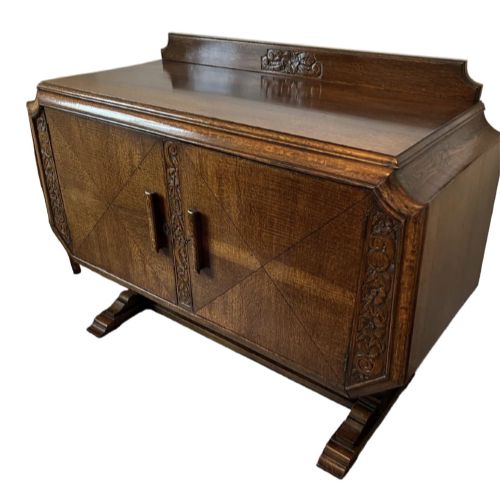
Makers and regional workshops across Britain and continental Europe produced these items using native timbers suited to daily domestic service. Whether configured with breakfront drawers, mirror backs, or raised galleries, each piece reflects the utilitarian dining storage requirements of its period.
Materials and construction methods
Solid oak forms the primary structural material across these pieces, occasionally complemented by distinct veneers like pollard oak, walnut, or secondary woods. Artisans selected timber for grain density and durability, building carcases that withstand heavy domestic use.
Decoration relies heavily on hand carving, geometric panels, and applied mouldings rather than applied ornamentation. Joinery techniques include traditional mortise and tenon joints, hand-dovetailed drawer construction, and panelled backs secured with iron fixings.
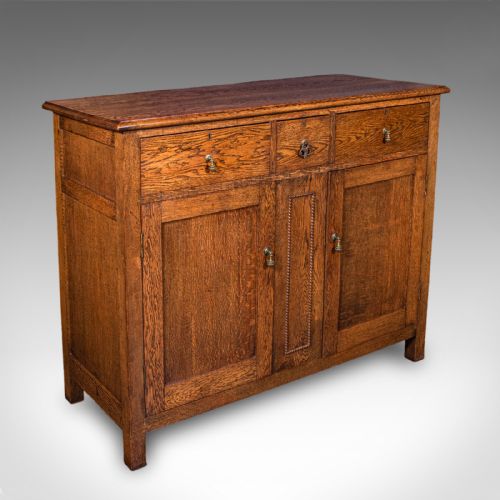
Hardware incorporates brass face handles, drop pulls, and iron hinges selected to match the stylistic period, from early geometric drawer fronts to later Arts and Crafts metalwork.
Antique Oak Dining Cupboard Retail Price Guide 2026
Typical asking prices for oak dining cupboard among the pieces listed under this phrase on Sellingantiques today, from the lower quarter to the upper quarter. They describe what is for sale here now, not the wider market.
Styles span Victorian, Jacobean Revival, Arts and Crafts, French Provincial, Georgian, Edwardian, and Gothic Revival forms.
Markers of quality and execution
The depth and crispness of the carved detail distinguish superior examples from simpler production pieces, particularly on Green Man motifs, panel surrounds, and stretcher bases. Master carvers achieved clean, three-dimensional relief work that retains sharp edges across the timber grain.
Construction heft and timber selection also divide the range, with dense solid oak boards and figured pollard oak veneers marking out higher-grade commissions. Superior pieces maintain structural integrity through thick carcase walls, heavy panelled doors, and solid drawer linings without modern board substitutions.
Maple and Co·Liberty
The Antique Oak Dining Cupboard Glossary
- Court cupboard
- A heavy seventeenth- or nineteenth-century storage piece featuring an enclosed upper section supported by carved pillars above a lower cupboard.
- Enfilade
- A long low buffet or sideboard of French provincial origin designed with multiple doors and drawers across a continuous front.
- Green Man
- A sculptural architectural ornament depicting a human face emerging from or entwined with foliage and vines, frequently carved into Victorian oak furniture.
- Stretcher base
- A horizontal timber framework connecting the lower legs of a sideboard or table to provide structural rigidity and support.
- Pollard oak
- A decorative timber sourced from pollarded oak trees, displaying tight clustered knots and intricate swirling grain patterns.
Antique Oak Dining Cupboard: Frequently Asked Questions
What is an antique oak dining cupboard?
An antique oak dining cupboard is a heavy timber storage piece designed for dining rooms, encompassing sideboards, dressers, buffets, and server units.
These items were historically used to store table linen, cutlery, and serving dishes while providing a surface for food presentation.
How do I identify a Victorian oak sideboard?
Victorian oak sideboards are typically identified by heavy, deep carving, raised galleries, mirror backs, and architectural motifs such as Green Man carvings or barley twist legs.
These pieces often utilise solid oak or pollard oak veneers and date from the nineteenth century.
Where were these cupboards placed in a home?
These cupboards were traditionally positioned in dining rooms, kitchens, and hallways to serve as functional storage and serving surfaces.
French provincial buffets and English dresser bases frequently sat against dining room walls for daily household provisioning.
What is the difference between a sideboard and a court cupboard?
A sideboard is a long low server featuring drawers and lower cupboards suited to general dining storage.
A court cupboard is an earlier or revival form featuring an enclosed upper tier supported by heavy columns above a lower storage section.