






Antique Oak Club Chair
These heavy timber armchairs bring substance to a room, offering deep seats and sturdy oak frames built to endure.

Antique Oak Club Chair
An antique oak club chair is a sturdy seat built around a solid timber frame, frequently designed for libraries, studies, and smoking rooms. When you browse for an antique oak club chair, you encounter examples stretching from the Victorian era into the 1930s, taking forms such as library armchairs, fireside seats, and low elbow chairs.
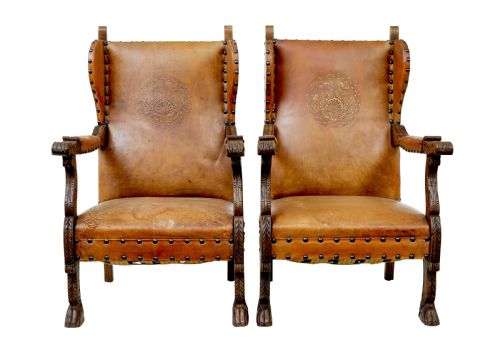
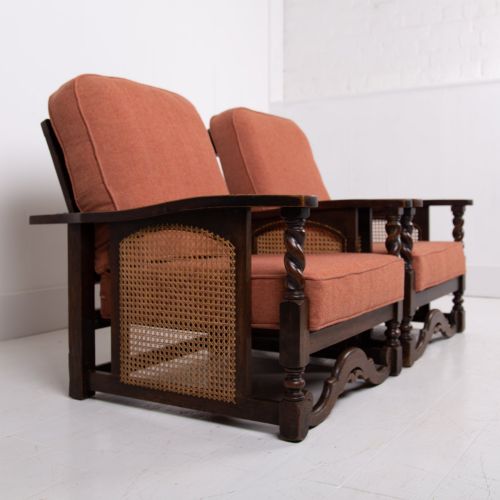
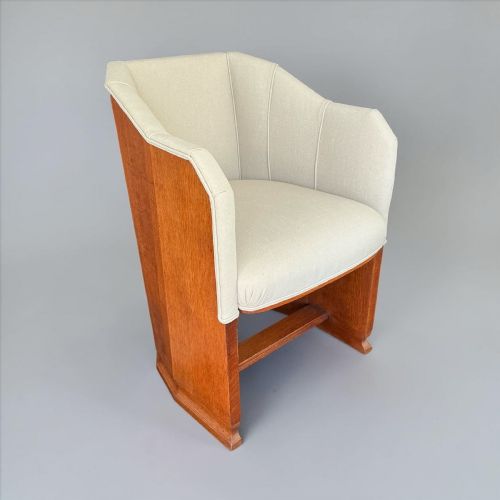
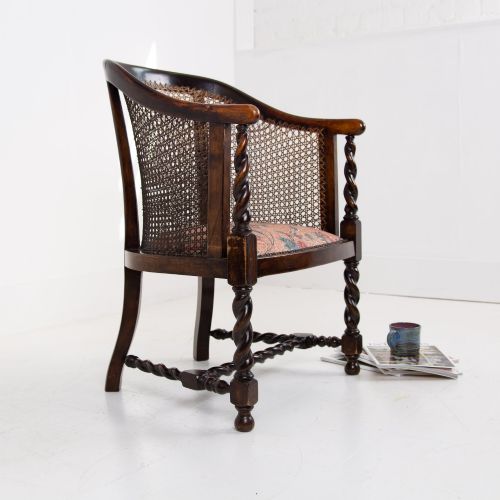
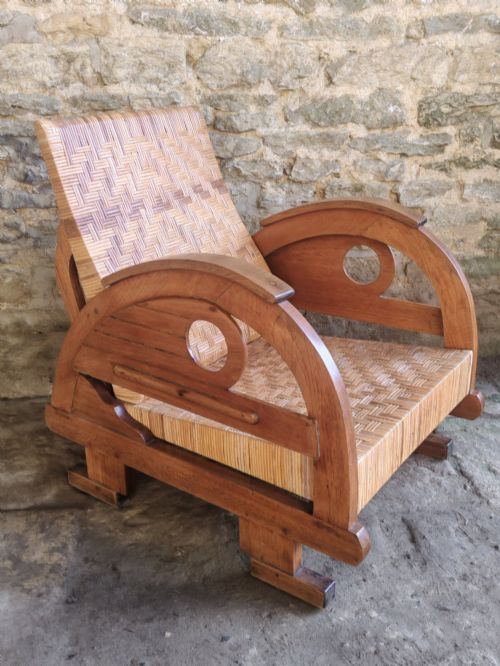
Many of these pieces date from the nineteenth century, displaying carved details like lion heads and Gothic revival motifs, whilst later twentieth-century examples lean towards Art Deco lines, rattan panels, and reclining mechanisms. You find single chairs as well as matched pairs, some equipped with deep proportions and generous padding.
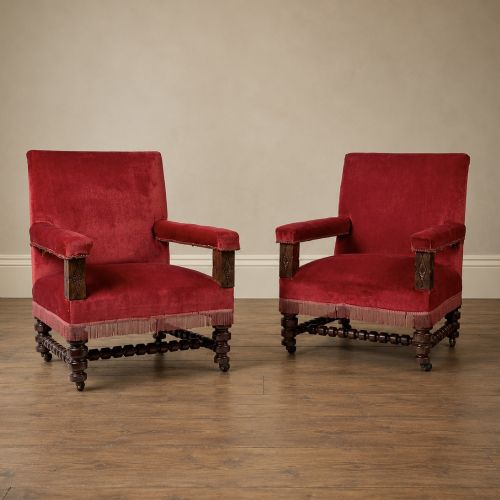
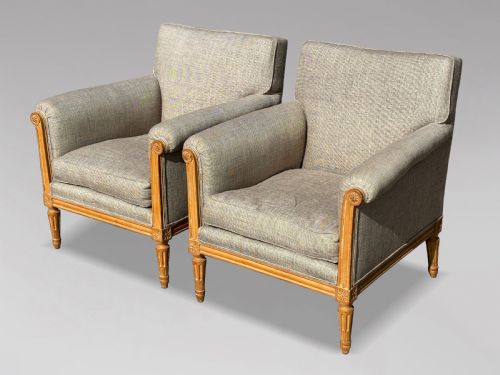
The materials paired with the timber define the character of each piece, moving from traditional brown and tan leather to red velvet, fabric, cane, and brass accents. These armchairs served as working furniture in offices and private libraries, meaning their design prioritises robust construction alongside comfort.
Judging Quality
Quality rests in the heaviness and integrity of the oak frame, where deep hand-carving on elements like lion heads or arm terminals indicates a higher grade of workshop production. Chairs with well-proportioned, generous dimensions and substantial timber substance command greater attention than lighter, plain frames.
The condition and treatment of the upholstery materials also separate examples, particularly where original leather hides have retained their suppleness and colour through decades of use. Alterations such as new seat webbing, replacement cushions, or re-covered panels alter the balance between original condition and practical usability.
The listings span from the mid-nineteenth-century Victorian period through the Arts and Crafts movement into 1930s Art Deco designs.
Heals of London·Foot and Sons
The Antique Oak Club Chair Glossary
- Library armchair
- A sturdy, upholstered seat designed for reading rooms, typically featuring padded arms and a supportive back.
- Gothic Revival
- A nineteenth-century style drawing on medieval architectural motifs, featuring pointed arches, tracery, and heavy carved details.
- Cane
- Woven plant material used to form breathable seat panels or backrests within a wooden frame.
- Reclining armchair
- A mechanical seat allowing the backrest to tilt backward, often associated with early twentieth-century patented designs.
- Smokers bow
- A nineteenth-century wooden armchair with a rounded spindle back, related to Windsor chair forms.
Antique Oak Club Chair: Frequently Asked Questions
What is an antique oak club chair?
An antique oak club chair is a heavy timber-framed armchair, typically upholstered in leather or fabric and designed for heavy daily use in studies, libraries, and smoking rooms.
These chairs date from the nineteenth and early twentieth centuries, encompassing Victorian, Gothic revival, Arts and Crafts, and Art Deco styles.
How do I date an antique oak club chair?
Dating relies on observing the interplay of structural style, carved ornamentation, and upholstery materials. Victorian and mid-nineteenth-century examples often display heavy mouldings, buttoned leather, and Gothic revival carvings.
Early twentieth-century pieces shift toward simpler lines, Art Deco reclining mechanisms, or cane and rattan panels while retaining solid oak frames.
Were these chairs used in offices?
Many of these armchairs served as office, desk, and library seating, providing sturdy support for working environments during the nineteenth and early twentieth centuries.
Their robust oak construction and durable leather upholstery made them suitable for professional rooms and private libraries alike.
Are these chairs comfortable for daily use?
Most pieces offer deep seats and supportive backs designed for long periods of reading or resting, though comfort depends on the internal springing and cushion condition.
Some listings feature newly upholstered seats or replacement cushions to improve daily usability while preserving the historic timber frame.