

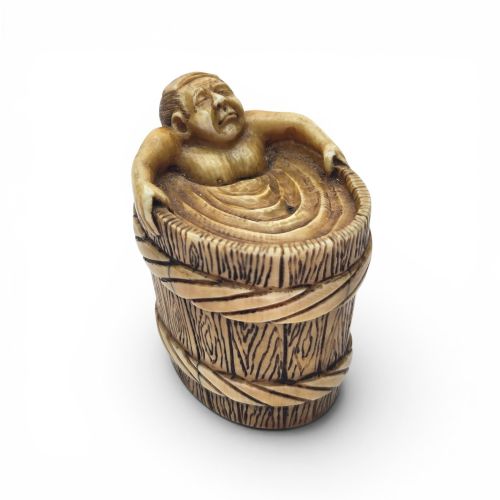


Antique Netsuke
Antique netsuke are small carved toggles carved from wood, boxwood, and stag antler, designed to secure personal pouches to kimono sashes.
Antique Netsuke
When you search for antique netsuke, you encounter traditional Japanese toggles that secured small containers like inro or tobacco pouches to traditional garments. The pieces available here span the Edo and Meiji periods, stretching from the nineteenth century into the early twentieth century.
Originating primarily from Japanese craftsmanship, these items reflect both cultural utility and miniature sculpture. The assortment captures specific historical spans including the late Edo period and the Meiji era.
What varies in quality
The distinction between standard work and superior carving rests in the depth of naturalistic detail and the expressiveness of the subject, whether depicting a toad, a scholar monkey, or a curled cat. Master carvers demonstrated precise control over organic textures and proportions.
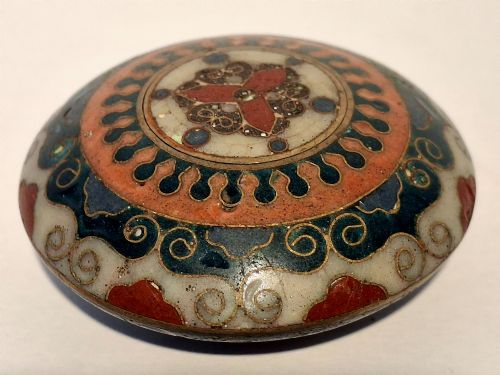
Signatures by recognised artists or attributed workshops elevate specific pieces above anonymous production. The harmonious integration of auxiliary materials, such as enamel insets or metal clasps, further separates ordinary examples from finer works.
The listings span the nineteenth and early twentieth centuries, encompassing both the Edo and Meiji periods.
Tomochika·Masayuki
The Antique Netsuke Glossary
- Netsuke
- A small carved toggle used in traditional Japanese dress to suspend a pouch or container from a sash. These objects combine practical fastening with miniature sculptural art.
- Manju
- A flat, disk-shaped netsuke often decorated with enamel, metalwork, or carved designs resembling a traditional Japanese confection. They provide a smooth surface for intricate decorative techniques.
- Kagamibuta
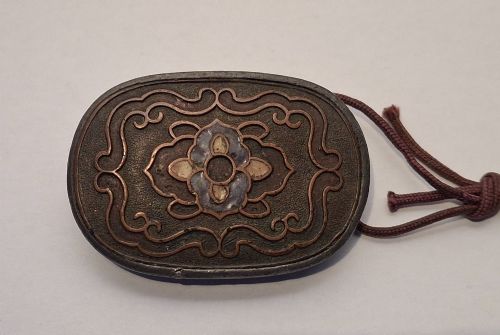
- A style of netsuke featuring a shallow bowl enclosing a metal disk lid, frequently combining wood and champleve enamel. The metal insert acts as a reflective or decorative centrepiece.
- Inro
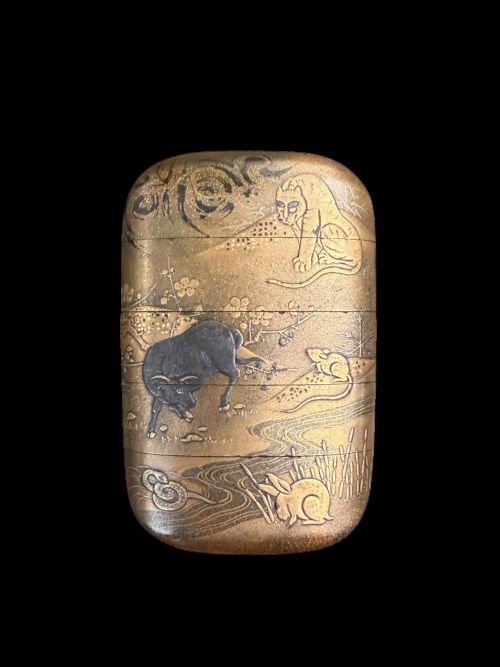
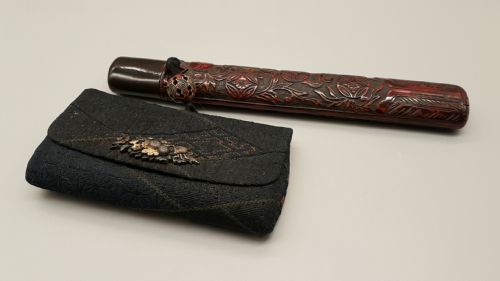
- A traditional multi-tiered container for carrying small valuables, suspended from a netsuke by a cord and ojime bead. These stacking cases display lacquer and metalwork artistry.
- Okimono
- A standalone Japanese decorative figurine intended for display rather than practical fastening. Unlike netsuke, they lack cord holes for suspension.
Antique Netsuke: Frequently Asked Questions
What is an antique netsuke used for?
These carved toggles served a practical function in traditional Japanese dress by anchoring hanging containers, such as tobacco pouches and inro, to the wearer's sash. Cords passed behind the obi to secure personal items safely.
Over time, they evolved from utilitarian fasteners into highly collectible miniature sculptures prized for their intricate craftsmanship and clever designs.
How do I date an antique netsuke?
Dating relies on stylistic markers associated with the Edo and Meiji periods, alongside material choices such as boxwood, stag antler, or mixed-metal additions. Carving techniques and the presence of artist signatures help place pieces within the nineteenth or early twentieth century.
Examining the wear patterns around the cord holes, known as himotoshi, also offers clues regarding the age and handling history of the toggle.
What materials are netsuke made from?
The listings show a strong reliance on boxwood and carved wood, alongside organic substances like stag antler and boar's tusk. Cherry amber and exotic woods also appear among the sculptural forms.
Some pieces integrate copper alloy, pewter, lacquer, and cloisonne enamel to create contrasting textures and colourful decorative highlights.
How should I display netsuke at home?
Displaying these tactile objects involves placing them on flat surfaces or within shallow cabinets where their detailed carving can be examined from multiple angles. Because they were originally meant to be held and turned in the hand, keeping them accessible enhances the experience.
Protecting them from direct sunlight and stable indoor humidity preserves the natural finish of the wood, amber, and enamel elements.