


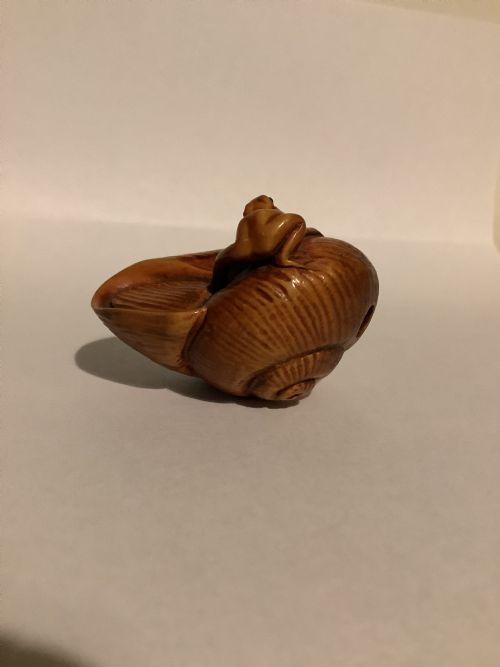


Antique Netsuke Carving
An antique netsuke carving is a miniature Japanese toggle of wood or antler, prized for its intricate detail and tactile form.
Antique Netsuke Carving
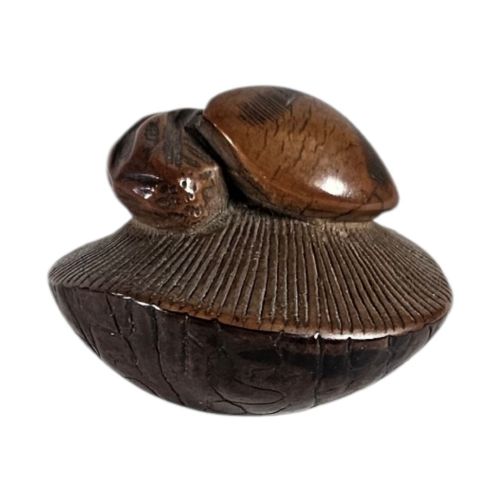
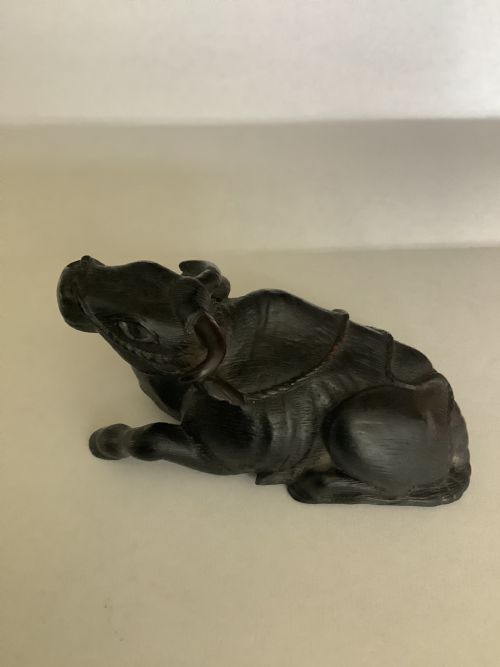
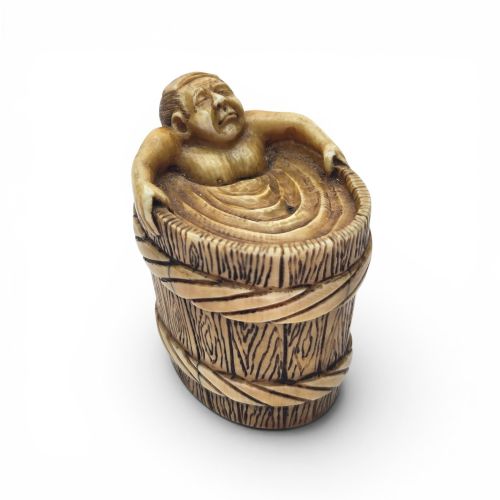
When you search for an antique netsuke carving, you look at miniature toggle fasteners historically used to secure small pouches or boxes to traditional Japanese kimono sashes. These small sculptures often depict animals, figures, or natural objects designed with exceptional attention to daily life and folklore.
The pieces you meet on this page hail primarily from the 19th century, spanning the Edo, Meiji, and Taisho periods. Boxwood and carved wood dominate the selection, alongside stag antler, horn, and rarer materials like cherry amber and boar's tusk.
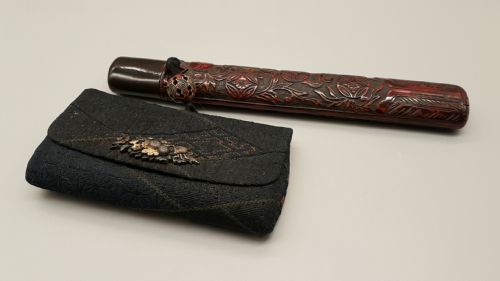
Forms range from traditional figural netsuke and manju kagamibuta to tobacco pouches with pipecases, smoking accessories, and small okimono. Each item reflects the functional origins of Japanese dress accessories combined with high artistic skill.
Materials and carving techniques
Makers utilised boxwood and other dense woods, carving the material with fine hand tools to achieve smooth surfaces and precise textures. Natural organic substances such as stag antler, horn, and boar's tusk provided alternative mediums that responded well to deep, relief-based incision.
Signatures and artist marks frequently appear carved directly into the body or within a dedicated reserve, indicating the hand of a named carver or specific school. Additional elements like metal champlevé cloisonné enamel or silk cords integrate with the primary carvings in smoking ensembles.
Listings feature 19th century boxwood, stag antler, and horn carved into animal, human, and botanical forms.
Evaluating quality and execution
The division between standard work and superior pieces rests on the depth of relief, anatomical accuracy, and the naturalism of the carving. Master carvers capture vitality in the posture of a toad, a snail, or a human figure, turning a functional toggle into a compelling sculpture.
Wear from handling softens the sharp edges of lesser pieces, whereas top-tier examples retain crisp detail while displaying the warm patina of age. Signatures attributed to known carvers such as Tomochika or Masayuki elevate the standing of a piece through documented mastery.
Tomochika·Masayuki
The Antique Netsuke Carving Glossary
- Netsuke
- A small carved toggle used in traditional Japanese dress to suspend pouches or containers from a kimono sash.
- Manju
- A round, flat style of netsuke shaped like a traditional Japanese sweet, often decorated with carved or inlaid designs.
- Okimono
- A standalone Japanese decorative figurine intended for display on a shelf or tabletop rather than for fastening to a sash.
- Sashi netsuke
- A long, slender style of netsuke that slips down behind the kimono sash to hold items securely in place.
- Himotoshi
- The small cord channels carved into a netsuke through which the sash cord passes.
- Ojime
- A small decorative bead threaded on the cord between a netsuke and a pouch to adjust the opening.
Antique Netsuke Carving: Frequently Asked Questions
What is an antique netsuke carving used for?
These pieces served as practical toggles in historical Japanese dress, anchoring suspended compartments like tobacco pouches and medicine boxes to a kimono sash.
Over time, they evolved from functional fasteners into highly detailed miniature sculptures collected for their artistry and miniature scale.
How do I identify Edo period pieces?
Edo period works often display deep patination, organic subjects, and traditional forms reflecting the culture of late feudal Japan.
Examining the wear patterns and stylistic conventions helps separate these earlier items from later Meiji or Taisho productions.
What materials are common in these carvings?
Boxwood is the primary medium found across the selection, prized for its fine grain and ability to hold intricate detail.
Alternative materials include stag antler, horn, cherry amber, and boar's tusk, each offering distinct textures and tonal variations.
How should I display a netsuke?
Because these objects were designed to be handled and felt in the palm, many collectors keep them accessible on open surfaces or in shallow trays.
Stable indoor conditions away from direct sunlight protect the organic wood and antler materials from drying out or fading.