



Antique Neoclassical Sofa
An antique neoclassical sofa brings symmetry and restrained classical ornament into a room, spanning periods from the eighteenth century onwards.
Antique Neoclassical Sofa
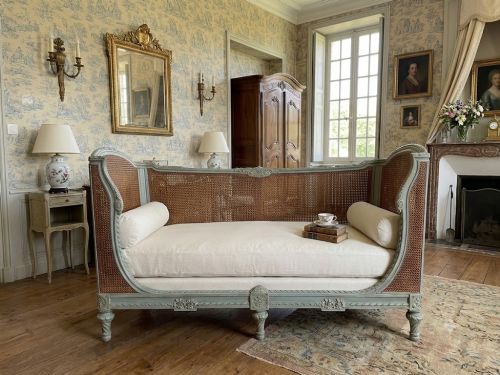
When you search for an antique neoclassical sofa, you encounter seating forms that range from substantial French giltwood frames to restrained English mahogany settee designs and pale Swedish birch daybeds. These pieces reflect the enduring influence of classical antiquity through straight tapered legs, urn motifs, and balanced proportions across the frame.
The selections span the eighteenth century, the nineteenth century, and early twentieth-century revivals, including Louis XVI, Georgian, Sheraton, and Empire styles. Among these, painted and giltwood frames with cane work or upholstered seats appear frequently, often taking the form of settees, double-backed couches, or daybeds.
Materials and Construction
Cabinetmakers built these frames using dense hardwoods such as mahogany, beech, birch, and walnut, often applying white or cream paint, giltwood leaf, or intricate marquetry inlay. Structural elements rely on mortise and tenon joinery, whilst surface enrichment incorporates carved fluting, classical mounts, and fine canework panels.
Upholstery techniques involve traditional stuffing secured over webbing, paired with silk, linen, or patterned fabric coverings that complement the exposed wooden or gilded framework. Ormolu mounts and brass accents provide metallic contrast on French and English salon pieces.
Several pieces preserve their original cane work intact, surviving centuries of quiet sitting without losing their bounce.
Distinctions in Execution
The refinement of the carved detail separates standard workshop production from exceptional pieces, visible in the crispness of acanthus leaves, fluted columns, and symmetry along the crest rail. Superior examples maintain the original integrity of the gilding or paint layer without excessive intervention.
Structural harmony also dictates standing; heavier proportions reflect regional provincial output, whilst slender, balanced members indicate sophisticated metropolitan design. The integration of secondary woods and the precision of joinery beneath the upholstery reveal the maker's discipline.
The Antique Neoclassical Sofa Glossary
- Canapé
- A decorative French sofa or settee, frequently built with an exposed wooden frame in the Louis XVI or Empire style. These seats often incorporate carved rails and cane panels.
- Giltwood
- Timber coated with a thin layer of gold leaf over a prepared gesso base. It defines formal neoclassical salon furniture from French and Swedish traditions.
- Ormolu
- Gilded bronze mounts applied to furniture for decorative contrast. It appears frequently on nineteenth-century French Empire pieces.
- Marquetry
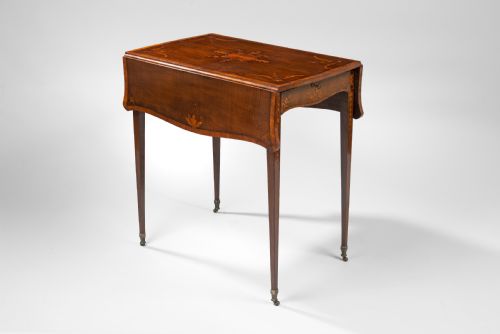
- The art of applying veneer pieces in contrasting timbers to form decorative patterns. It surfaces on eighteenth-century Sheraton table tops and settee panels.
- Gustavian
- The Swedish interpretation of neoclassical design, characterised by pale painted finishes and simplified classical motifs. These pieces date from the eighteenth century and later revivals.
Antique Neoclassical Sofa: Frequently Asked Questions
What defines a neoclassical sofa?
A neoclassical sofa employs classical architectural motifs such as straight lines, fluted pilasters, and symmetry derived from archaeological discoveries of the eighteenth century. These forms replace the curved exuberance of earlier rococo designs with geometric clarity and restrained ornament.
Such seating often includes exposed wooden frames of mahogany, giltwood, or painted beech, paired with upholstered or caned seats that suit formal reception spaces.
How do I date an antique sofa?
Dating relies on examining the timber species, joinery methods, and stylistic cues present in the frame. Eighteenth-century pieces typically show hand-cut joinery and period-specific proportions, whereas nineteenth-century and Edwardian examples often incorporate revival traits from Louis XVI or Empire styles.
Secondary woods used inside the frame and the wear patterns on painted or gilded surfaces further indicate whether a piece originates from the period of original manufacture or a later revival.
Where should I place a settee?
Settees suit entrance halls, drawing rooms, or bedrooms, functioning as conversational seating or architectural focal points against a wall. Their relatively shallow depth allows them to sit comfortably in perimeter spaces without dominating a room.
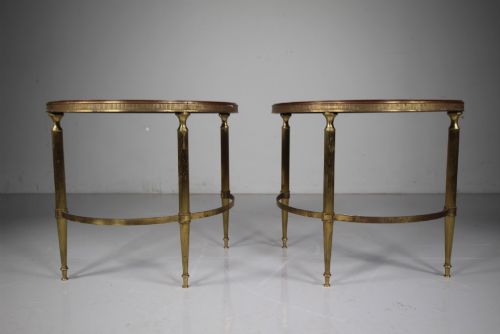
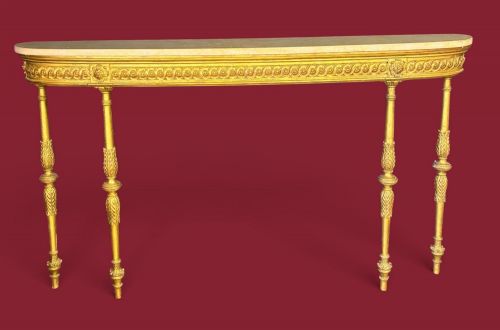
Pairing a painted or giltwood settee with complementary side tables or console tables enhances the classical balance of the interior scheme.
What is the difference between a sofa and a settee?
Historically, a settee denotes a smaller, lighter two-seater bench with an upholstered back and arms, whilst a sofa often refers to a larger, deeply cushioned seating piece. In practice across antique listings, the terms frequently overlap.
Both forms serve similar domestic functions, though pieces described as settees in neoclassical styles tend to feature more exposed woodwork and formal carved frames.