



Antique Neoclassical Settee
An antique neoclassical settee brings restrained classical lines and architectural balance into a room, offering both seating and a strong focal point.
Antique Neoclassical Settee
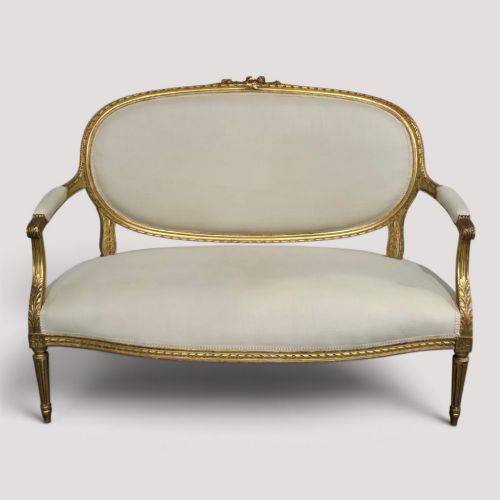
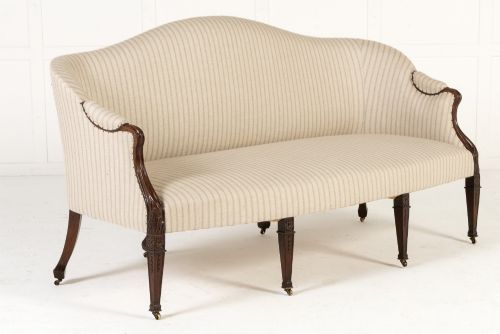
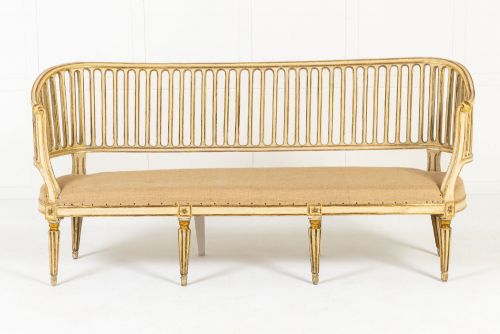
An antique neoclassical settee is a formal seating piece defined by symmetrical geometry, straight tapering legs, and motifs drawn from classical antiquity such as fluting, urns, and paterae. These items emerge across several centuries, appearing in Georgian England, eighteenth-century Sweden, and later French revivals.
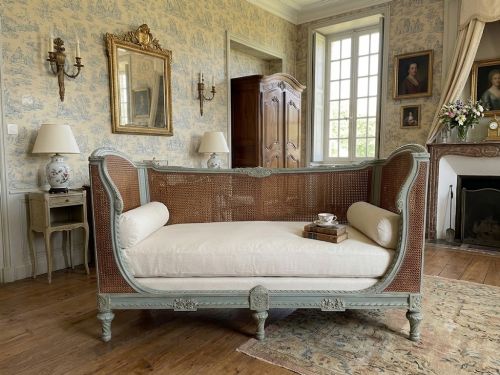
The versions most commonly met on this page include French Louis XVI style frames, Swedish Gustavian models, and George III examples. They span forms ranging from painted caned daybeds and triple-back settees to grand giltwood salon sofas.
Originating in domestic interiors dedicated to reception and display, these settees function primarily as decorative architectural furniture. They reflect the shift away from exuberant curves towards structured, classical restraint.
Materials and construction
Cabinetmakers constructed these frames using hardwoods such as mahogany, birch, and walnut, alongside softer timbers intended for decorative finishes. Skilled artisans applied gesso and paint, or gilded the wood surfaces with gold leaf to achieve the desired metallic lustre.
Many examples incorporate organic seating materials including woven cane work for canework panels, alongside traditional textile upholstery like linen and patterned fabric. Metal detailing appears through cast brass and ormolu mounts fixed to the primary wooden structure.
Antique Neoclassical Settee Retail Price Guide 2026
Typical asking prices for neoclassical settee among the pieces listed under this phrase on Sellingantiques today, from the lower quarter to the upper quarter. They describe what is for sale here now, not the wider market.
The inventory spans the eighteenth century, the nineteenth century, and Edwardian revival periods.
Distinguishing quality across examples
Quality rests upon the crispness of the carved ornament and the architectural proportion of the frame. Pieces with deeply undercut carving and precise classical detailing stand apart from simpler or more heavily restored items.
The integrity of the original surface finish, whether undisturbed antique paint, genuine gilding, or patinated mahogany, dictates the standing of the piece. Subtle adjustments in timber selection and joinery execution separate provincial work from metropolitan workshops.
The Antique Neoclassical Settee Glossary
- Canework
- Woven cane material used for seat panels and backrests. It provides a lightweight, resilient surface common on French and English seating.
- Giltwood
- Timber coated with gold leaf over a prepared gesso ground. This finish creates a luminous metallic appearance typical of formal salon furniture.
- Ormolu
- Cast bronze mounted with a fine mercury-gilding technique. These decorative metal mounts adorn the corners and rails of neoclassical frames.
- Satinwood
- A lustrous tropical hardwood used for fine cabinetmaking and decorative inlay. Its pale yellow colour accepts polish to a high sheen.
- Gustavian
- The Swedish interpretation of neoclassical design, characterised by pale painted finishes and simplified classical motifs.
Antique Neoclassical Settee: Frequently Asked Questions
How do I place an antique neoclassical settee?
Position these settees against panelled walls or in formal hallways where their architectural lines can be appreciated without visual competition. They suit drawing rooms and reception spaces dedicated to quiet conversation.
Ensure the piece sits away from direct sunlight and heat sources to protect historic wood finishes, painted surfaces, and delicate cane panels from drying out.
What is the difference between French and Swedish styles?
French pieces often display ornate giltwood frames, carved crest rails, and detailed ormolu mounts reflecting courtly taste. They lean towards decorative richness.
Swedish Gustavian and Empire pieces favour lighter painted surfaces, birch timbers, and restrained geometric carvings that reflect a cooler, brighter aesthetic.
How do I identify the period of a settee?
Examine the timber species, joinery methods, and the specific interpretation of classical motifs present on the frame. Georgian and eighteenth-century pieces display hand-cut joinery and period-specific carving.
Later nineteenth-century and Edwardian examples often reveal revival traits, machine-assisted elements, or nineteenth-century upholstery techniques beneath the top layer of fabric.
Can I use a neoclassical settee every day?
Historic frames require gentle use compared to modern domestic seating. The weight capacity depends on the structural soundness of the original timber and joinery.
Regular inspection of cane panels and upholstered platforms ensures the piece remains stable and supportive during normal seating.