



Antique Needlework Stand
An antique needlework stand brings together fine textiles and timber frames, offering both a functional surface and a decorative domestic panel.
Antique Needlework Stand
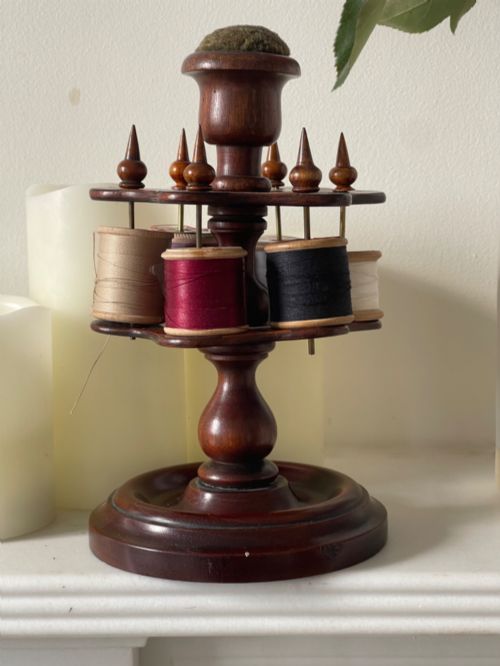
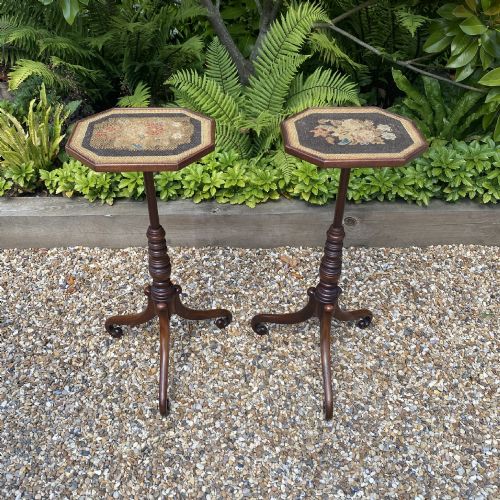
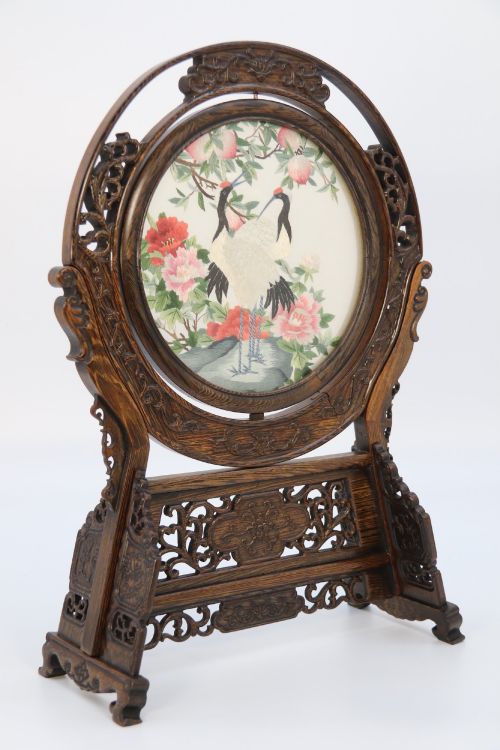
When you search for an antique needlework stand, you encounter a variety of forms designed to hold crafting materials or display stitched panels near the fireplace. The selection primarily includes sewing tables, work tables, and pole screens featuring embroidered panels.
How they were made
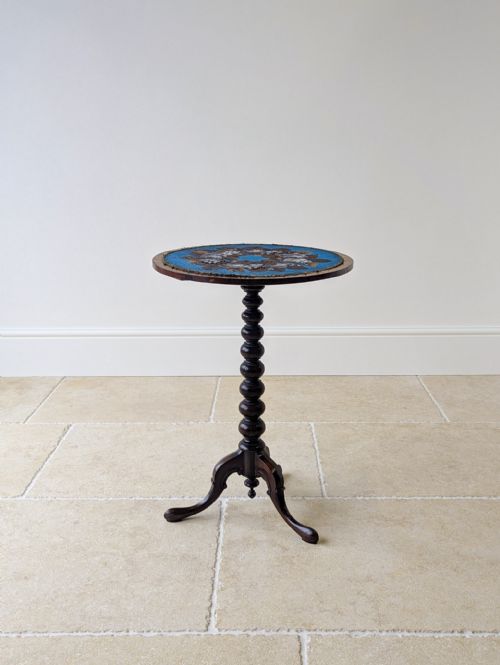
Cabinetmakers utilised dense timbers such as mahogany and rosewood to construct the structural frames, tripod bases, and drop-leaf work tables. These woods provided the necessary strength for pivoting mechanisms, folding flaps, and slender turned columns.
The decorative panels and interior fittings combine textiles with woodwork, incorporating silk embroidery, wool needlepoint, and beadwork within brass or wooden mounts. Skilled artisans mounted these embroidered textiles onto rotating frames, sliding screens, or hinged boxes.
Antique Needlework Stand Retail Price Guide 2026
Typical asking prices for needlework stand among the pieces listed under this phrase on Sellingantiques today, from the lower quarter to the upper quarter. They describe what is for sale here now, not the wider market.
Several stands double as fire screens with built-in reflectors, proving that Georgian and Victorian crafters took multitasking very seriously indeed.
What varies in quality
The refinement of the carved wooden bases and the complexity of the internal compartment layouts distinguish finer pieces from simpler domestic examples. Superior stands demonstrate precise joinery on their tripod supports and cabinetry.
The execution and preservation of the needlework panel itself dictate much of the overall merit. Finely worked silk embroidery or detailed tapestry panels retain tighter tension and richer colour harmony within their frames.
The Antique Needlework Stand Glossary
- Pole screen
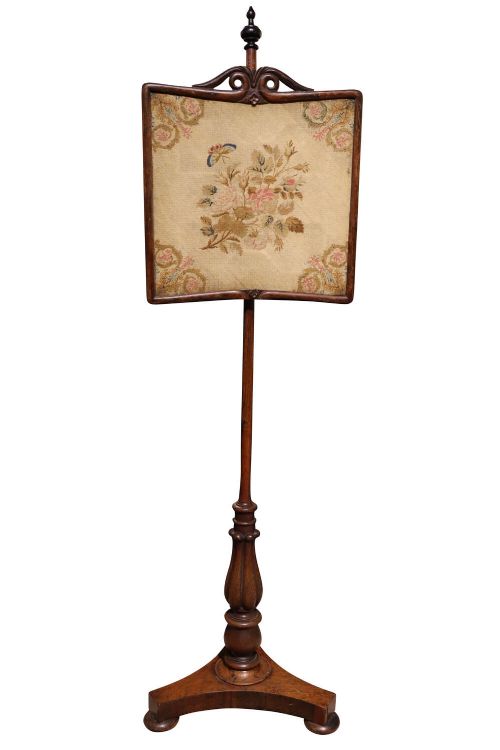
- A vertical wooden stand with an adjustable sliding panel designed to shield the face from fireplace heat. The panel typically displays needlework, tapestry, or embroidery.
- Work table
- A small domestic table fitted with drawers, compartments, or a fabric bag for holding sewing equipment and crafting materials. These pieces often feature drop leaves or folding tops.
- Needlepoint
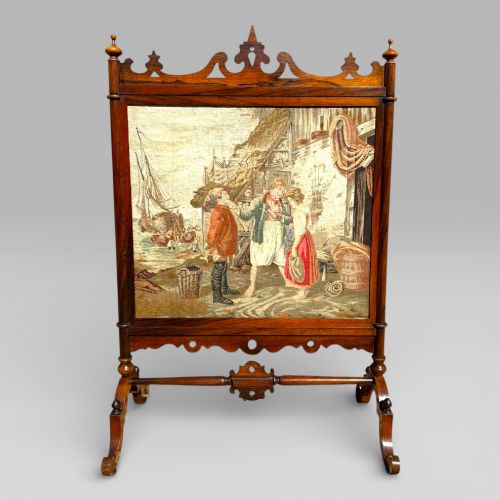
- A type of canvas work embroidery stitched with wool or silk threads to cover an entire ground. It frequently appears on Victorian fire screens and tabletop frames.
- Tripod base
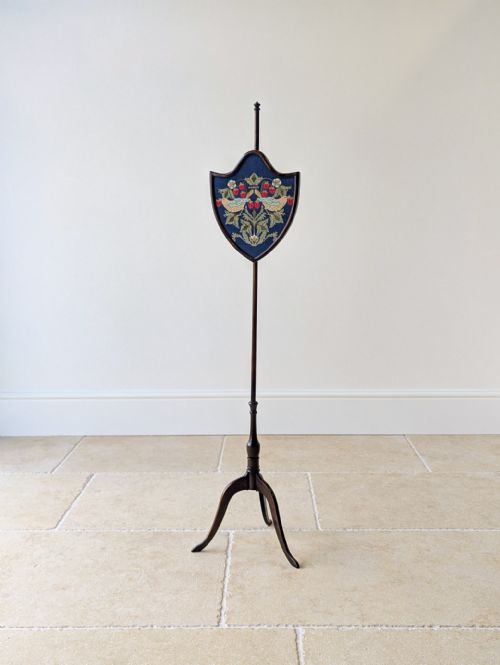
- A pedestal support resting on three spreading legs, commonly found on Georgian and Regency pole screens and small occasional tables. This design provides stability on uneven floorboards.
- Etui
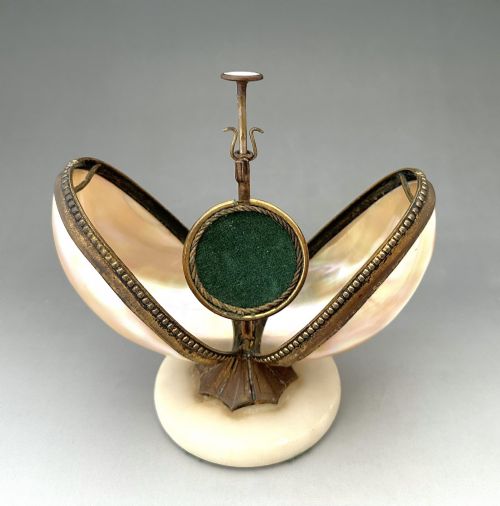
- A small decorative case designed to hold needles, scissors, and other delicate sewing implements. These portable containers appear in materials such as mother-of-pearl and ivory.
Antique Needlework Stand: Frequently Asked Questions
What is an antique needlework stand used for?
These pieces served practical roles in nineteenth-century domestic life, either by housing sewing implements within compartmentalised drawers or by deflecting fireplace heat with an embroidered screen.
Today, they function well as decorative occasional tables or as display stands for textile art within a traditional interior.
How do I identify a pole screen?
A pole screen consists of a vertical turned wooden shaft mounted on a weighted tripod base, carrying a sliding panel that can be adjusted vertically.
The panel usually holds an antique needlework or tapestry picture framed in wood or brass.
What woods were used for sewing tables?
Cabinetmakers primarily selected dense tropical hardwoods such as mahogany and rosewood for their durability and rich grain patterns. Lighter timbers like satinwood and satin walnut also appear on later pieces from the Edwardian period.
These materials allowed workshops to carve slender legs and shape hinged lids for fitted interior compartments.
Are the needlework panels original?
Most period stands retain their original hand-stitched silk, wool, or beadwork panels, which were executed by contemporary makers using canvas or linen grounds.
Careful inspection of the reverse side and mounting points helps confirm the integration of the textile with the wooden frame.