


Antique Needlepoint Picture
An antique needlepoint picture brings centuries of textile artistry indoors, offering textured pastoral scenes and portraits framed in period wood.
Antique Needlepoint Picture
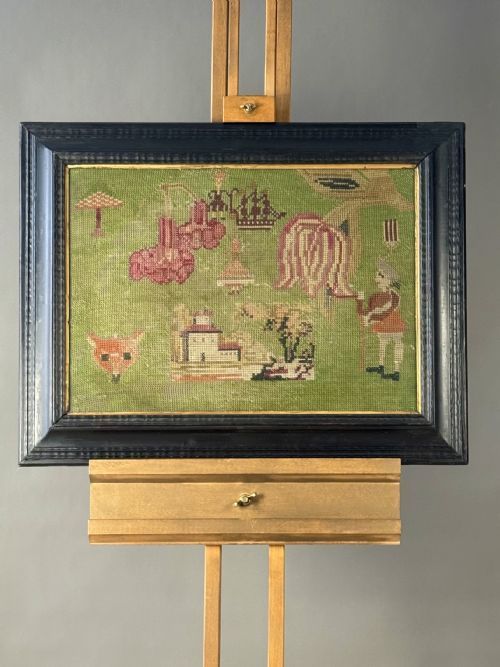
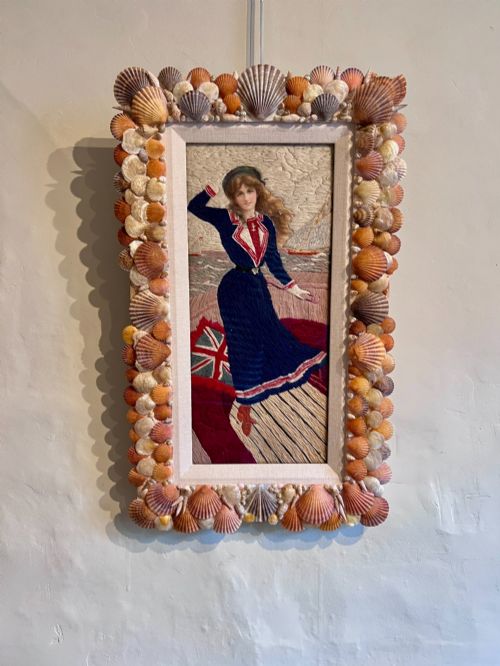
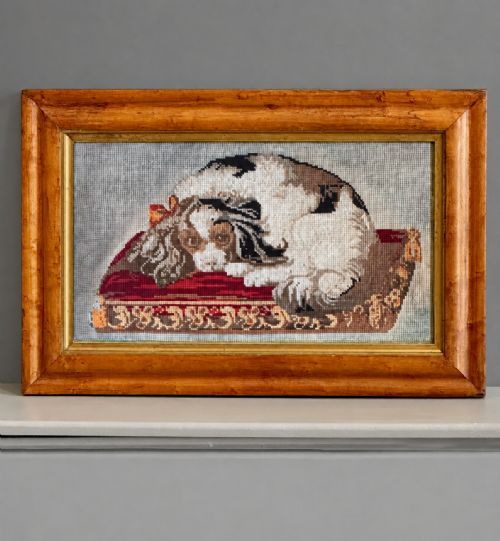
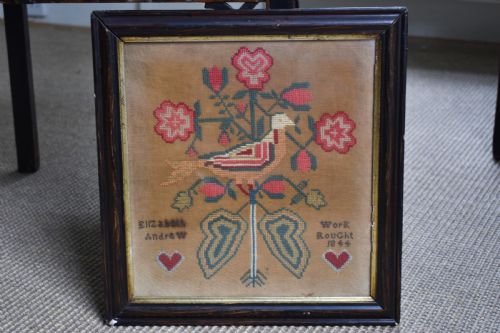
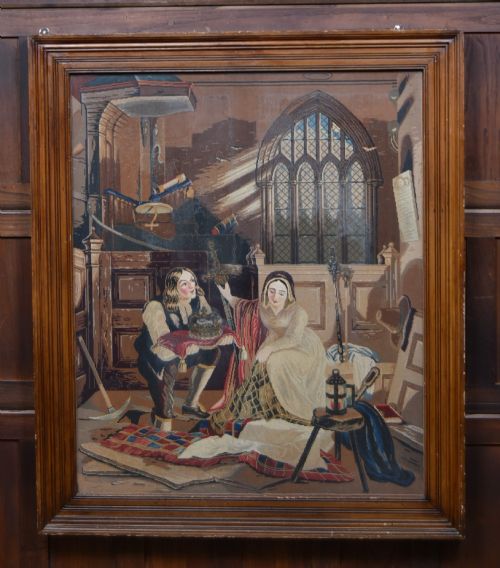
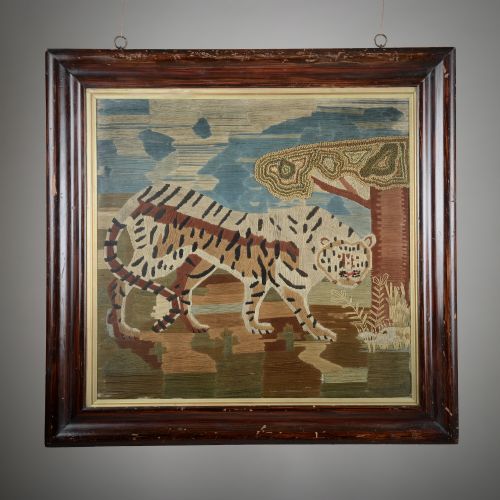
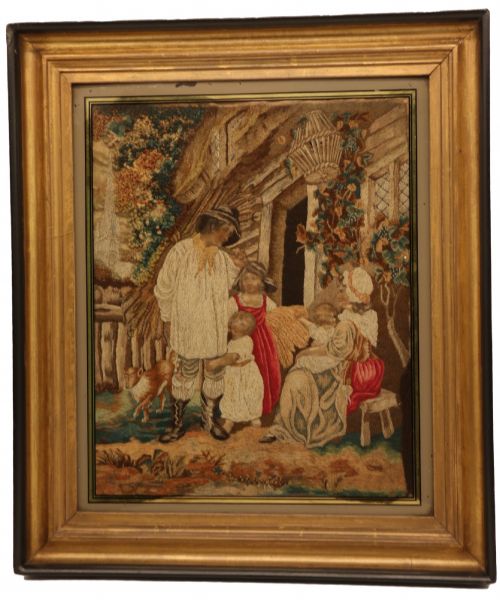
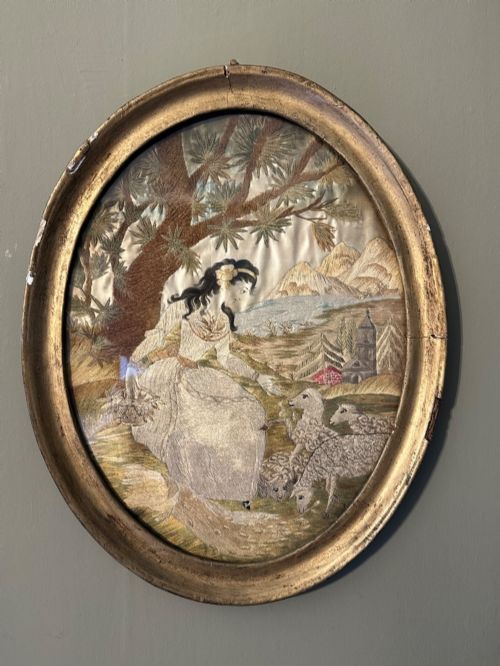
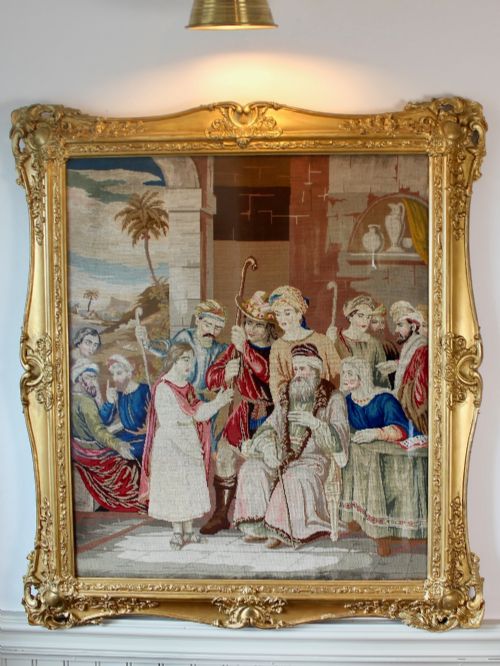
An antique needlepoint picture comprises historic stitched textiles designed for display as wall art, spanning centuries of domestic and professional craft. These framed works include pastoral farming landscapes, literary scenes, royal portraits, and depictions of animals ranging from King Charles spaniels to tigers.
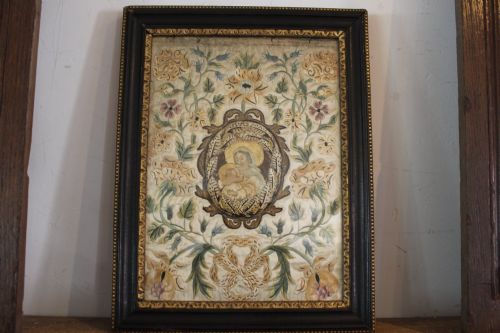
The versions most commonly met on this page date from the nineteenth century, including Victorian woolwork woolies, Berlin work panels, and plushwork pictures. Earlier examples extend back to the seventeenth century with silk embroidery panels and beadwork fragments, often housed in original burr maple or gilt frames.
How they were made
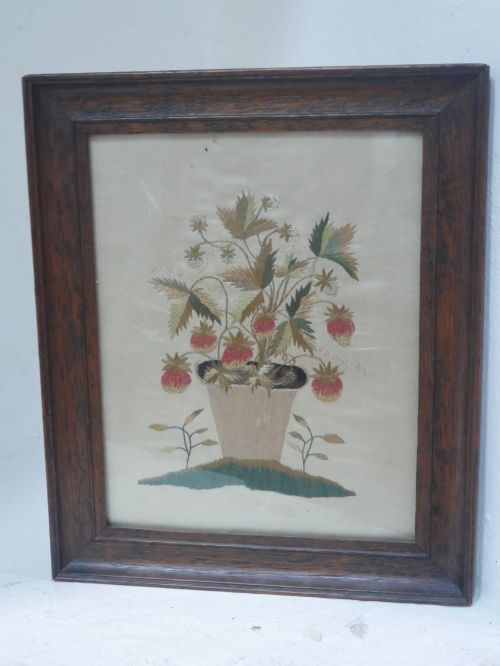
Maker execution relies on wool, silk, and linen threads worked onto canvas supports using specialised stitches such as long stitch, gros-point, and plushwork. Silk floss and wool yarns bring colour and texture to pictorial compositions, sometimes combined with hand-painted silk elements or watercolour details.
Framing forms an integral part of the finished object, utilising glass protection alongside wooden surrounds such as giltwood, birds-eye maple, faux tortoiseshell, and verre églomisé glass panels.
Antique Needlepoint Picture Retail Price Guide 2026
Typical asking prices for needlepoint picture among the pieces listed under this phrase on Sellingantiques today, from the lower quarter to the upper quarter. They describe what is for sale here now, not the wider market.
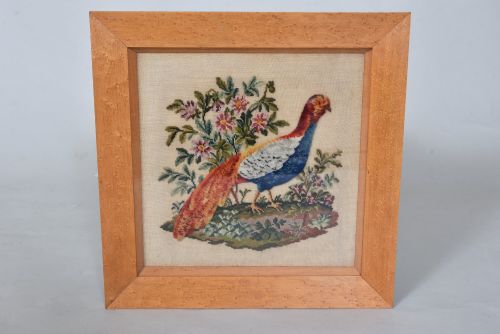
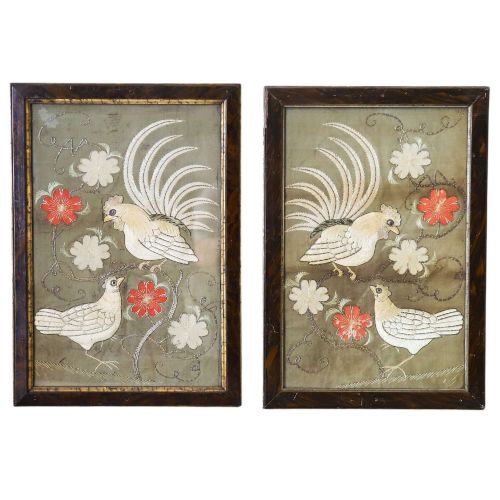
Among the historical menagerie stitched by makers, a plushwork pheasant shares space with a King Charles spaniel and a tiger.
What varies in quality
Quality rests in the intricacy of the needlework technique, the complexity of the pictorial subject matter, and the preservation of the textile fibres over time. Finer execution shows in detailed shading, complex stitch variation like gros-point, and sophisticated composition.
The survival of original period framing, including burr maple and verre églomisé surrounds, elevates the integrity of the piece. Superior examples combine skilled hand-stitched artistry with stable ground fabrics and well-preserved original mountings.
The Antique Needlepoint Picture Glossary
- Berlin Work
- A style of nineteenth-century canvas work embroidered from printed, squared colour charts. It allowed makers to produce shaded pictorial designs using wool yarn.
- Plushwork
- A raised embroidery technique using looped or cut stitches to create a tactile, three-dimensional pile. It appears frequently on animal depictions.
- Verre Églomisé
- A process of applying gold or silver leaf to glass with etched detailing, frequently used for decorative antique picture frames. This framing technique protects and enhances framed textile art.
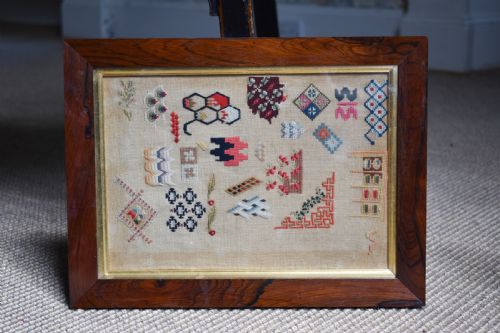
- Sampler
- A piece of canvas or linen stitched to demonstrate needlework proficiency, often featuring alphabets, motifs, and maker details. Older examples carry significant historical record.
- Gros-point
- A counted-thread needlepoint stitch worked over canvas to create a sturdy, textured surface. It provides durability and fine detail for complex pictorial tapestries.
Antique Needlepoint Picture: Frequently Asked Questions
How should I hang an antique needlepoint picture?
Keep textile artworks away from direct sunlight to prevent fading of wool and silk threads. Position them on interior walls where humidity and temperature remain stable.
Ensure frames are securely hung using appropriate wall fixings suited to the weight of the wood and glass. Professional framing support protects the historic fabric from environmental damage over time.
What periods do these textile pictures cover?
The available selection spans from the seventeenth century through the Georgian, Regency, and Victorian eras into the early twentieth century. Each period brings distinct aesthetic choices, from Stuart embroidery panels to Victorian woolwork.
Stylistic shifts reflect changing domestic tastes, moving from formal classical portraits and pastoral scenes to folk art and literary subjects in later decades.
Are these works framed in period surrounds?
Many examples retain their original period frames, including burr maple, giltwood, and verre églomisé surrounds. These housings complement the era of the textile creation.
Inspect the framing materials noted in each listing, as original wood and glass configurations add historical context and aesthetic balance to the wall art.