





Antique Nautical Helm
These antique nautical helm pieces bring maritime history indoors, offering solid brass and timber craftsmanship for any room.
Antique Nautical Helm
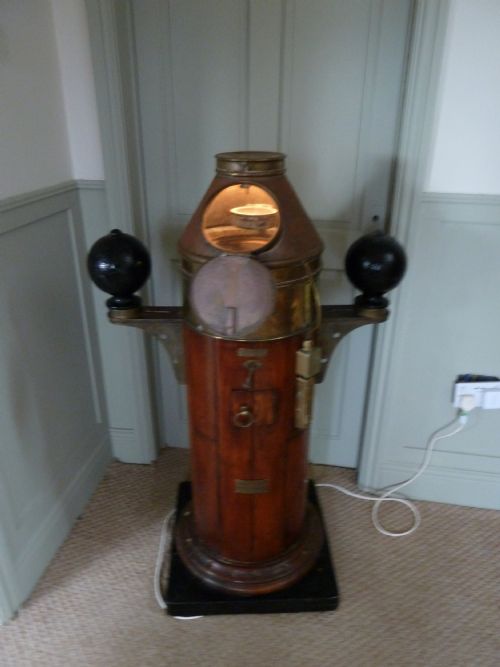
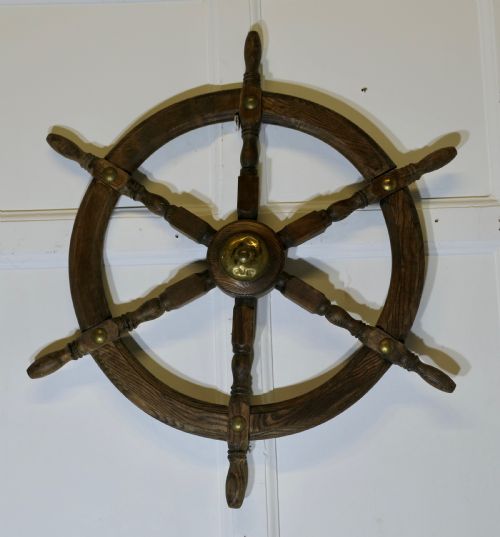
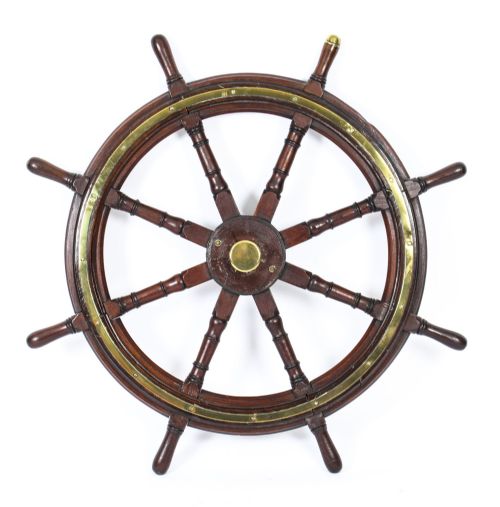
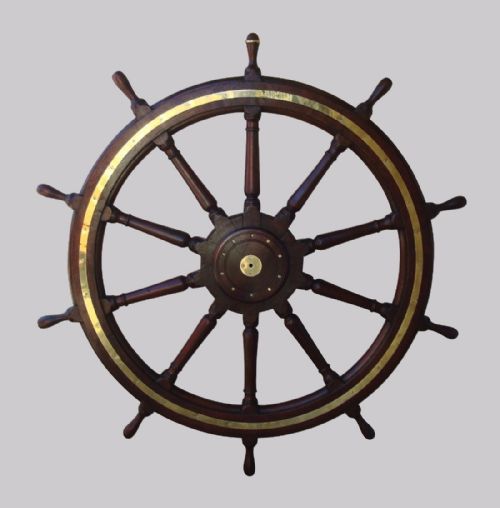
When you search for an antique nautical helm, you encounter functional ship steering wheels and binnacles alongside smaller desk clocks and mantel pieces styled in the maritime tradition. These objects connect directly to nineteenth-century maritime history through their robust timber and metal construction.
The versions most commonly met on this page range from large teak steering wheels with multiple spokes to smaller French and industrial desk clocks housed in brass frames. Pieces span the Victorian era and early twentieth century, reflecting both utilitarian seafaring origins and decorative domestic adaptations.
How they were made
These pieces rely heavily on durable hardwoods such as teak, oak, and general hardwood, chosen for their resilience in marine environments. Carpenters and joiners shaped these timbers into robust wheels and housings designed to withstand harsh conditions at sea.
Brass fittings, enamel dials, and glass covers provide essential functional and visual contrast against the dark wood surfaces. Iron components and painted wood finishes also appear, particularly on regional items like the red-painted Welsh ship wheel.
A small Welsh ship wheel arrives with a coat of deep red paint, proving that even working marine gear occasionally enjoyed a vibrant local aesthetic.
What varies in quality
Quality in these items rests on the integrity of the materials and the scale of the piece, with large, multi-spoke teak wheels representing the most substantial examples of the craft. The presence of original working mechanisms in clocks and binnacles elevates an object above purely decorative later adaptations.
Surface preservation defines the character of each piece, distinguishing items retaining untouched patination and original paint from those with modern alterations. The precision of brass mounting and the quality of the timber grain separate standard utility items from finer maritime instruments.
Benson Electric Co USA·Gay Vicarino·Pascall Atkey of Cowes
The Antique Nautical Helm Glossary
- Binnacle
- A freestanding housing traditionally placed in front of the helmsman to hold a ship's compass. It protects navigational instruments from weather and metal interference.
- Teak
- A dense, durable tropical hardwood prized for its natural oils and resistance to moisture. It forms the primary structure of many heavy-duty ship wheels.
- Spoke
- One of the radial handles projecting from the hub of a ship's wheel. Sailors grip these to turn the rudder mechanism.
- Enamel
- A glassy substance fused to metal surfaces under high heat to create smooth, legible clock faces. It provides a crisp white background for black numerals.
Antique Nautical Helm: Frequently Asked Questions
What is an antique ship wheel made of?
These items are constructed primarily from dense hardwoods like teak and oak, complemented by robust brass rims and fittings.
Iron elements and glass components also feature across various functional dials and binnacle housings.
How do I date a ship wheel?
Dating relies on assessing the timber type, construction methods, and associated metal components such as brass hubs.
Listed pieces span from the mid-nineteenth century Victorian period through to the early twentieth century.
Are these wheels from actual ships?
Many examples originate directly from maritime vessels, functioning as genuine steering wheels or navigational binnacles.
Others take the form of smaller clocks and desk accessories created in a distinct maritime style.
How should I display a large ship wheel?
Large multi-spoke wheels require secure wall mounting or sturdy floor placement due to their substantial weight and diameter.
Placing them in open spaces allows the teak grain and brass details to function as focal points.