




Antique Nautical Display
These pieces for an antique nautical display bring maritime history indoors through cased dioramas, carved pond yachts and brass instruments.
Antique Nautical Display
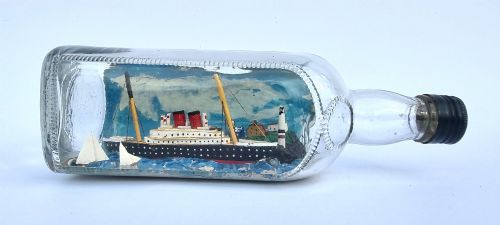
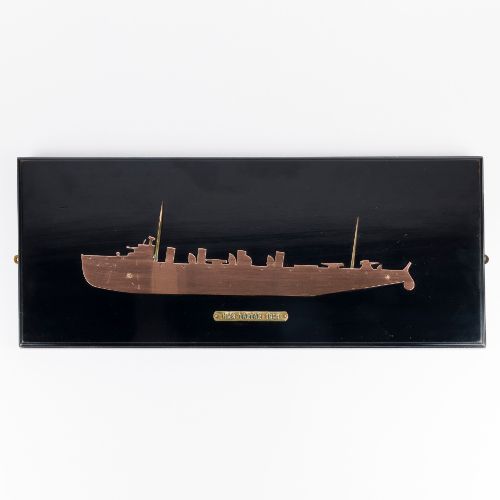
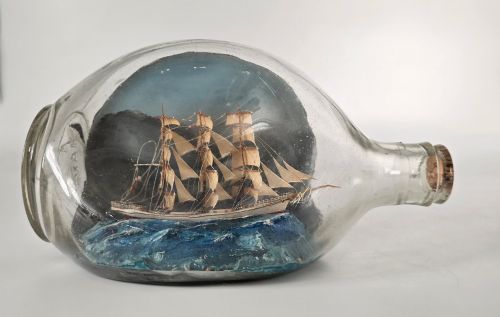
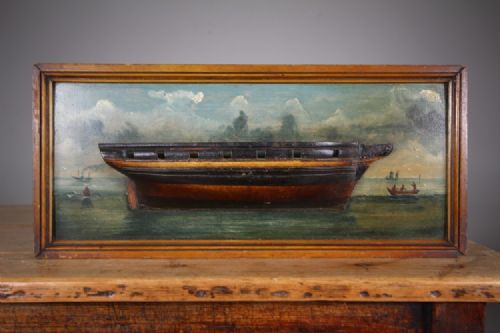
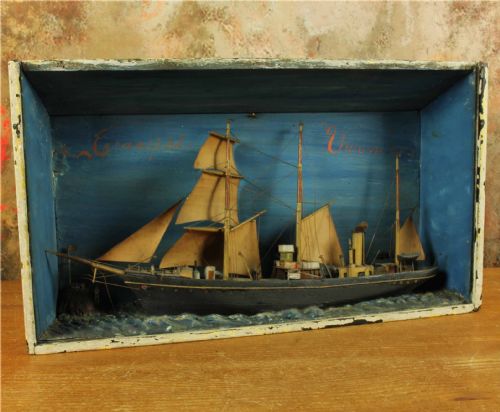
An antique nautical display gathers items connected to maritime life, ranging from model ships and pond yachts to scientific instruments and cased dioramas. These objects record the craftsmanship of naval architecture and coastal folk art from the Victorian and Edwardian eras.
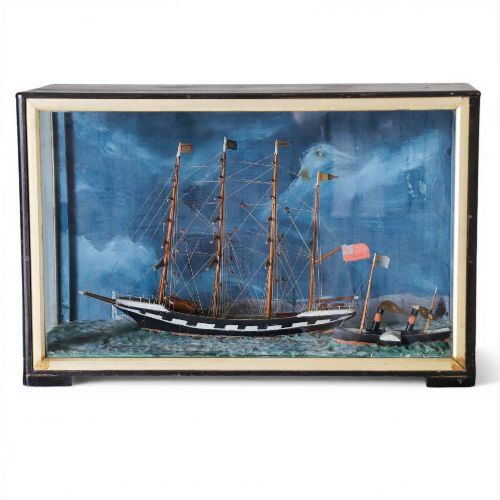
The most common forms on this page are cased ship dioramas and scale model boats, alongside brass telescopes and scientific barometers. Pieces span the nineteenth century through the early twentieth century, showing both workshop precision and naive folk art.
How they were made
Maker construction relies heavily on timber, with mahogany, sycamore, teak, and oak forming the hulls, carriages, and cabinets. Glass cases protect delicate rigging, painted canvas backgrounds, and plaster seascapes from dust and damage.
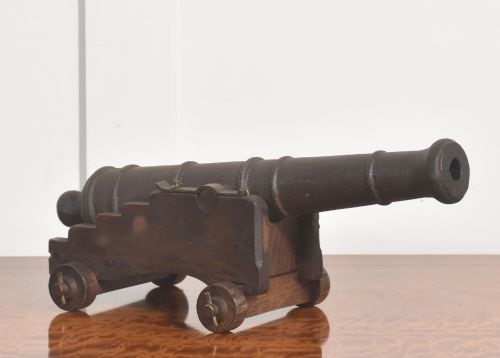
Brass and cast iron provide the rigid components for navigational instruments, signal cannons, and telescope fittings. Painted details and applied straw work give individual character to folk art dioramas and scratch-built ship models.
Listings feature eighteenth-century hulls alongside nineteenth-century dioramas built from mahogany, glass, brass, and painted canvas.
What varies in quality
Quality rests upon the precision of the scale work and the completeness of the original rigging. Scratch-built models and signed optical instruments by makers such as Ross of London or Negretti and Zambra demonstrate higher execution than simpler decorative items.
The integrity of the housing affects the piece, particularly where original glass and timber cases preserve the interior maritime scene. Superior examples maintain untouched painted surfaces and contemporary mounts without later alterations.
Ross of London·Richardson·Cary London·Negretti and Zambra
The Antique Nautical Display Glossary
- Diorama
- A three-dimensional scene enclosed in a glass-fronted case, often depicting sailing ships racing or navigating coastal waters. These displays use painted canvas and carved plaster to create depth.
- Pond yacht
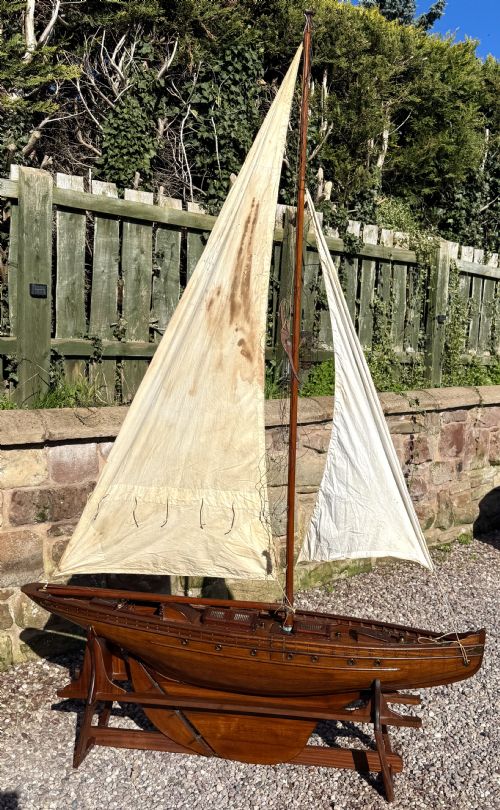
- A large model sailing boat designed for leisure navigation on open water rather than static display. These hulls are timber-built and scaled for functional handling.
- Spyglass
- A portable refracting telescope used for maritime observation, typically constructed with brass draws and leather or wood casings. Instruments often fold down for transport by ships' officers.
- Hypsometer
- A scientific instrument used to determine height or boiling point, associated with navigational and exploratory meteorology. Examples incorporate aneroid barometers within brass housings.
- Scratch build
- A model constructed entirely from raw materials and plans rather than from a commercial kit. This method relies on the individual maker's skill to scale down actual vessels.
Antique Nautical Display: Frequently Asked Questions
How do I clean a cased ship diorama?
Glass exteriors wipe down with standard glass cleaner applied to a cloth rather than sprayed directly near timber joins. Internal elements must remain untouched to avoid disturbing fragile rigging and painted canvas.
Dust accumulation inside sealed boxes indicates a compromised seal, which requires professional conservation rather than amateur intervention.
Were pond yachts meant for actual sailing?
Large pond yachts were constructed for functional sailing on park lakes and coastal waters during the Victorian and Edwardian periods. Their lead ballast keels and adjustable rudders allowed owners to trim the sails for straight runs.
Many surviving hulls retain evidence of active use on the water alongside later display stands.
What is the difference between folk art and scale models?
Scale models follow exact engineering blueprints and official shipyard specifications to reproduce specific vessels accurately. Folk art pieces rely on the maker's visual memory and vernacular materials, introducing naive proportions and imaginative painted seascapes.
Both categories appear across nineteenth-century maritime displays but serve different aesthetic traditions.
How do I date an antique brass telescope?
Dating relies upon the number of draw tubes, the engraving style of the maker's signature, and the materials used for the barrel dressing. Victorian and Edwardian examples shift from leather-wrapped brass to specialised optical finishes and distinct maker stamps.
Engraved signatures referencing London workshops provide the clearest indication of production eras.