


Antique Narrative Artwork
Antique narrative artwork tells a story on canvas or paper, capturing literature, myth, and social history to bring character and drama to your walls.
Antique Narrative Artwork
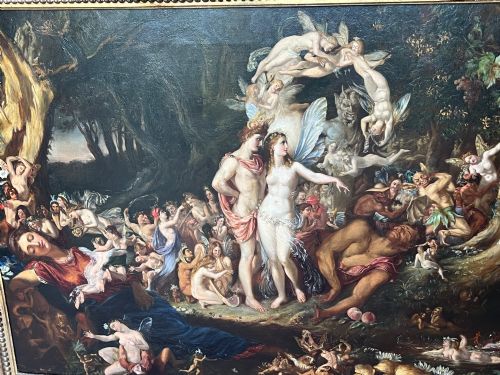
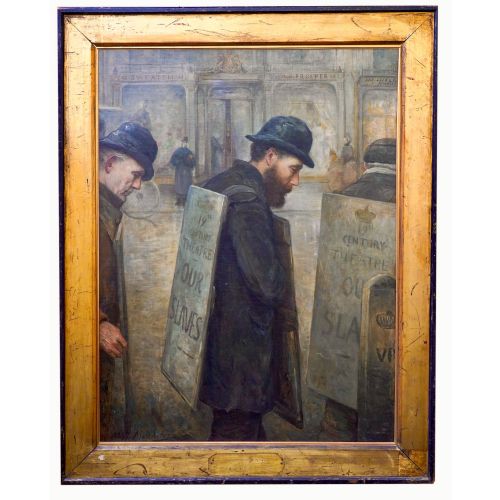
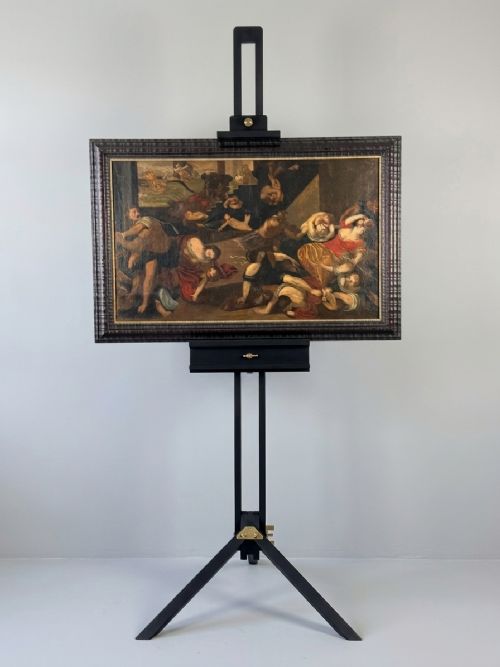
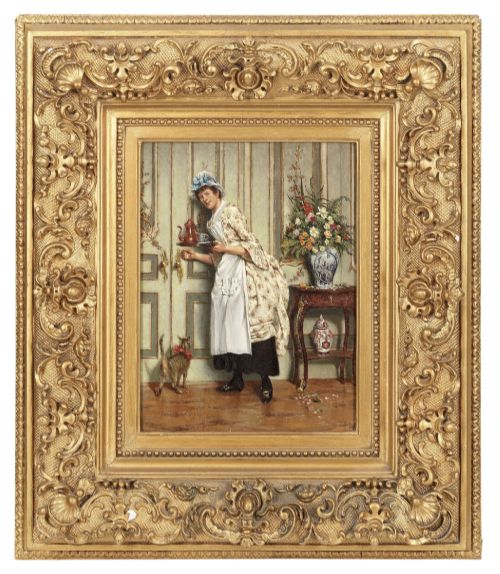
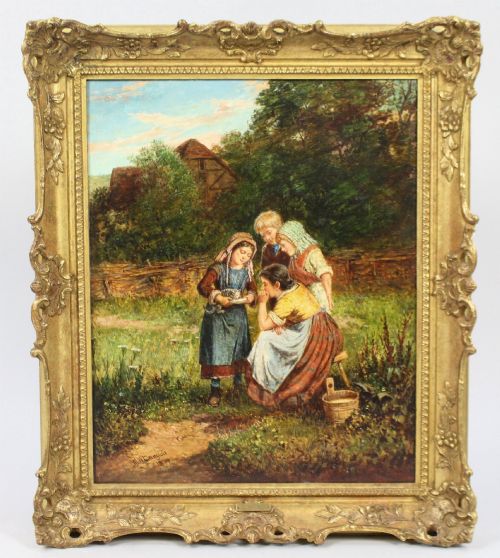
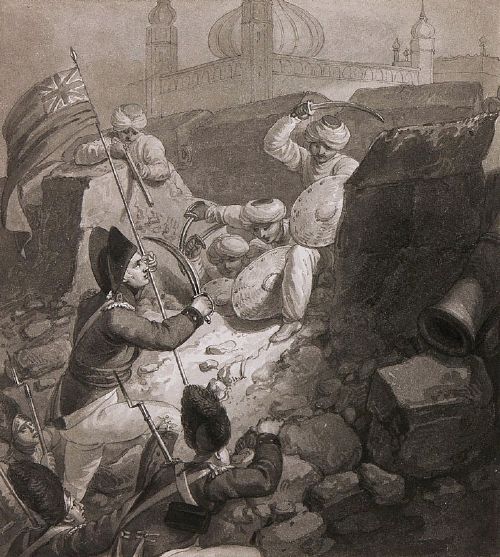
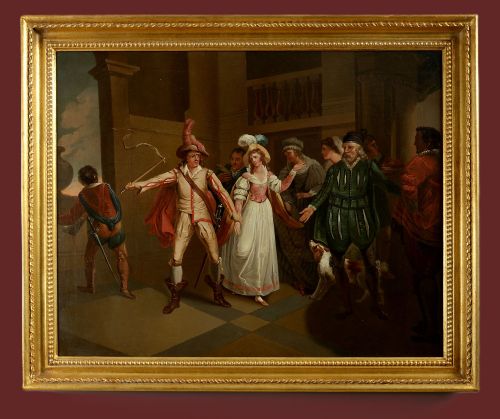
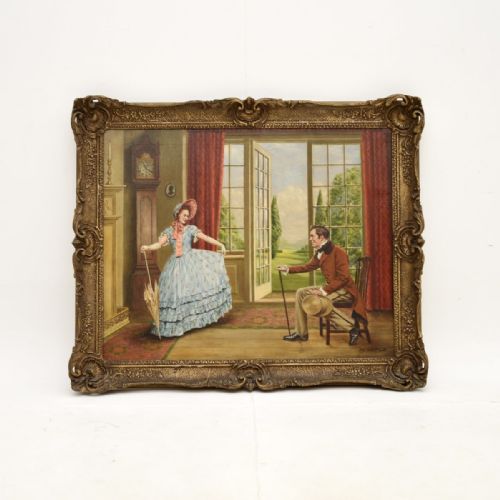
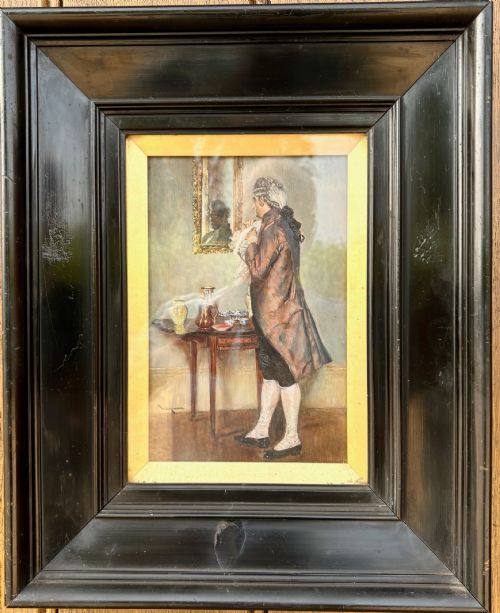
When you search for antique narrative artwork, you encounter figurative paintings, watercolours, etchings, and engravings that depict a specific story, historical event, or domestic scene. The selection spans the eighteenth, nineteenth, and early twentieth centuries, drawing heavily on Victorian genre painting and romantic illustration.
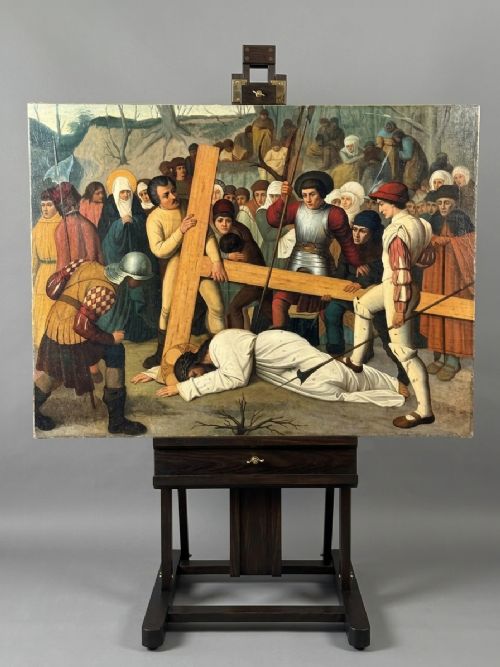
You will frequently find oil paintings on canvas alongside works on paper, framed in period timber and gesso moulding. The subjects range from Shakespearean tales and classical mythology to everyday scenes of country house life and social history.
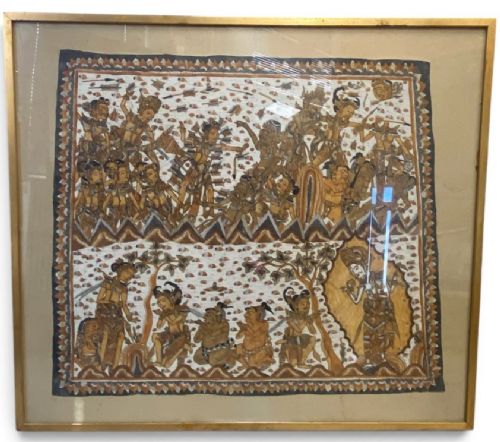
The assortment reflects diverse origins, including British, French, and Scottish schools alongside Indian Kalamkari textiles and Balinese Kamasan paintings. These pieces functioned as visual storytelling before the dominance of photography and cinema.
Materials and technique
Artists built these compositions primarily using oil paint on canvas or board, applying pigment with varying brushwork to create texture and depth. Watercolour and pen washes on paper offered a lighter medium for detailed illustrative works.
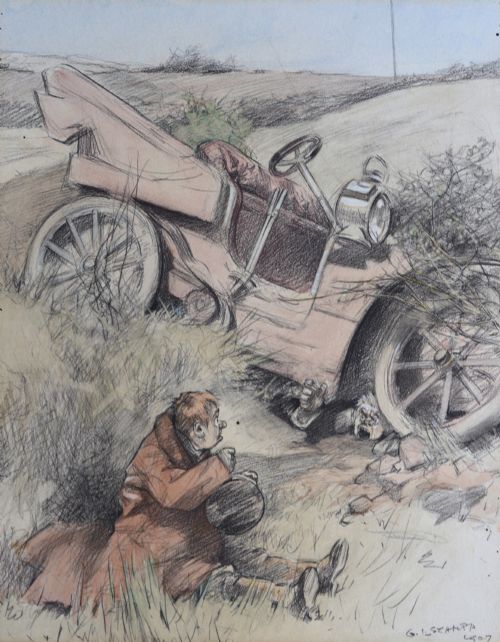
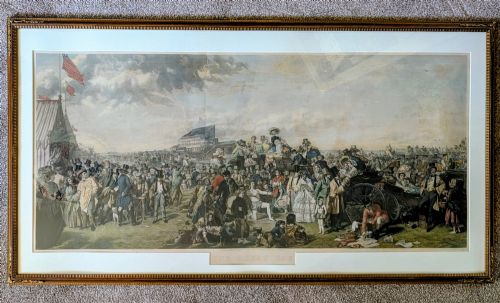
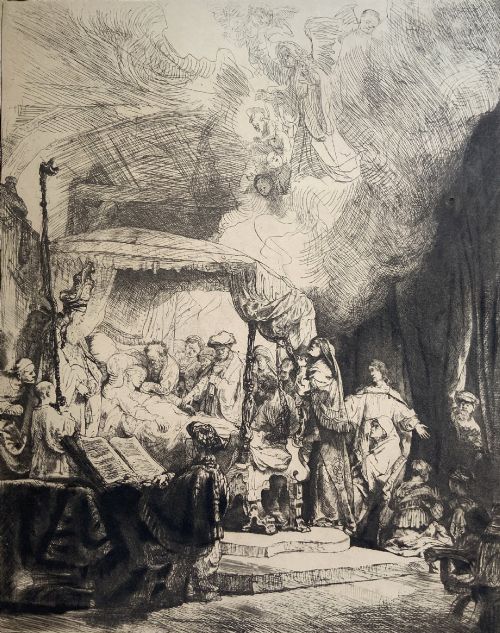
Printmakers utilised etching and engraving techniques to reproduce popular paintings for a wider audience, transferring complex narratives onto paper plates. Framed art relied on carved wood, gesso, and giltwood surrounds to protect and elevate the paper or canvas within.
The selection includes British, French, and Scottish school works alongside traditional Indian and Balinese narrative textiles.
Distinctions in quality
Quality rests upon the artist's ability to render human expression, posture, and narrative tension convincingly within the scene. Superior works display confident draftsmanship and subtle handling of light, whereas lesser pieces rely on stiff figures and formulaic compositions.
The integrity of the original medium, the preservation of the canvas or paper, and the presence of a period frame contribute to the overall standard. Works signed by recognised practitioners of the Victorian genre or classical schools hold greater weight in the tier of production.
Sir Joseph Noel Paton·Felix Stone Moscheles·Alfred Lyndon Grace·Howard Helmick·Abraham Cooper
The Antique Narrative Artwork Glossary
- Genre painting
- Genre painting depicts scenes from everyday life, ordinary people, and domestic interiors rather than grand historical or mythological events. These works often carry subtle moral or social commentary.
- Etching
- Etching is a printmaking process where lines are incised into a metal plate with acid before being inked and pressed onto paper. This technique allows for fine, fluid detail in narrative prints.
- Gesso
- Gesso is a plaster-like mixture applied to wooden frames as a base for moulding and gilding. It provides a smooth surface for ornate decorative details.
- Kalamkari
- Kalamkari refers to hand-painted or block-printed textile art traditionally used for narrative wall hangings. These pieces often illustrate traditional stories and religious epics.
- Wash
- Wash is a technique involving diluted ink or watercolour applied evenly across paper to create smooth backgrounds or shadows. It is common in preparatory sketches and drawings.
Antique Narrative Artwork: Frequently Asked Questions
What subjects appear in narrative art?
These works depict literary moments, biblical tales, historical battles, and domestic drama. Artists drew inspiration from Shakespeare, classical mythology, and contemporary social issues.
Scenes range from dramatic accounts of conflict to quiet interior moments between family members or courting couples.
How were these pieces framed originally?
Period frames often utilised carved wood finished with gesso and gilt. Many pieces retain their original Hogarth or decorative timber frames which complement the era of the artwork.
The framing was designed to isolate the narrative scene and enhance its presence on the wall.
Are these works painted on canvas?
Many of the larger narrative pieces consist of oil paint applied to canvas or wood board. Watercolours and prints on paper formed a separate category for detailed illustration and reproduction.
Textiles and traditional wall art also appear alongside standard stretched canvas paintings.
How do I identify the period of a piece?
Dating relies on the style of clothing, interior furnishings, and the painting technique visible in the composition. Signatures, inscriptions, and framing styles offer additional clues regarding the decade of creation.
Nineteenth-century works often reflect Victorian realists or academic traditions popular at the time.