
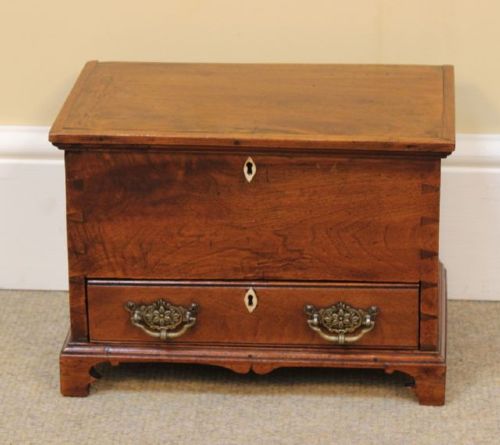
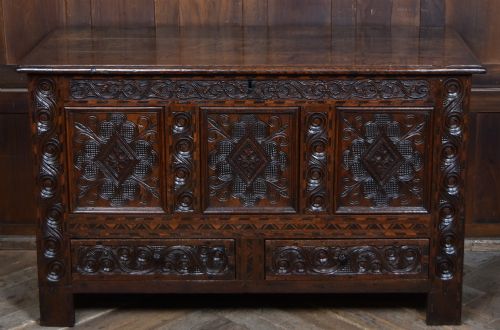
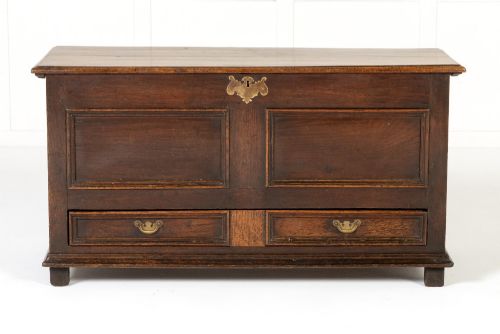
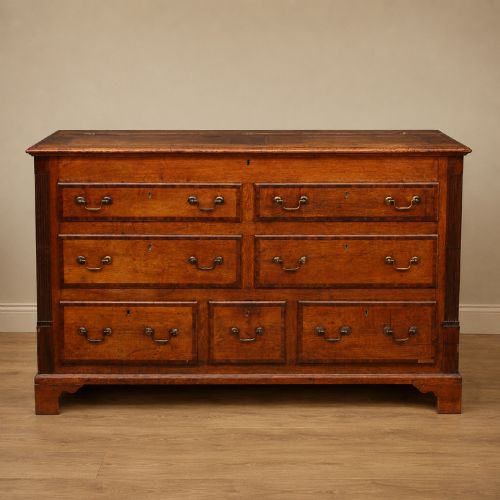

Antique Mule Chest Drawers
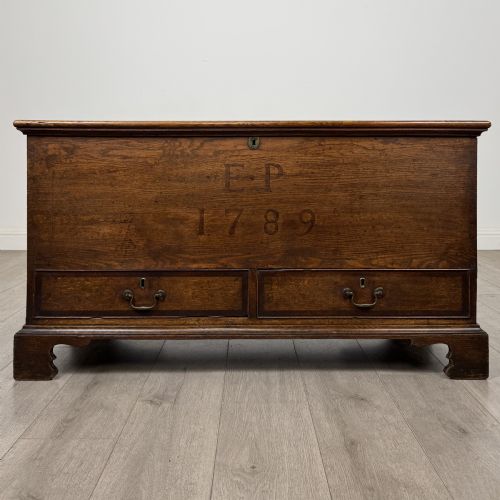
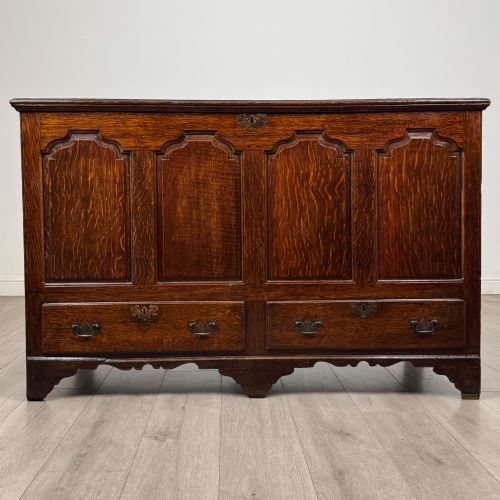
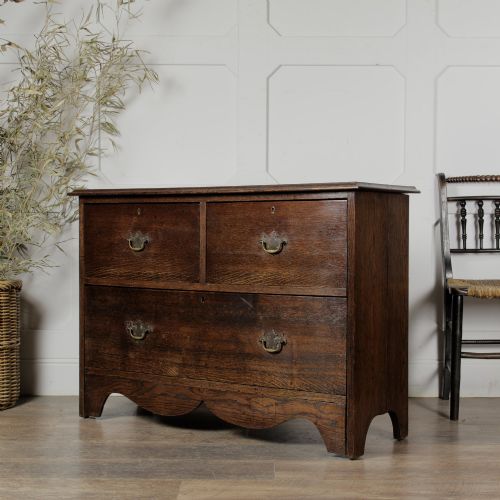
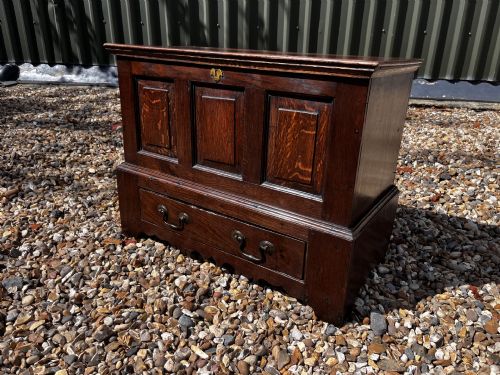
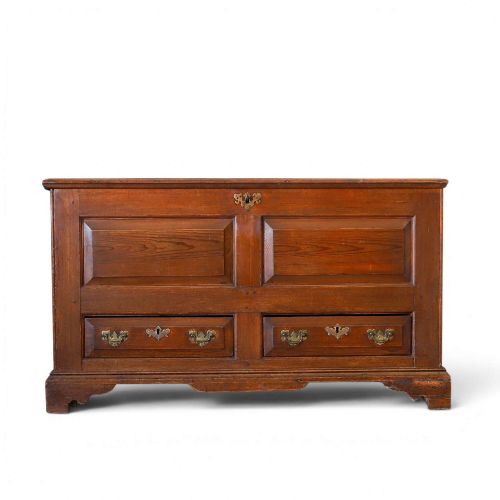
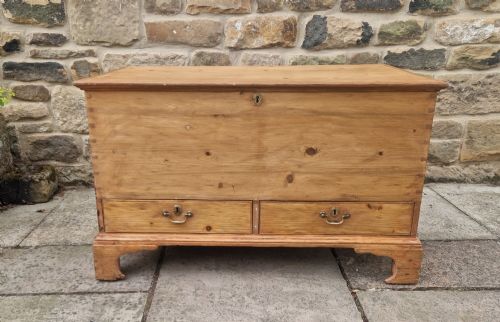
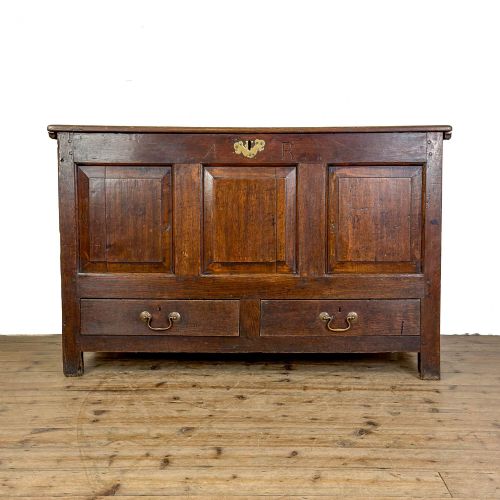
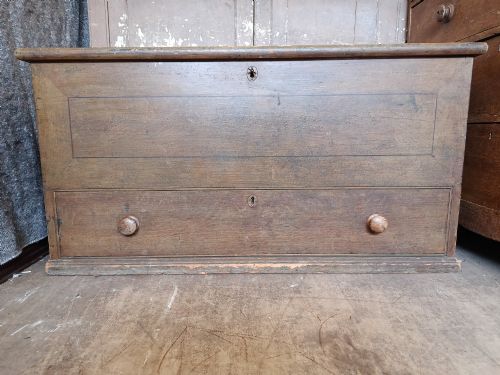
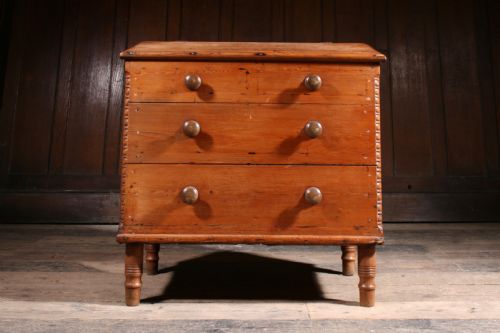
When you search for antique mule chest drawers, you are looking at substantial storage furniture combining a lift-lid compartment with base drawers.
Antique Mule Chest Drawers
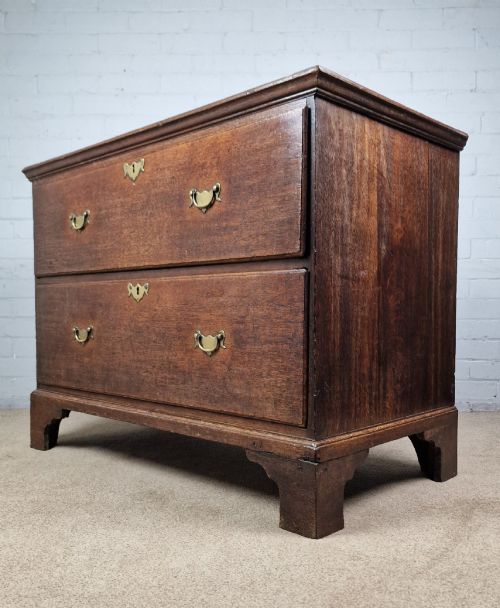
An antique mule chest drawers piece bridges the traditional lidded coffer and the chest of drawers, offering both top-opening blanket storage and deep base compartments. The listings here span from the 17th century through the Georgian and Victorian periods up to the early 20th century.
Oak forms the backbone of these pieces, alongside pine, mahogany, and walnut. Regional variations such as the Welsh coffer bach and the Lancashire mule chest appear frequently among the English country and Jacobean styles.
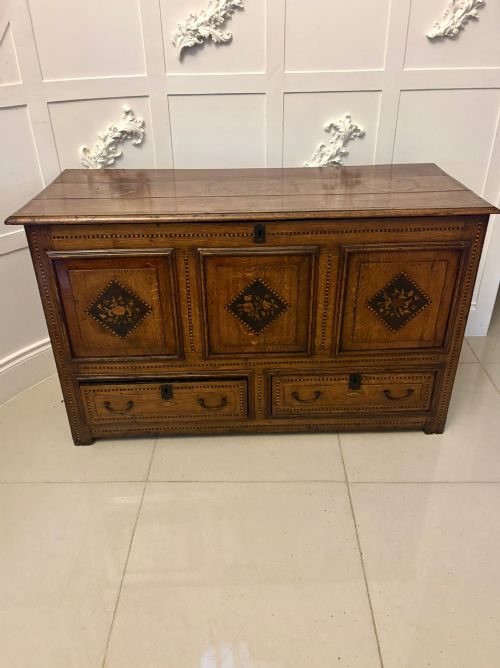
Buyers encounter solid timber construction, panelled bodies, and occasional painted finishes or marquetry inlay. These storage trunks served domestic utility across centuries before entering the antique market.
How They Were Made
Joiners built these storage chests predominantly from solid English oak and pine, utilising frame and panel construction to accommodate seasonal timber movement. Crossbanding in mahogany and marquetry inlay added decorative contrast to Georgian and 17th-century examples.
Iron and brass provided functional hardware for hinges, lockplates, and drawer pulls. Surface treatments ranged from clear wax finishes to painted pine and green man carvings.
Form variations include coffer bach, marriage mule chests, and apprentice pieces alongside standard storage trunks.
What Varies in Quality
The degree of hand-carved detail, such as intricate panel work or figural carvings, distinguishes simpler cottage furniture from high-status examples. Timber selection also dictates the tier, with burr elm panels or crossbanded mahogany marking superior craftsmanship.
Proportion and structural integrity define the architectural success of a piece, separating well-balanced Georgian forms from later utility versions.
The Antique Mule Chest Drawers Glossary
- Coffer bach
- A small Welsh chest, often featuring drawers beneath the main compartment. These miniature boxes served traditional domestic functions.
- Crossbanding
- A strip of veneer applied perpendicularly to the grain of the primary surface. This technique frames drawer fronts and panels on Georgian furniture.
- Marquetry inlay
- Decorative patterns formed by fitted pieces of various woods or contrasting materials set into the surface. It appears on finer 17th-century examples.
- Panelled oak
- Construction method using vertical stiles and horizontal rails enclosing flat or raised wooden panels. This technique gives stability to heavy chests.
- Coffer
- A large wooden chest used historically for storing valuables and textiles. Adding drawers underneath transformed the basic coffer into a mule chest.
Antique Mule Chest Drawers: Frequently Asked Questions
What is a mule chest?
A mule chest is a traditional storage piece that combines a hinged lid for top access with one or more drawers built into the base.
This hybrid form evolved to make stored textiles and garments more accessible without requiring items on top to be moved.
How old are these chests?
The pieces span multiple centuries, ranging from 17th-century Jacobean examples through Georgian and Victorian eras up to the early 20th century.
Oak pieces dominate the earlier periods, while pine and mahogany variants become common in the 18th and 19th centuries.
Where were they made?
These items originate primarily from English workshops, with distinct regional forms like Welsh coffer bach and Lancashire mule chests appearing in the record.
Makers utilised local timbers such as oak and pine alongside imported mahogany.
How do I style a mule chest at home?
These large storage trunks function effectively as blanket boxes at the foot of a bed or as hallway furniture for boots and linens.
The flat top surface also provides display space for lamps, books, or decorative objects.