





Antique Moonstone Jewellery
Antique moonstone jewellery brings a distinctive adularescent glow to the neckline, wrist, or finger, prized for its ethereal blue sheen.
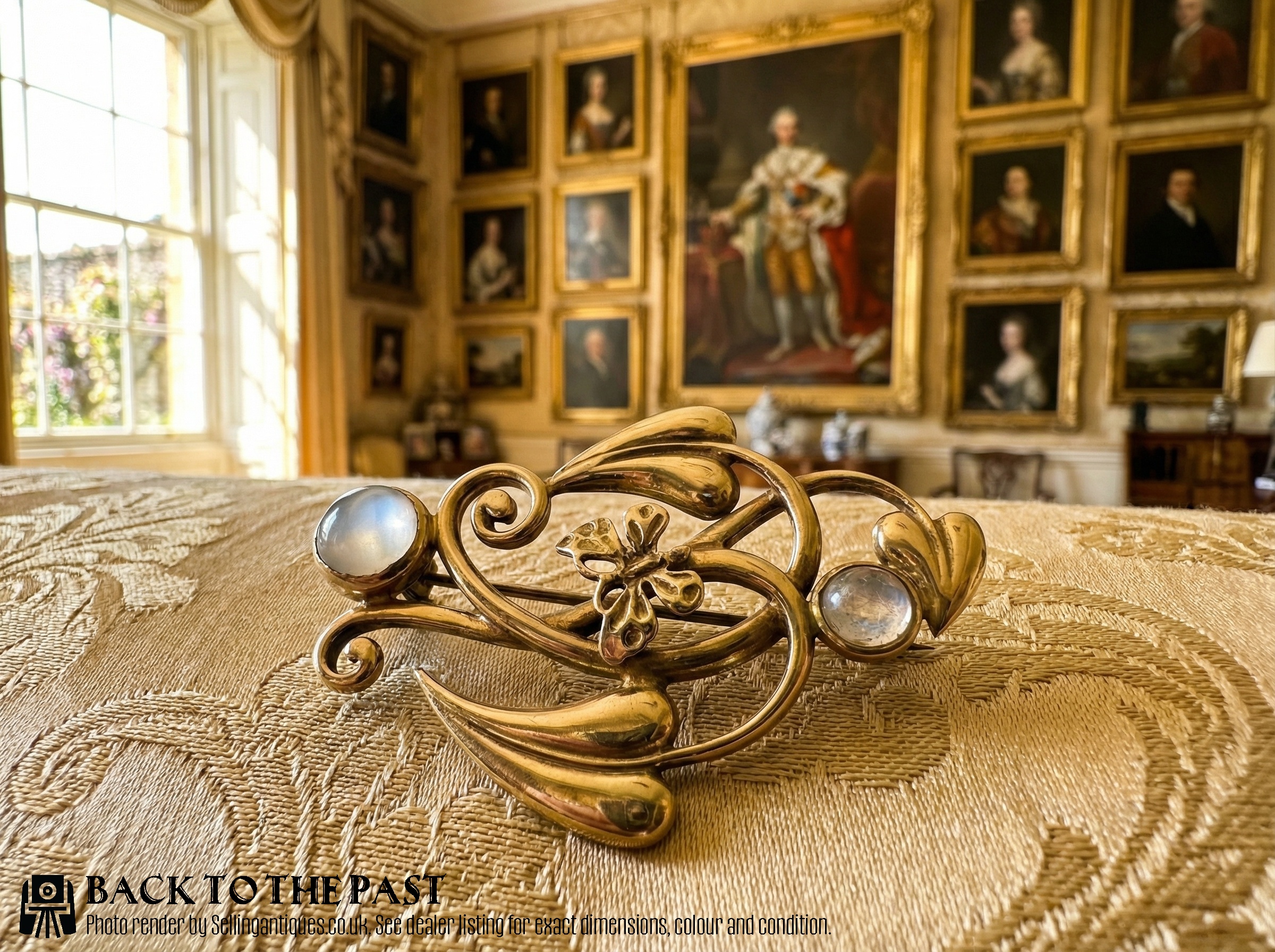
Antique Moonstone Jewellery
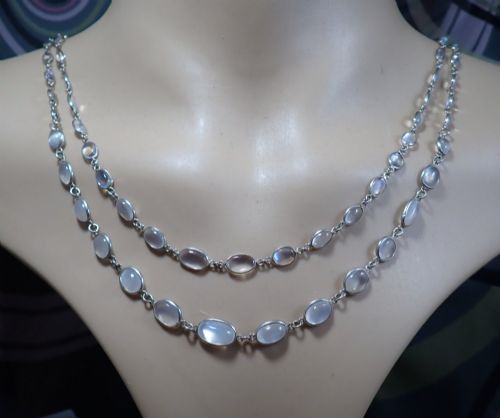
Antique moonstone jewellery encompasses necklaces, rings, brooches, pendants, earrings, bracelets, and bangles originating from the Georgian, Victorian, Edwardian, and Art Deco eras. Pieces range from simple sterling silver rings to elaborate gold lavaliere necklaces and festoons.
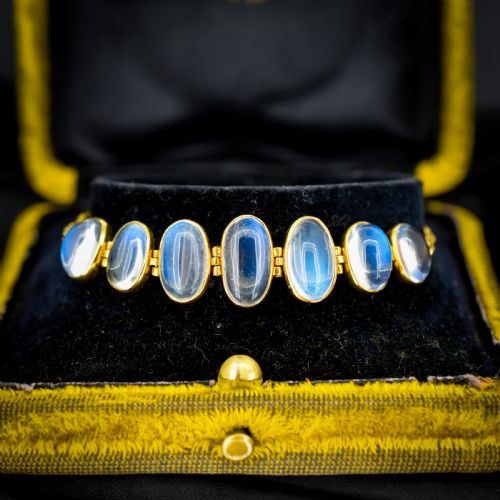
The selection on this page leans heavily into the Arts and Crafts and Edwardian periods, where handcrafted silver and natural gemstones predominate. Buyers find both delicate everyday pins and substantial multi-stone gold bracelets.
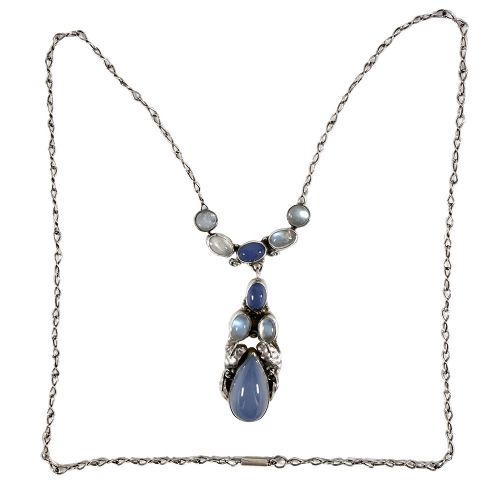
Makers and designers of note contribute specific Arts and Crafts and Art Deco interpretations, combining moonstones with pearls, chalcedony, diamonds, and enamel.
How they were made
Gems are cut as oval cabochons to maximise the floating light phenomenon known as adularescence, then set in sterling silver, 9ct gold, 15ct gold, 18ct gold, or platinum. Metalsmiths of the Arts and Crafts movement employed hand-beaten silver work alongside bezel settings.
Detailing often incorporates seed pearls, diamonds, sapphires, garnets, amethyst, coral, or enamel work to frame the central moonstone. Construction methods range from delicate filigree and wirework to robust cast gold hinges and safety chains.
Antique Moonstone Jewellery Retail Price Guide 2026
Typical asking prices for moonstone jewellery among the pieces listed under this phrase on Sellingantiques today, from the lower quarter to the upper quarter. They describe what is for sale here now, not the wider market.
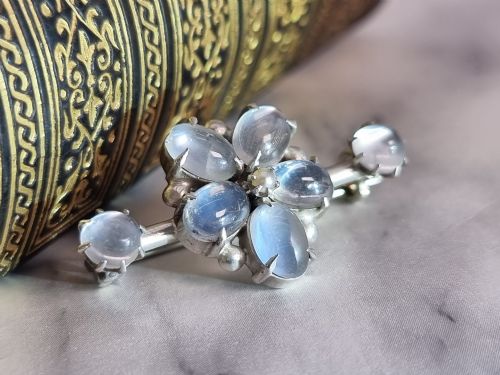
One determined little scorpion brooch scurries through the Edwardian silver selection, brandishing a glowing moonstone body.
What varies in quality
Quality rests primarily on the optical clarity and blue intensity of the moonstone cabochon itself, alongside the integrity of the surrounding metalwork. Superior stones exhibit a strong, floating adularescent sheen rather than a flat, milky white appearance.
Artistic execution and provenance elevate certain pieces, particularly those bearing the hallmarks or distinct stylistic markers of prominent Arts and Crafts workshops. The harmony between secondary gems like diamonds, sapphires, or chalcedony and the primary moonstone also dictates the standing of a piece.
Mary Thew·Knoll and Pregizer·George Hunt·John Paul Cooper·Dorrie Nossiter·Amy Sandheim
The Antique Moonstone Jewellery Glossary
- Adularescence
- The optical phenomenon where light billows or glows across a gemstone, creating the signature floating blue sheen of a quality moonstone. This effect results from light scattering between microscopic layers of feldspar.
- Cabochon
- A gemstone shaped and polished with a smooth, convex dome rather than faceted edges. This cut is essential for displaying the luminous qualities of moonstones and opals.
- Lavallière
- A pendant necklace featuring a central drop suspended from a chain, popular during the Edwardian period. These pieces often incorporate pearls and diamonds alongside large moonstones.
- Festoon
- A necklace style featuring chains, swags, or draped links that sit across the collarbone. They frequently combine moonstones with coloured stones like amethyst, garnet, and coral.
- Bezel setting
- A method of securing a gemstone where a thin metal strip is wrapped around the stone's perimeter and pushed over its edge. This technique dominates Arts and Crafts jewellery design.
Antique Moonstone Jewellery: Frequently Asked Questions
How do I care for antique moonstone jewellery?
Moonstone is a softer gemstone, measuring around six on the Mohs hardness scale, so it requires gentle handling to avoid scratches. Clean pieces using warm soapy water and a soft cloth, avoiding harsh ultrasonic cleaners and chemical dips.
Store items separately in lined boxes or soft pouches to prevent harder gems like diamonds from rubbing against the moonstone surface.
How can I tell an Edwardian moonstone piece from a Victorian one?
Victorian pieces often utilise heavier yellow gold settings, intricate seed pearl clusters, and robust clasp mechanisms. The designs tend toward romantic symbolism, incorporating hearts, lovers' knots, and substantial framing.
Edwardian and Arts and Crafts pieces frequently favour sterling silver, lighter platinum, or rose gold. They highlight hand-wrought metalwork, whiplash lines, and open-backed bezel settings that let light pass directly through the stone.
What is adularescence in antique moonstones?
Adularescence is the milky, bluish light that appears to billow from beneath the surface of the stone when it is rotated under a light source. It is caused by the intergrowth of different feldspar minerals scattering light rays.
Top-tier antique moonstones display a bright, centered blue sheen that moves freely across the cabochon dome.
Can I wear an antique moonstone ring every day?
Wearing an antique moonstone ring daily requires mindfulness because the stone can scratch or fracture under sharp impacts. Choosing pieces with protective bezel settings helps shield the girdle of the stone from knocks.
For heavy daily wear, pendants, earrings, and brooches face significantly less physical impact than rings worn on the hands.