





Silver Cabochon Brooch
A silver cabochon brooch brings together polished domed stones and precious metal in wearable forms that span from the Victorian era to the mid-twentieth century.
Silver Cabochon Brooch
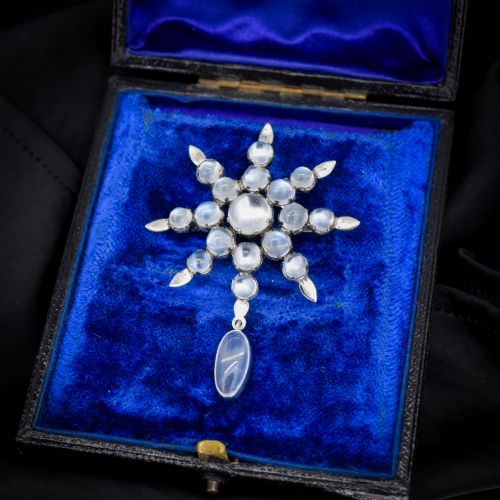
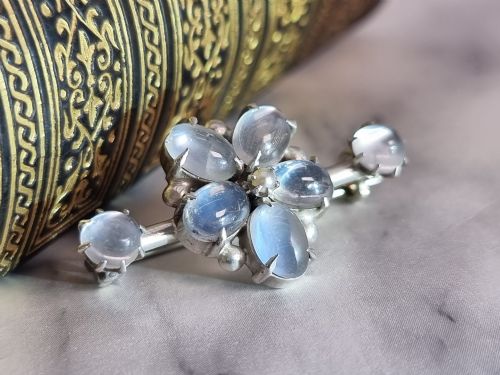
When you search for a silver cabochon brooch, you encounter pieces defined by unfaceted, smoothly rounded gemstone cuts set within silver frames. The selection includes frequent examples from the Victorian, Edwardian, and Arts and Crafts periods, alongside later mid-century designs.
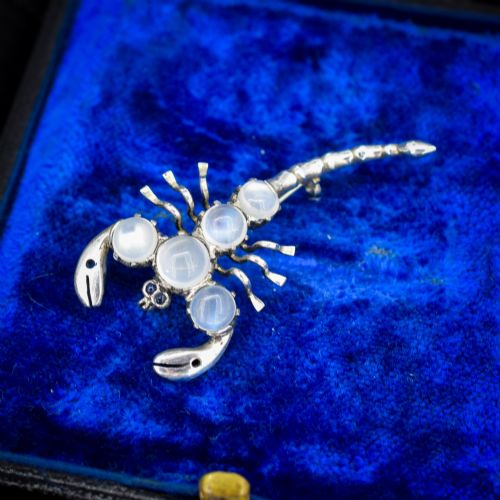
The forms vary widely across the inventory, ranging from botanical flower and floral motifs to insects such as frogs, scorpions, and dragonflies, as well as geometric horseshoe shapes. Many items function dually as pendant brooches, offering versatility in how they are worn.
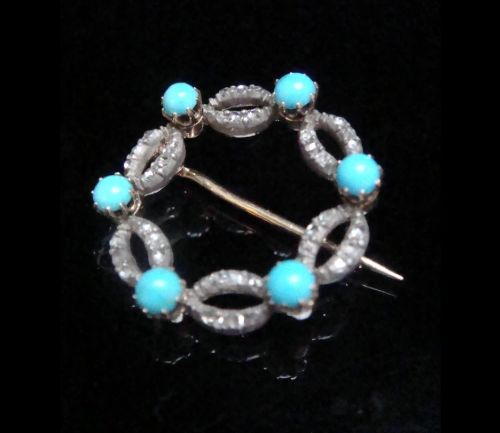
You are most likely to meet moonstone and turquoise as the primary cabochon stones on this page, often paired with silver or silver gilt settings. Pieces span centuries of craftsmanship, connecting nineteenth-century revival work with twentieth-century modernist production.
Materials and construction
Maker workshops utilised sterling and standard silver, frequently applying a silver gilt wash over base layers to achieve a rich golden tone. Gemstones including moonstone, turquoise, opal, amber, and carnelian were shaped into smooth cabochons rather than cut with facets.
Techniques range from intricate filigree wirework in Chinese export pieces to enamelling and marcasite pavé settings that frame the central stones. Master jewellers secured these cabochons in closed or open-backed silver mounts, integrating pins and pendant loops by hand.
Silver Cabochon Brooch Retail Price Guide 2026
Typical asking prices for silver cabochon brooch among the pieces listed under this phrase on Sellingantiques today, from the lower quarter to the upper quarter. They describe what is for sale here now, not the wider market.
A tiny silver frog crouches permanently in mid-jump, holding a polished marcasite shield against the passage of time.
Assessing quality
The standard of a piece rests on the selection and matching of the cabochon stones, where uniform polish and deep natural lustre elevate the design. Finer items display meticulous hand-setting in the metalwork, whether through delicate wire filigree or substantial cast silver mounts.
Design coherence separates standard production from exceptional work, particularly in Arts and Crafts examples where hand-wrought details and signed studio marks indicate distinct authorship. The integrity of original enamelling and the secure seating of soft stones also define the higher tier.
The Gaskins
The Silver Cabochon Brooch Glossary
- Cabochon
- A gemstone shaped and polished with a smooth, convex domed surface rather than being faceted. This cut is particularly suited to opaque or translucent stones like moonstone, turquoise, and opal.
- Silver Gilt
- Silver that has been coated with a thin layer of gold, often referred to as vermeil. This technique provides the warmth of gold combined with a silver base.
- Marcasite
- Small, faceted pieces of iron pyrite polished and set closely together to resemble diamonds. It creates a dark, glittering metallic border popular in twentieth-century jewellery.
- Filigree
- Delicate jewellery ornamentation made from fine wire soldered together in open lace-like patterns. It appears frequently in antique silver and silver gilt work.
Silver Cabochon Brooch: Frequently Asked Questions
What is an Arts and Crafts brooch?
An Arts and Crafts brooch originates from a late nineteenth and early twentieth-century design movement that emphasised hand-craftsmanship over industrial mass production. These pieces often showcase naturalistic motifs like flowers, leaves, and insects.
Makers working in this style favoured cabochon stones in unpolished or softly gleaming settings, highlighting the natural character of the materials rather than gemstone brilliance.
How do I care for antique silver jewellery?
Antique silver jewellery requires gentle maintenance to preserve both the metal and soft cabochon stones like turquoise and opal. Avoid submerging porous stones in liquid cleaners or exposing them to harsh chemical polishes.
Store pieces individually in soft pouches away from direct sunlight and moisture to prevent tarnish and protect delicate surface details.
How can I tell an Edwardian brooch from a Victorian one?
Victorian brooches often display heavier, more ornate metalwork with deep chasing and substantive stones, reflecting the romantic and revivalist moods of the nineteenth century. Edwardian pieces generally shift toward lighter, airier designs utilising platinum or bright silver with delicate floral or geometric openwork.
Examining the pin mechanism and overall weight can also provide clues, as Edwardian jewellers favoured finer, lace-like mountings.