






Antique Monk Seat
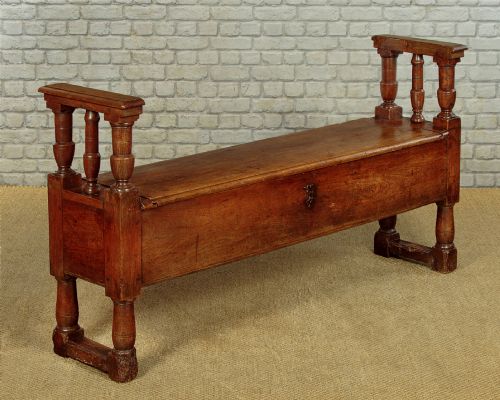
An antique monk seat offers solid timber construction and clever dual-purpose seating that suits both hallways and living spaces.
Antique Monk Seat
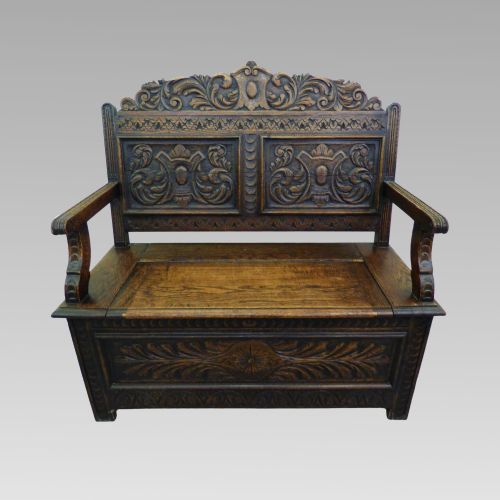
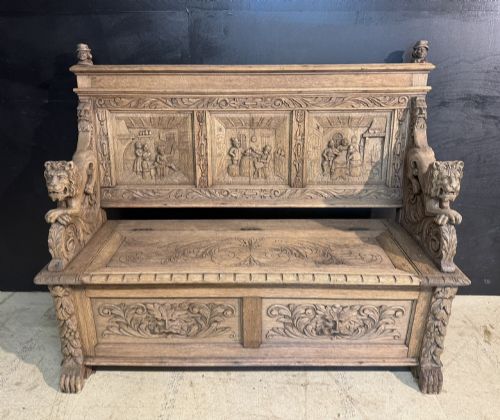
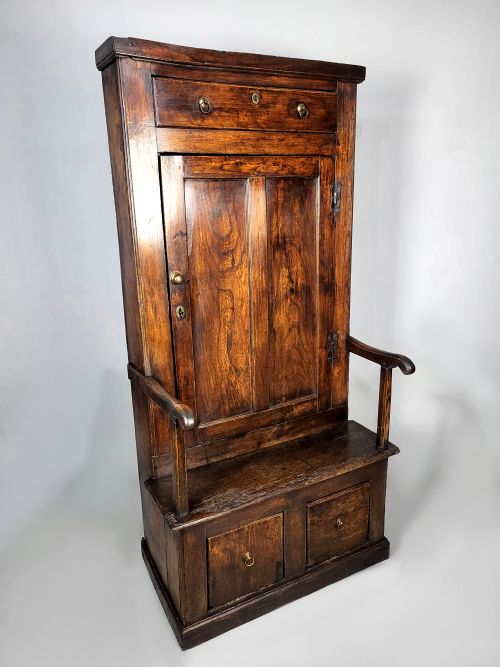
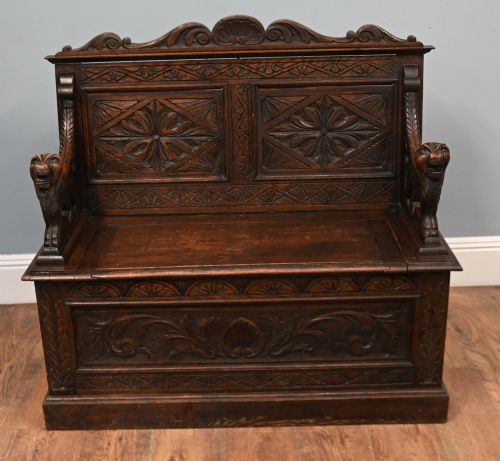
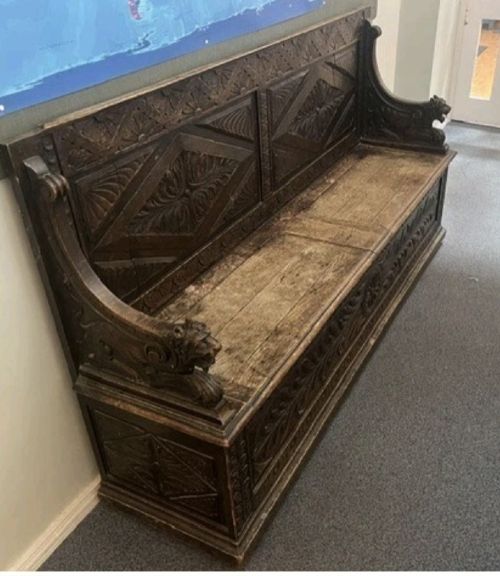
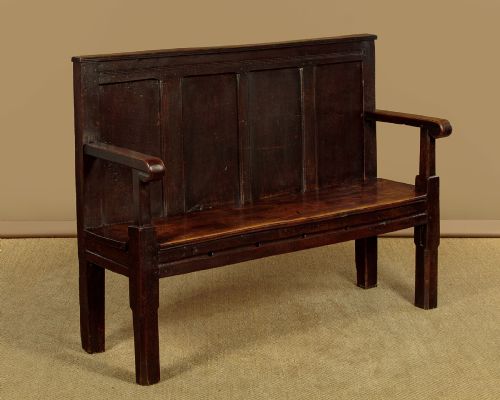
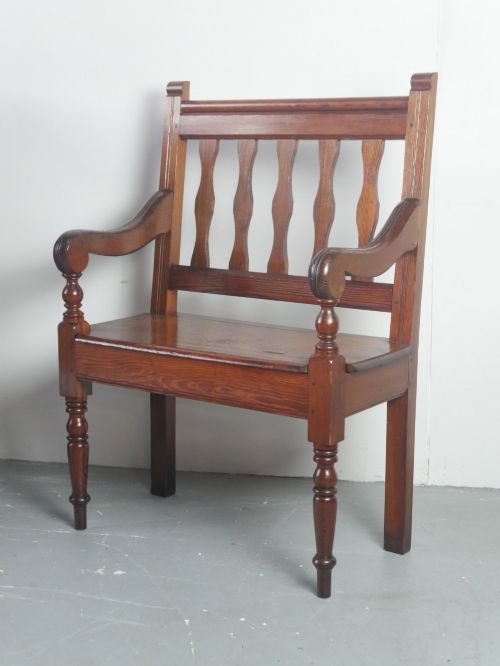
When you search for an antique monk seat, you encounter substantial wooden seating that often incorporates storage or a convertible top. These pieces appear across multiple historical periods, including the seventeenth, eighteenth, and nineteenth centuries, as well as the Edwardian era.
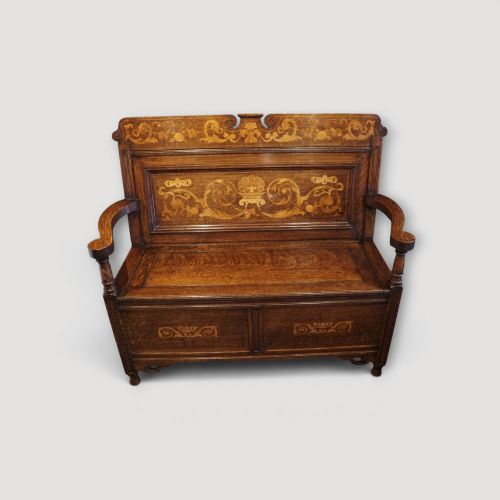
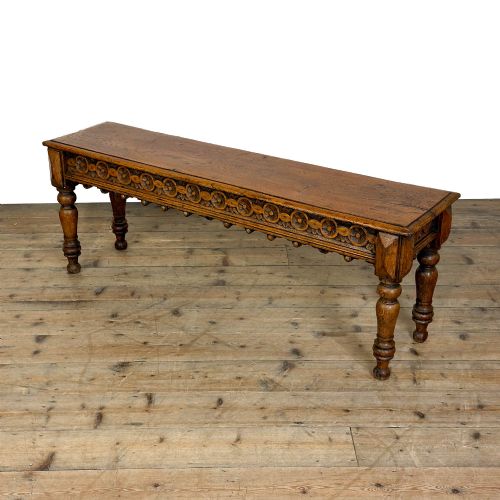
The inventory on this page spans several related forms, such as settles, hall benches, and box settles. Examples range from compact single-seat hall pieces to large country house settles with high panelled backs and lift-up storage compartments.
Regional variations and revival styles shape the selection significantly. Pieces emerge in Jacobean Revival, Renaissance Revival, and Arts and Crafts aesthetics alongside simpler country and cottage iterations.
Distinguishing quality factors
The integrity of the timber and the depth of the carving determine the standing of an individual piece. Earlier examples from the seventeenth and eighteenth centuries often display heavier patination and more complex panel construction than later revival versions.
Proportion and utility also dictate standard, where pieces retaining original board seats, operational folding tops, and untouched hardware hold greater design coherence.
Antique Monk Seat Retail Price Guide 2026
Typical asking prices for monk seat among the pieces listed under this phrase on Sellingantiques today, from the lower quarter to the upper quarter. They describe what is for sale here now, not the wider market.
Materials represented across the inventory include solid oak, pine, ash, and brass, finished with historic wax or original paint.
Liberty·Shapland & Petter
The Antique Monk Seat Glossary
- Box settle
- A high-backed wooden bench featuring a storage compartment beneath the seat. This form kept occupants sheltered from draughts in older interiors.
- Fold over top
- A hinged backrest mechanism that rotates forward to form a table surface. This design gives the monk seat its dual utility.
- Panel-back
- A construction method utilising wooden boards fitted within a structural frame. It provides rigidity and allows for decorative carved motifs.
- Patina
- The surface sheen and colour acquired by wood through age, handling, and waxing. It serves as an indicator of a piece's longevity.
Antique Monk Seat: Frequently Asked Questions
How do I use a monk seat at home?
Place a smaller monk seat in a hallway to provide a convenient spot for footwear storage beneath the lift-up lid.
Larger versions with high backs serve well against a dining wall or in a living room where the convertible tabletop adds functional surface area.
How do I date an antique monk seat?
Examine the construction methods, such as hand-cut pegged joints and timber grain, which indicate earlier seventeenth and eighteenth-century craftsmanship.
Revival pieces from the Victorian and Edwardian eras often feature machine-sawn components and more elaborate decorative carving styles.
What is the difference between a settle and a monk seat?
A standard settle is a high-backed wooden bench designed primarily for seating, often with a box base for storage.
A monk seat specifically incorporates a top that folds down to create a flat table surface in addition to the bench function.
Are these seats comfortable to sit on?
Constructed entirely from solid wood like oak and pine, these benches offer a firm seating experience typical of historical furniture.
Many owners add loose cushions or textiles to soften the wooden seat base for everyday use.