
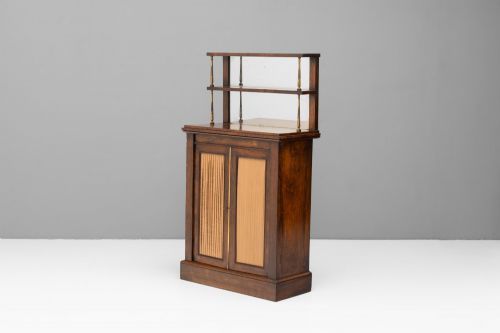
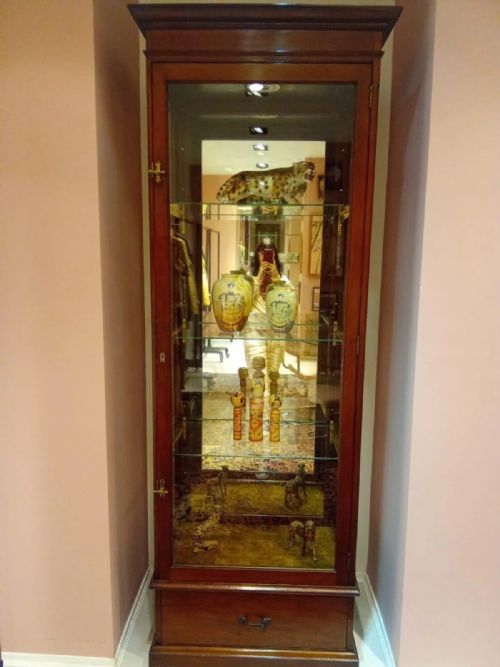
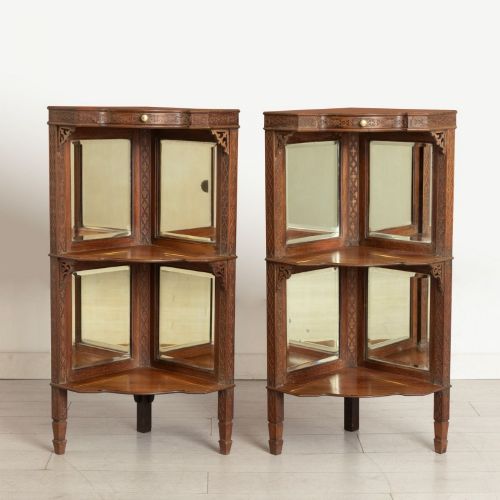
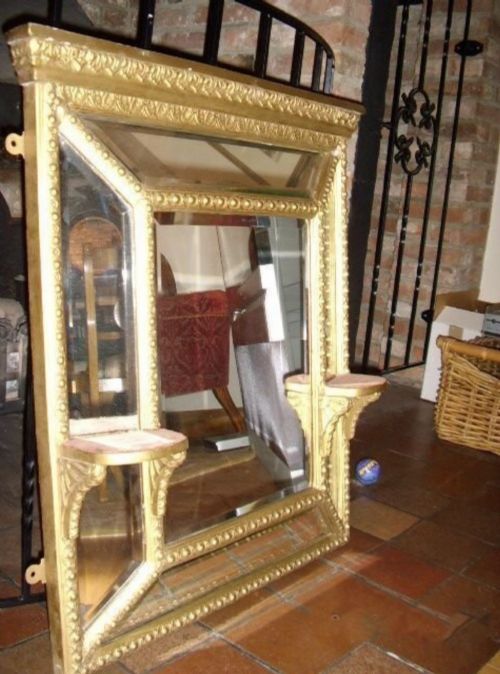
Antique Mirrored Shelves
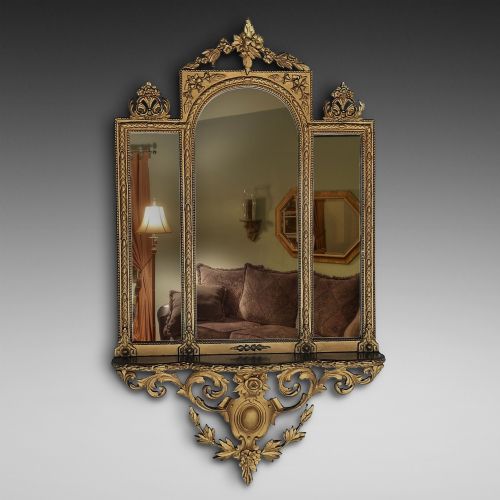
These antique mirrored shelves combine functional display space with reflective glass, bringing depth and light to period interiors.
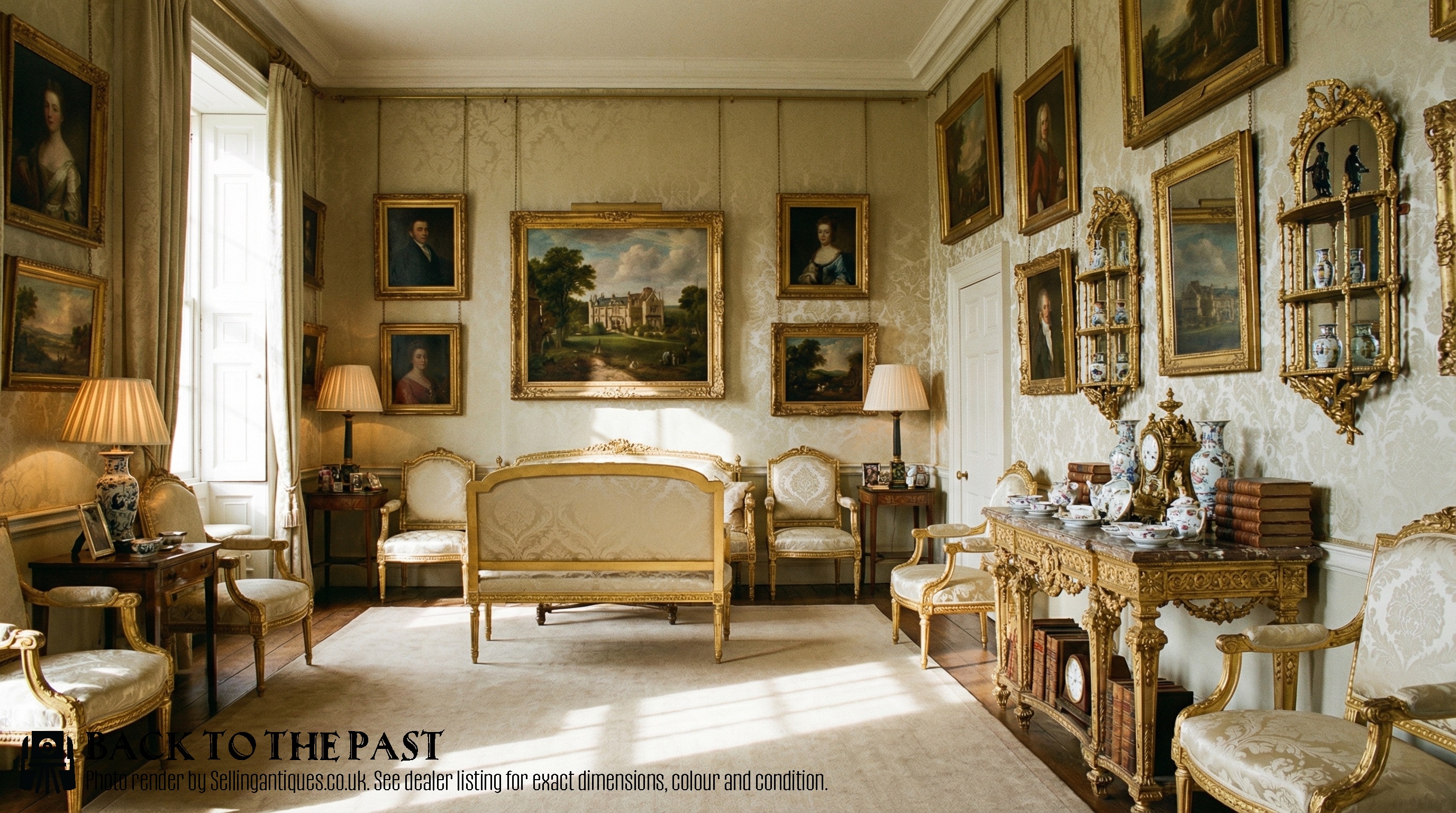
Antique Mirrored Shelves
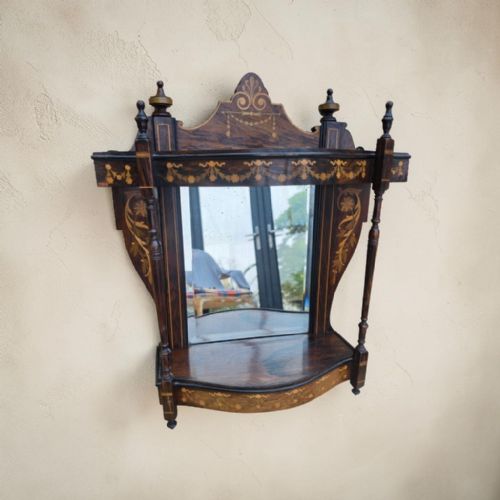
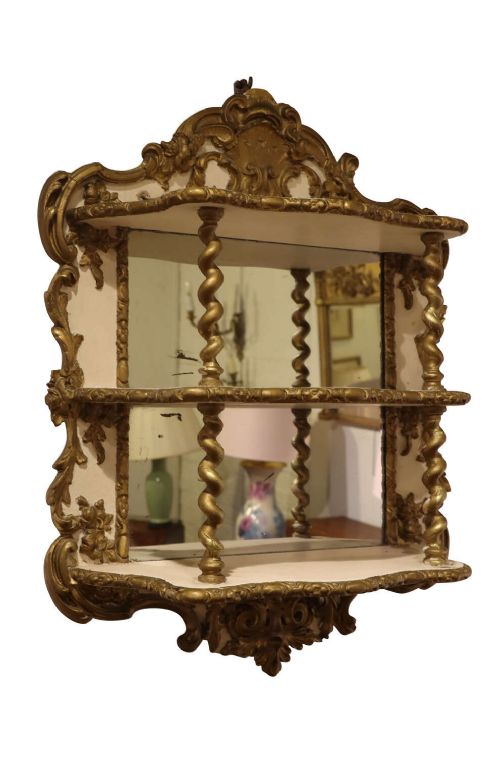
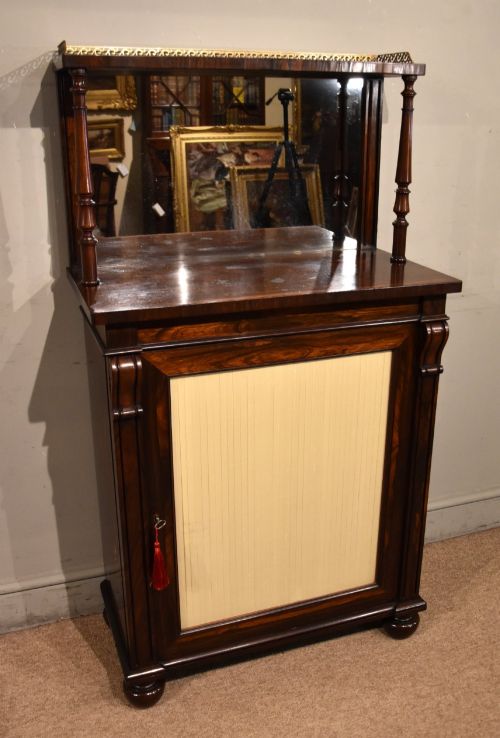
Antique mirrored shelves encompass wall-mounted brackets, hanging cabinets, and larger overmantel or credenza designs incorporating glass surfaces. These pieces emerge from the nineteenth and early twentieth centuries, spanning Victorian, Edwardian, and Aesthetic Movement periods.
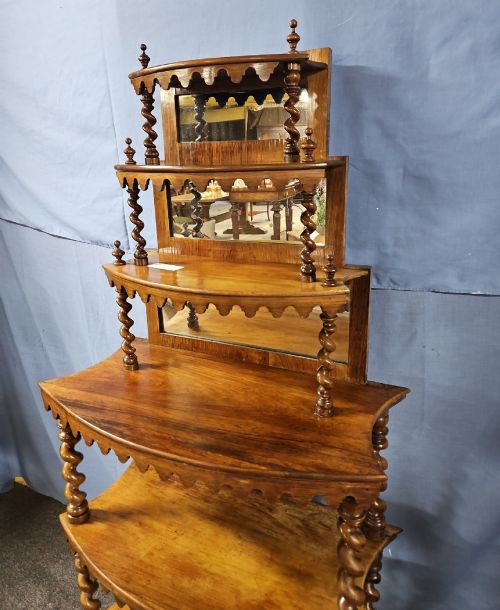
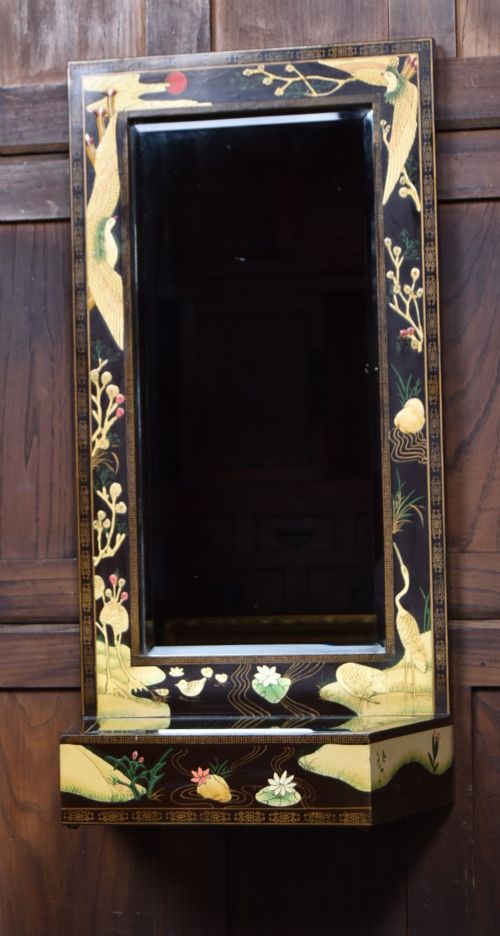
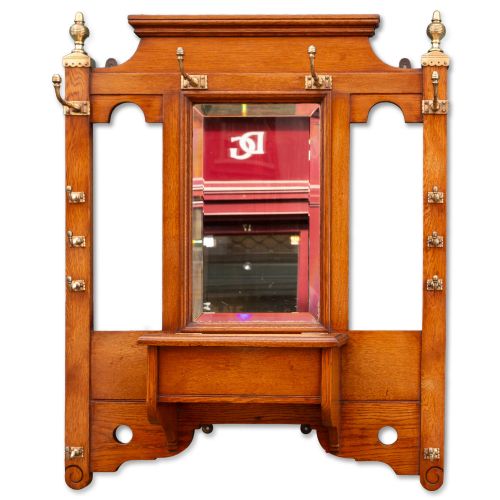
Buyers most frequently encounter smaller wall-hung formats featuring single shelves and small mirrors, alongside larger cabinetry where mirror glass forms a decorative backing behind display tiers.
How they were made
Cabinetmakers utilised dense hardwoods such as mahogany, rosewood, burr walnut, and oak for structural integrity and rich grain patterns. Giltwood and brass fittings provided decorative contrast, while mirror glass was set into frames to catch and reflect light.
Joinery techniques included fine inlays, carving, and applied mouldings, with bevel-cut glass panels secured into wooden or brass frames by hand.
Listings span the nineteenth and early twentieth centuries, featuring materials like brass, mahogany, rosewood, and burr walnut across Victorian and Edwardian styles.
What varies in quality
Quality rests upon the selection of timber figures, such as burr walnut or rosewood veneers, and the crispness of hand-carved details or brass mounts. Finer examples display meticulous joinery and well-preserved original mirror plates with authentic foxing rather than modern replacements.
Gillows·Edwards & Roberts·Cottier & Co·Liberty & Co·Pauly et Cie·Strahan of Dublin·John Stow Ltd of Bradford
The Antique Mirrored Shelves Glossary
- Overmantel mirror
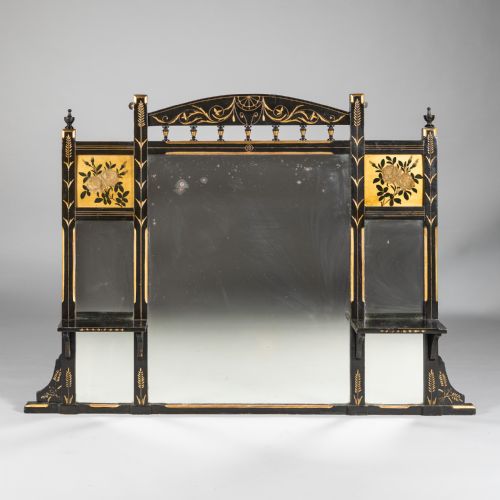
- A large mirror designed to hang specifically above a fireplace mantelpiece. These often incorporate small display brackets or shelves for ornaments.
- Whatnot
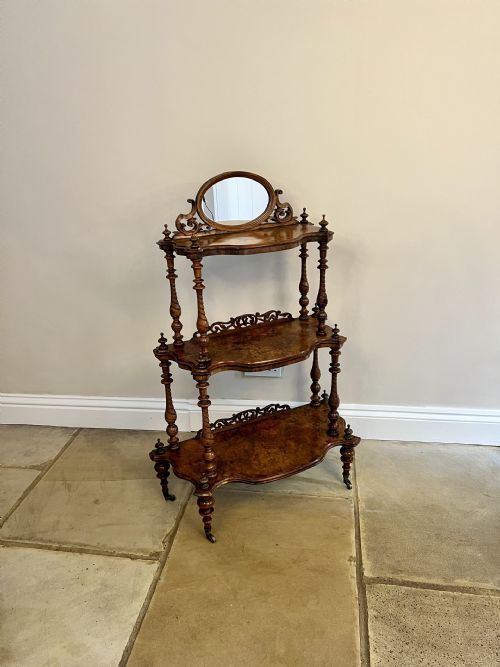
- A piece of freestanding furniture consisting of multiple open shelves for displaying small objects. Victorian examples frequently integrated a mirror into the upper framework.
- Credenza
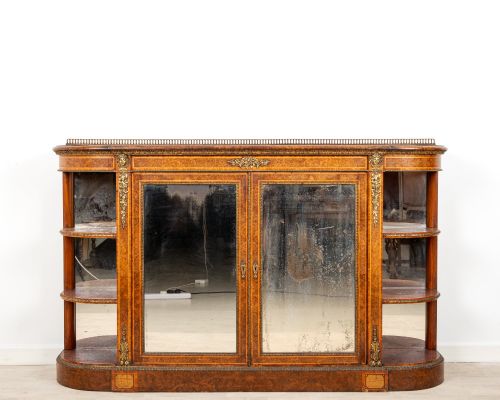
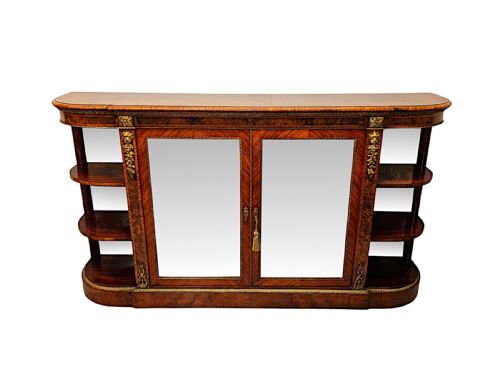
- A low dining-room sideboard or cabinet. Nineteenth-century versions commonly featured mirrored doors and ornate ormolu mounts.
- Girandole
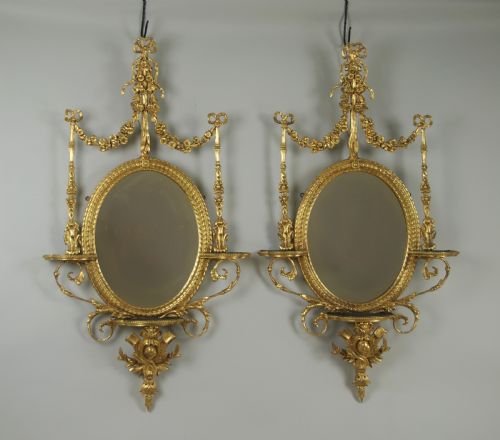
- An ornamental bracket mirror featuring attached candle sconces. The reflective glass multiplies the candlelight within a room.
- Aesthetic Movement
- A late nineteenth-century design style prioritising beauty and artistic expression over strict historical revival. Pieces from this movement often utilise ebonised wood and parcel-gilt details.
Antique Mirrored Shelves: Frequently Asked Questions
Where should I hang a mirrored shelf?
These pieces suit entrance halls, bedrooms, and reception rooms where they can reflect natural light and provide a small surface for everyday items.
Wall placement requires secure fixings into solid masonry or studwork to support the combined weight of the timber frame and heavy glass.
How do I care for antique mirror glass?
Cleaning requires a soft microfiber cloth and a gentle, ammonia-free glass cleaner applied sparingly to avoid seeping behind the silvering.
Original mirror plates often show natural ageing and dark spots known as foxing, which should be preserved rather than aggressively scrubbed.
Are these shelves structurally strong?
Most wall-hung variants are designed for lightweight decorative items, small ornaments, or toiletries rather than heavy book collections.
Checking the joints where shelves attach to the backplate ensures the timber remains stable and capable of holding intended objects safely.
How do I distinguish Victorian from Edwardian pieces?
Victorian items often lean towards heavier timbers like burr walnut and rosewood, frequently enriched with ornate carvings, giltwood, or intricate brass inlays.
Edwardian designs tend to exhibit lighter oak or mahogany construction, cleaner lines, and simpler geometric forms suited to brighter domestic spaces.