
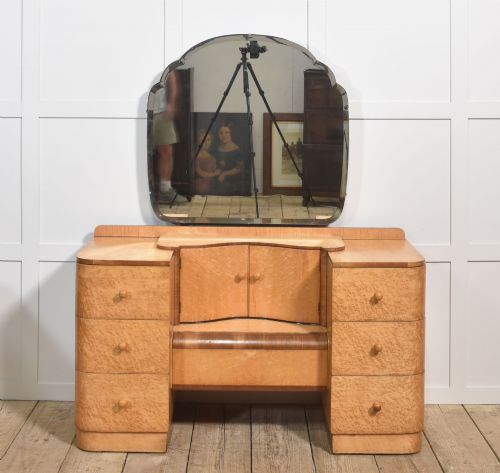
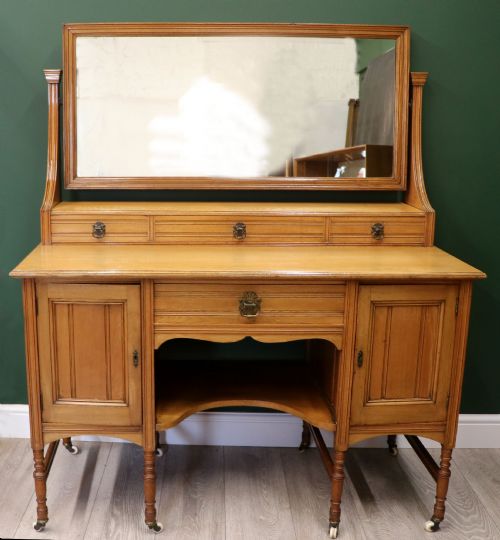


Antique Mirror Pedestal Desk
An antique mirror pedestal desk provides a generous writing and grooming surface flanked by banks of drawers, uniting practical workspace with built-in reflection.
Antique Mirror Pedestal Desk
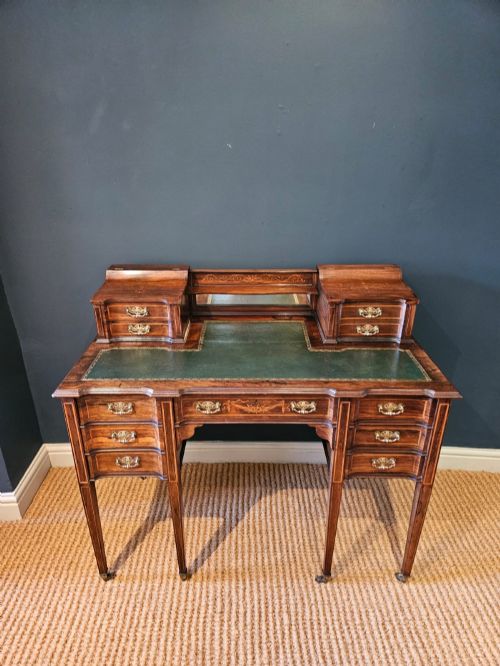
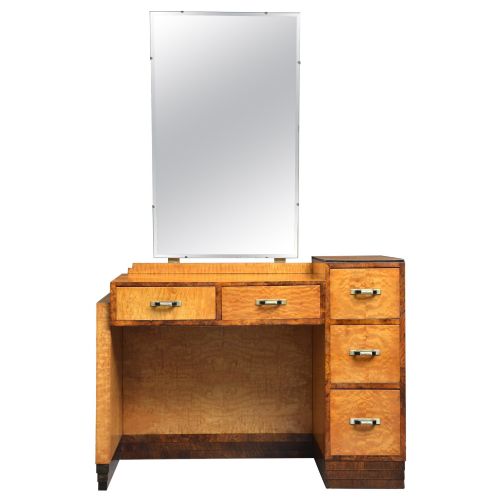
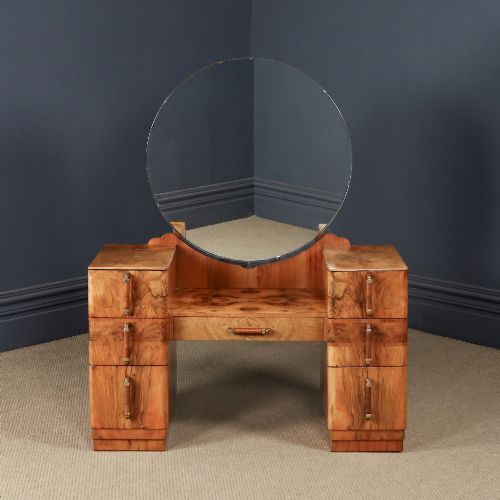
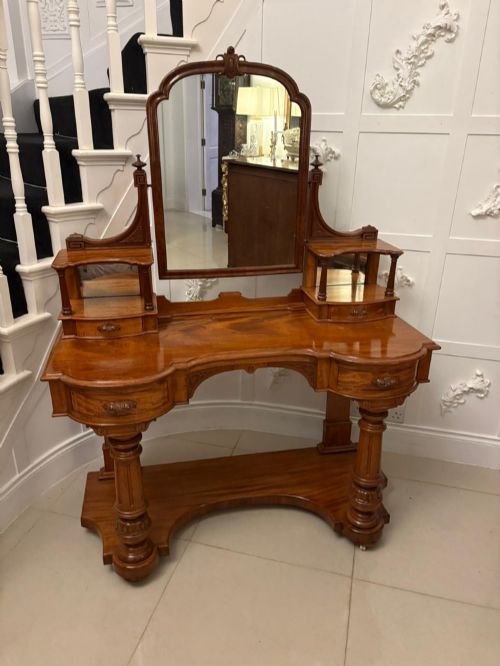
An antique mirror pedestal desk typically takes the form of a twin pedestal dressing table or kneehole chest fitted with an adjustable or fixed mirror, spanning the Victorian, Edwardian, and Art Deco periods.
The layout arranges two vertical stacks of drawers beneath a main top, creating a central kneehole space that accommodates a chair while keeping essentials within arm's reach.
Makers fashioned these pieces primarily in mahogany, walnut, and satinwood, drawing on styles ranging from Gothic Revival and Aesthetic Movement to streamlined 1930s Modernism.
Materials and Construction
Cabinetmakers constructed carcass frames in solid timbers such as mahogany and oak, applying figured walnut, burr walnut, maple, and satinwood veneers to prominent exterior surfaces.
Inlaid decoration utilises contrasting woods, banding, and marquetry techniques, whilst brass handles and fittings provide functional contrast to polished wood grains.
Listings feature woods spanning mahogany, satinwood, maple, and burr walnut across Victorian and Art Deco eras.
Evaluating the Craftsmanship
The standard of timber selection dictates visual appeal, with symmetrical grain patterns and choice burr veneers marking out superior examples from plain alternatives.
Drawer construction reveals structural integrity, where fine dovetailing, clean internal secondary woods, and smoothly running runners separate workshop output from mass production.
The retention of original mirror glass, brass hardware, and stencilled or inlaid decoration preserves the integrity and character of the piece.
Harry and Lou Epstein·Edwards & Roberts·John Taylor of Edinburgh
The Antique Mirror Pedestal Desk Glossary
- Kneehole
- A recessed central space beneath the main surface of a desk or dressing table designed to accommodate the user's legs.
- Pedestal
- A structural vertical column of drawers supporting one side of the upper writing or dressing surface.
- Marquetry
- Decorative patterns formed by the insertion of pieces of wood, shell, or ivory into a veneered surface.
- Satinwood
- A pale, hard timber from tropical trees that yields a lustrous, satin-like sheen when polished.
- Burr Walnut
- Timber taken from a tree growth or burl, prized for its swirling, highly figured grain patterns.
Antique Mirror Pedestal Desk: Frequently Asked Questions
How do I care for the wood surface?
Dust regularly with a soft, dry cloth and apply a quality beeswax periodically to nourish the timber.
Avoid placing the piece in direct sunlight or near heat sources to prevent the wood and veneer from drying out or cracking.
Can the mirror be removed for transport?
Most mirrors on these pieces are secured to the superstructure by removable brackets or screws.
Taking off the mirror plate and its frame greatly reduces weight and prevents accidental damage during moving.
How do I distinguish Victorian from Art Deco?
Victorian examples display heavier carved decoration, darker mahogany or walnut timbers, and traditional revival styles.
Art Deco pieces favour streamlined geometric forms, lighter maples, or figured walnut veneers with minimal ornamentation.