


Antique Milk Glass
Antique milk glass brings together opaque white vessels, lighting and tableware forged across the Georgian, Victorian and twentieth-century eras.
Antique Milk Glass
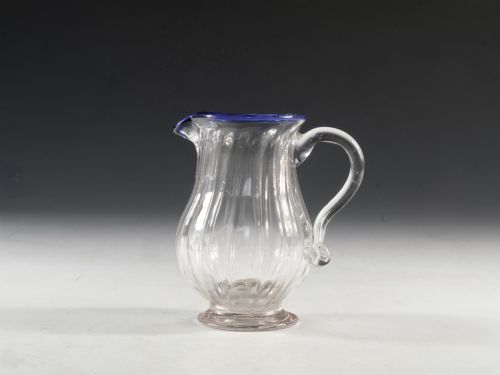
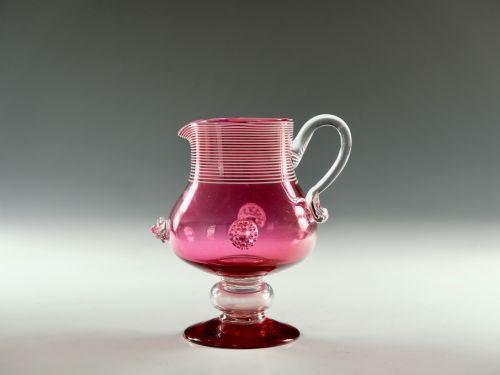
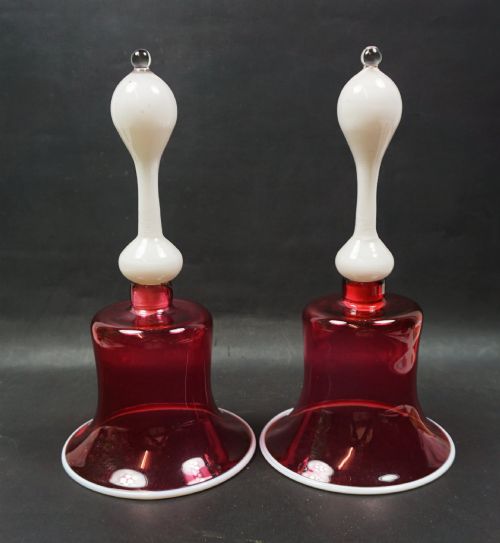
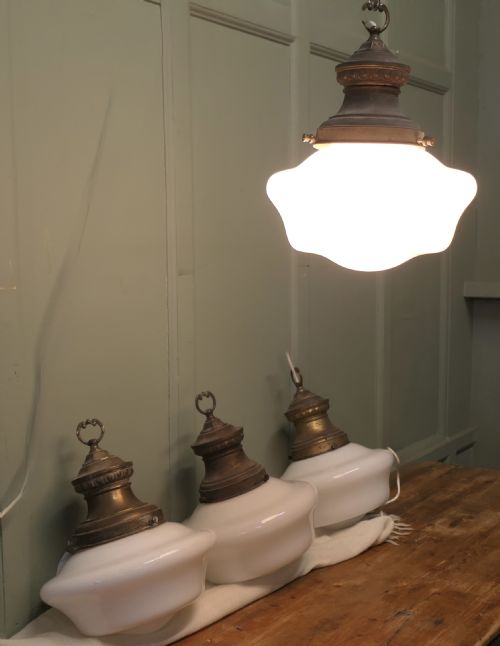
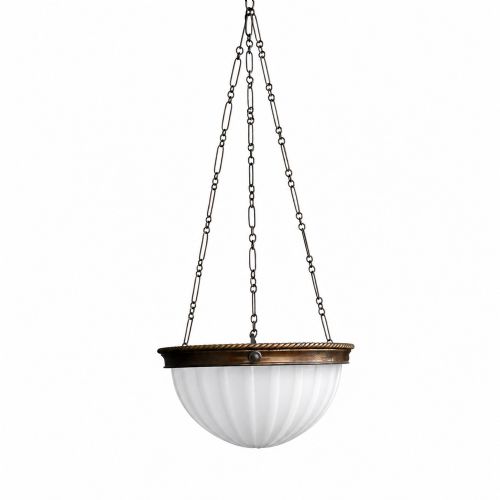
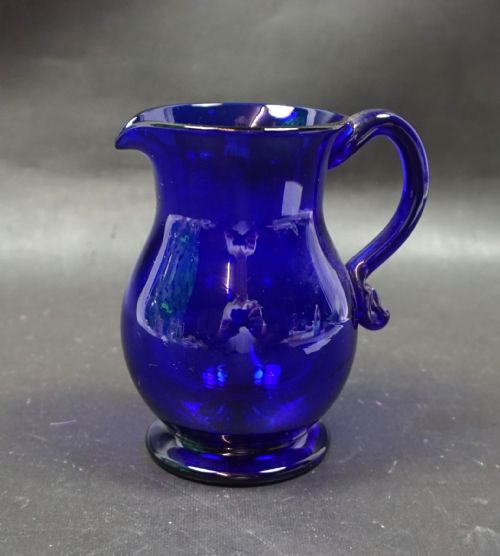
When buyers search for antique milk glass, they encounter an array of opaque white vessels, domestic lighting and decorative tableware spanning several centuries. The selections on this page incorporate utilitarian cream jugs alongside decorative vases, decanters and hanging pendant lights.
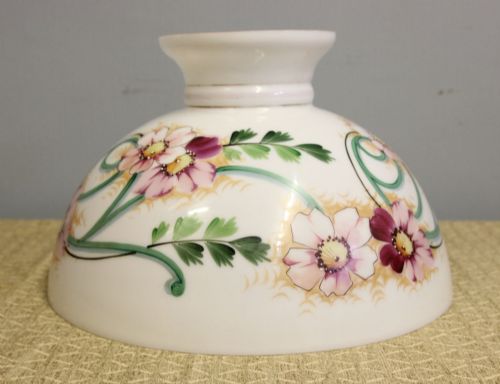
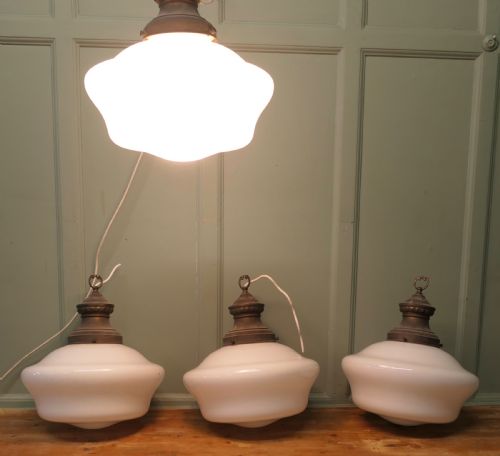
The most frequent forms met here include Victorian oil lamps, twentieth-century industrial lighting shades and Georgian tableware. Pieces originate from English, French, Swiss and Bohemian workshops, reflecting diverse regional manufacturing traditions.
Materials and construction methods
The objects combine opaque white glass with mounts of brass, copper and ceramic, frequently enhanced by enamel painting and gilt detailing. Glassmakers achieved opacity through various mineral additions, producing the characteristic dense white body seen in milk glass, opaline and moonstone variants.
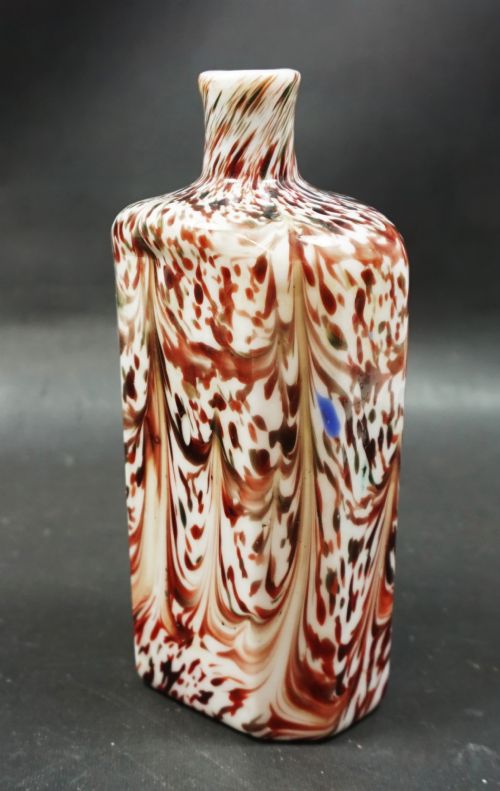
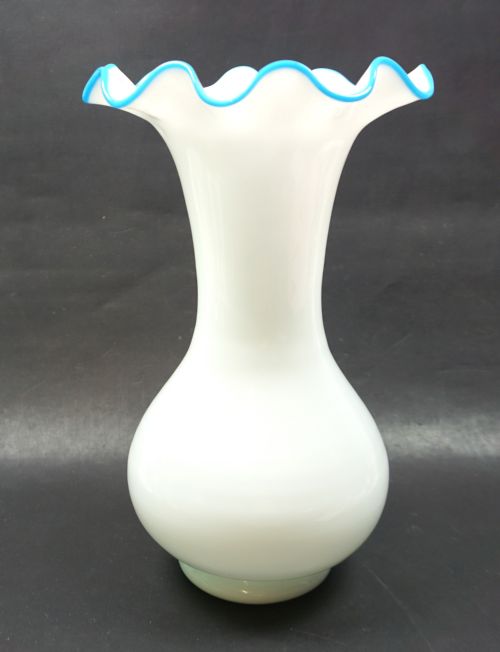
Forming techniques range from mould-blowing, seen in quilt-moulded flasks and reeded shades, to hand-finished application of rims and handles. Decorative elements include hand-painted floral panels, enamel motifs and applied coloured glass piping.
Objects recorded in the archive and current listings include cream jugs, decanters, oil lamps, pendant lights and decorative vases.
Factors separating tiers of quality
Differentiation across the range relies on the crispness of mould forms, the delicacy of hand-painted enamel work and the integration of metal mounts. Superior pieces display refined proportions and skilful execution in decorative details such as gilt highlights and painted floral panels.
The weight and consistency of the glass body, alongside the purity of colour in related opaline and moonstone pieces, indicate the standard of production. Original matching components, such as paired vases or complete lamp assemblies, elevate the integrity of surviving examples.
Jean Francois Robert·Baccarat
The Antique Milk Glass Glossary
- Milk glass
- An opaque white or translucent glass first produced in Venice and later widely adopted across Europe and England for tableware and decorative items.
- Opaline glass
- A type of semi-opaque glass, often in white or pastel shades, popular in nineteenth-century France for vases and lighting.
- Moonstone glass
- A translucent, milky glass variety utilised primarily for twentieth-century lighting shades and globes to diffuse illumination evenly.
- Nailsea glass
- A style of glasswork characterised by looped or threaded decoration, originating from the nineteenth-century English village production.
- Lustre
- A decorative tabletop ornament featuring a bowl with a scalloped rim hung with cut crystal glass drops, frequently made in pairs during the Victorian period.
Antique Milk Glass: Frequently Asked Questions
What is antique milk glass?
Antique milk glass refers to opaque white glass items produced from the eighteenth century through the early twentieth century. These pieces encompass domestic tableware, decorative vases and functional lighting fixtures.
Items range from simple cream jugs to elaborate oil lamps and pendant shades, showcasing diverse manufacturing techniques across England, France and Bohemia.
How do I date milk glass?
Dating relies upon stylistic markers, manufacturing methods and material composition observed within specific periods such as the Georgian, Victorian or Edwardian eras. Architectural details on lamp bases and lighting fixtures also provide chronological context.
Industrial lighting designs typically point to twentieth-century production, whereas hand-painted enamel decoration and specific mould forms often associate with nineteenth-century or earlier craftsmanship.
How were milk glass lamps used?
Milk glass lamps served as primary domestic lighting sources during the Victorian and Edwardian periods, utilising oil or paraffin to illuminate rooms. Opaque shades helped to soften and diffuse the glare from the flame.
Many survive today as converted table lamps, hanging pendant lights or decorative wall fixtures within period and contemporary interiors.
How do I care for antique glass?
Antique glass requires gentle cleaning with lukewarm water and a mild detergent, avoiding harsh abrasives that could damage enamel decoration or gilt highlights. Metal mounts and brass components should be polished separately with appropriate conservation materials.
Careful handling prevents chipping on delicate rims, applied handles and crimped edges found on vases, jugs and lamp shades.