





Antique Military Horse Artwork
These antique military horse artwork pieces bring centuries of cavalry history, spirited equines and notable officers straight to your walls.
Antique Military Horse Artwork
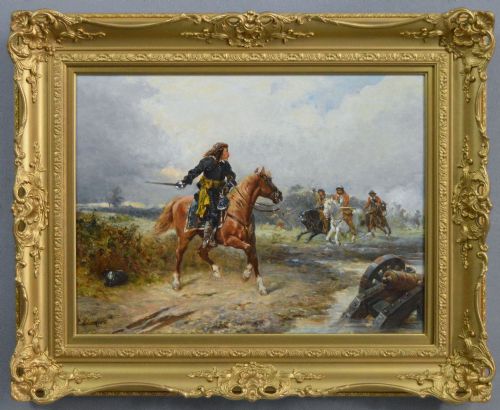
When you search for antique military horse artwork, you encounter a specialised mix of oil paintings, watercolours, framed prints and porcelain wall plaques. These works document mounted cavalrymen, specific named chargers and pivotal battlefield scenes across the eighteenth, nineteenth and early twentieth centuries.
The domestic selection most frequently brings forward nineteenth-century oil paintings and British sporting art alongside French cavalry watercolours and hand-coloured prints. Subjects span named mounts like Balmoral and military officers on horseback, framed in wood and glass.
Pieces range from intimate watercolour sketches to grander oil on canvas portraits executed by named artists such as Gilbert Scott Wright, Thomas Mackay and Albert Ferdinand Le Dru. They record the intersection of military commission and animal portraiture through Georgian, Victorian and Edwardian periods.
Materials and techniques
Makers utilised oil on canvas or board to build deep, rich tones for formal portraits of officers and their mounts, often sealing them behind glass within gilt wood frames. Watercolours on paper offer a lighter touch, capturing swift movement in cavalry skirmishes.
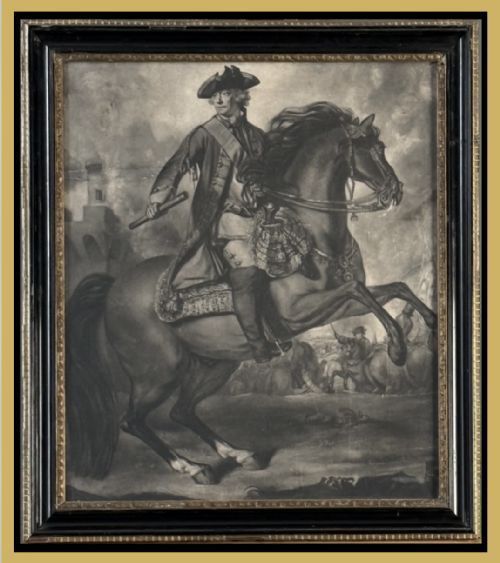
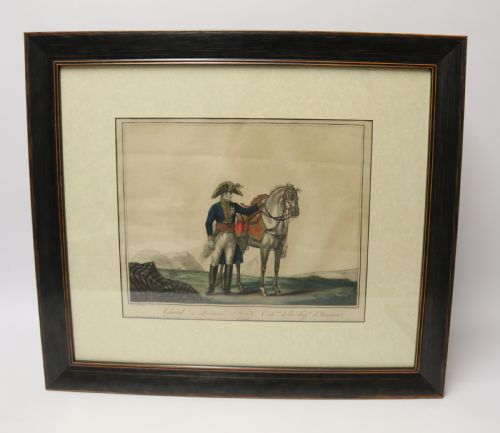
Printmakers employed mezzotint and hand-colouring techniques to reproduce military subjects for wider distribution, while porcelain served as a durable base for specialised wall plaques.
Antique Military Horse Artwork Retail Price Guide 2026
Typical asking prices for military horse artwork among the pieces listed under this phrase on Sellingantiques today, from the lower quarter to the upper quarter. They describe what is for sale here now, not the wider market.
One cheerful Victorian painting captures a rather rowdy tavern scene featuring a drunken and disorderly horse art context.
Assessing quality
Quality rests in the anatomical accuracy of the horse, the precision of the uniform details and the artist's ability to convey tension and motion in a mounted scene. Finer canvases display confident brushwork and nuanced handling of light on horse and rider.
Materials dictate longevity, with well-preserved paper works protected under glass and stable oil on canvas pieces retaining their original vibrancy without excessive craquelure or poor later restoration.
Edward Fisher·Gilbert Scott Wright·Thomas Mackay·Albert Ferdinand Le Dru·Donald Wood
The Antique Military Horse Artwork Glossary
- Mezzotint
- A printmaking process where the copper plate is roughened to achieve rich dark tones and subtle tonal gradations. It was frequently used for portraits of military commanders.
- Gilt
- A gold leaf or gold paint finish applied to wood frames to enhance the presentation of paintings and prints. This decorative coating reflects light across the wall.
- Cavalry
- Soldiers who fought on horseback, forming the primary mounted arm of historical military forces. Their engagements supply the central narrative for these artworks.
- Watercolour
- A painting method where pigment is suspended in a water-based solution on paper. It creates transparent washes that suit rapid outdoor sketches.
Antique Military Horse Artwork: Frequently Asked Questions
What periods do these pieces date from?
The works span from the seventeenth century through the Georgian and Victorian eras up to the early twentieth century. Most examples cluster around the nineteenth century.
Dates are assigned through stylistic evidence, artist signatures and costume details shown within the portraits and battle scenes.
How should I hang and light them?
Keep these framed works away from direct sunlight to protect fragile watercolours and paper prints from fading. Consistent indoor humidity preserves both canvas and wood.
Use picture lights or ambient room lighting to highlight the details of the uniforms and horses without generating excessive heat.
Are the horses usually named?
Some specific mounts, such as Balmoral, are recorded by name in the titles or inscriptions left by the artist. Others represent generic chargers attached to particular regiments.
Named horses usually accompany portraits of specific officers, documenting a valued animal alongside its owner.
How do I tell watercolours from prints?
Watercolours show direct brush texture and unique pigment pooling under close inspection. Prints reveal uniform dot patterns, ink consistency or plate marks from the printing process.
Hand-coloured prints layer watercolour washes over a printed base, combining mechanical reproduction with manual tinting.