
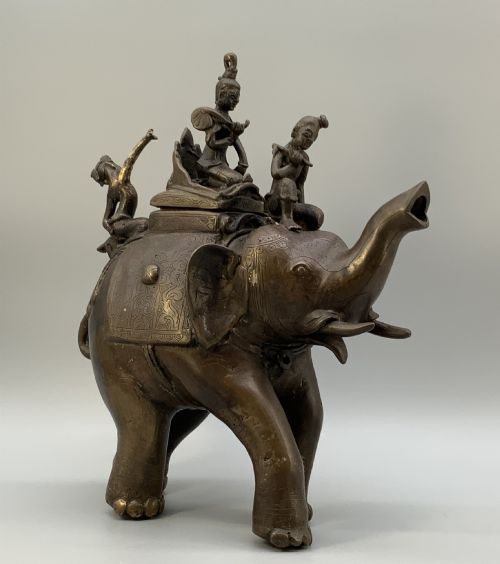
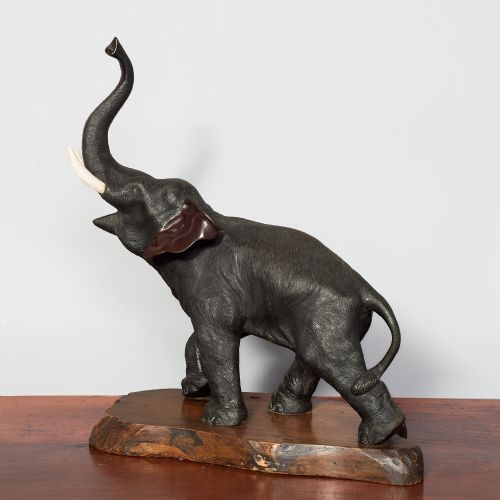


Antique Metalwork Elephant
These antique metalwork elephant figures and vessels bring remarkable craftsmanship into a room, forged in bronze and enamel.
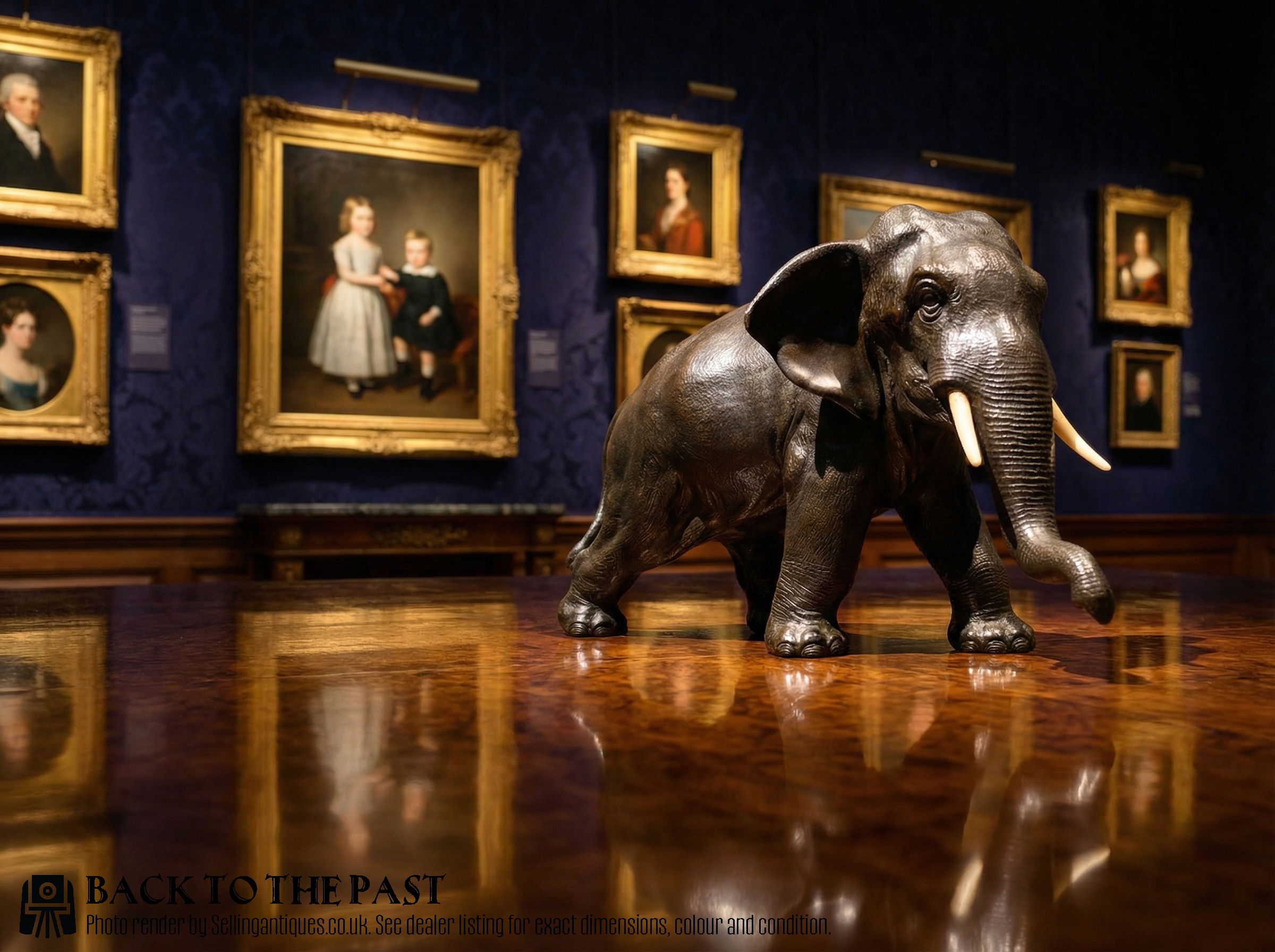
Antique Metalwork Elephant
An antique metalwork elephant brings together sculptural mastery and decorative arts, predominantly taking the form of free-standing animal figures and ornate bronze vases. Buyers searching for this phrase seek tactile representations of the animal rendered in cast metals, often incorporating riders, tusks, or elaborate decorative bases.
The selections available here span diverse origins, with Japanese Meiji period examples and Indian nineteenth-century sculptures forming the core of the offerings. Alongside sculptural figurines, collectors encounter utilitarian vessels such as baluster vases and bells featuring elephant motifs.
How they were made
Bronze serves as the primary medium, shaped through traditional casting techniques and finished with intricate surface engraving or mixed metal applications. Artisans integrated contrasting elements such as bone and ivory for tusks, alongside meticulous cloisonne and champleve enamel decorations.
Japanese workshops utilised sophisticated bronze casting alongside surface patination, while Chinese pieces often displayed colourful enamel cells soldered to the metal body. Certain works incorporate gilded bronze highlights and precious stones set into the eyes.
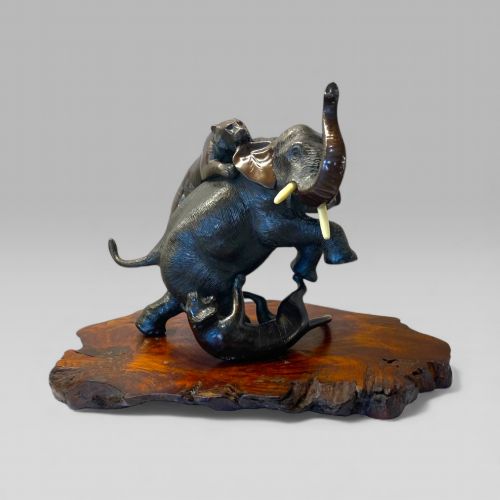
Several bronze elephants face fierce competition from tiny tigers clambering up their legs.
What varies in quality
The distinction between ordinary and exceptional pieces lies in the crispness of the chasing, the depth of the casting, and the naturalism of the musculature. Master workshops achieved a lifelike presence through precise anatomical detailing and balanced composition.
Materials integrated into the piece, such as genuine ivory tusks or diamond eyes, elevate the tier of a work. The complexity of the surface ornamentation, whether through fine engraving or multi-coloured enamelling, marks the artisan's dedication.
Tsunemitsu·Genryusai Seiya
The Antique Metalwork Elephant Glossary
- Meiji Period
- A era in Japanese history spanning from 1868 to 1912 noted for exceptional metalwork and bronze casting for export. Works from this time display refined patination and detailed animal sculptures.
- Cloisonne Enamel
- A decorative technique where thin metal wires form compartments on a bronze base, which are then filled with coloured paste and fired. This method creates vibrant patterns across vases and animal figures.
- Okimono
- A Japanese term for a decorative object designed for display on a shelf or tokonoma alcove. These small-scale sculptures prioritise aesthetic detail over practical utility.
- Champleve Enamel
- A process where troughs or cells are dug directly into the bronze surface and filled with enamel before firing. It produces bold patterns with distinct metal outlines.
- Baluster Urn
- A vase shape characterised by a rounded body that tapers toward the base and flares at the neck. These vessels often feature elephant motifs integrated into the handles or base.
Antique Metalwork Elephant: Frequently Asked Questions
What periods do these pieces date from?
The pieces span the nineteenth and early twentieth centuries, capturing the height of Japanese Meiji production and nineteenth-century Indian craftsmanship. Victorian and early twentieth-century European or Asian export markets also contribute to the selection.
Most items cluster around the late nineteenth century, reflecting a period of intense global interest in decorative metalwork and eastern artistic influences.
How were these metal elephants used?
Many function purely as decorative sculptures, designed as tabletop centrepieces or cabinet displays known as okimono. Others take the form of functional vessels, including vases and ceremonial bells.
In various cultural contexts, the elephant motif symbolised strength and status, making these decorative items prized additions to traditional interiors.
How do I care for antique metalwork?
Bronze and mixed metal surfaces require minimal intervention, benefiting primarily from gentle dusting with a soft, dry cloth. Avoid chemical cleaning products or abrasive polishes that can strip the historic patination.
Maintaining a stable indoor environment away from excessive moisture preserves the integrity of delicate enamel work and organic ivory elements.