


Antique Metal Water Pitcher
An antique metal water pitcher brings substantial weight and honest function to a room, ranging from plain Georgian service vessels to ornate Art Nouveau ewers.
Antique Metal Water Pitcher
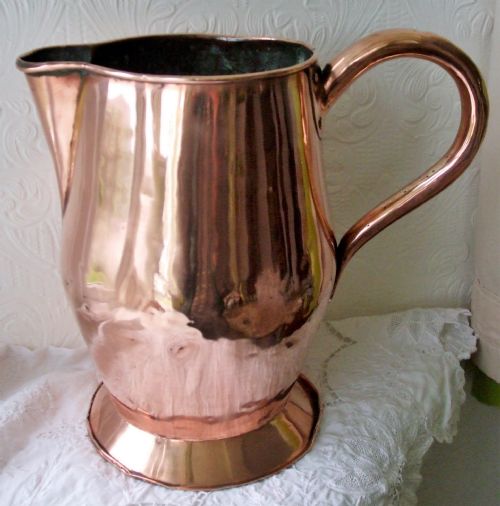
When you search for an antique metal water pitcher, you encounter domestic service pieces, ceremonial vessels, and heavy utilitarian flagons from British, European, and Asian workshops. These vessels take the form of large Georgian ale jugs, slender Victorian Jersey cans, and wide-bodied French enamelware water containers designed for daily utility or display.
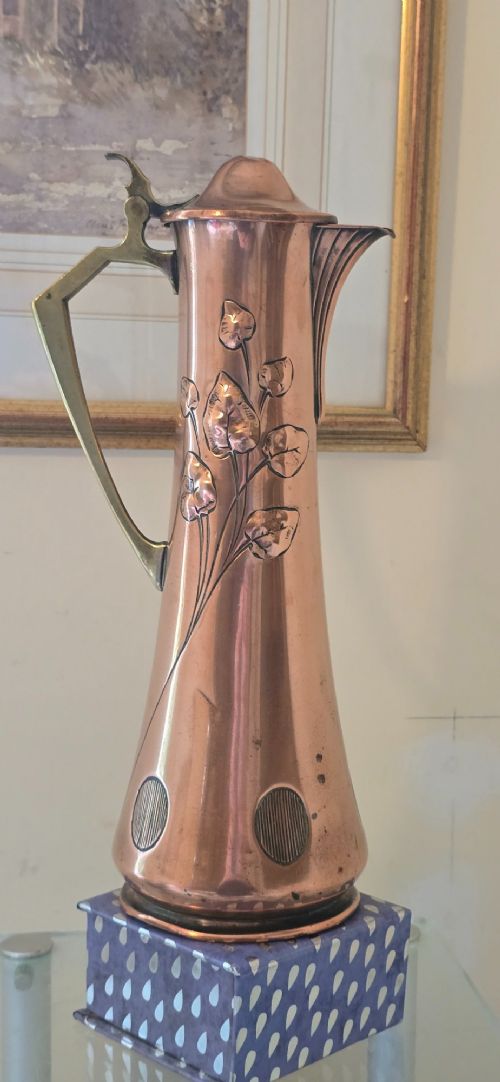
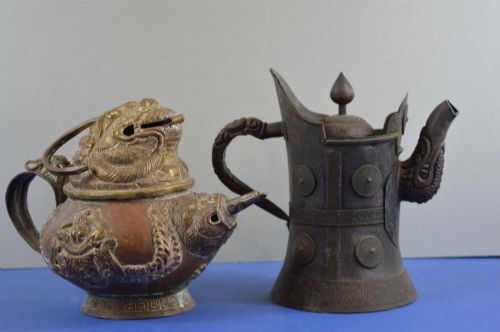
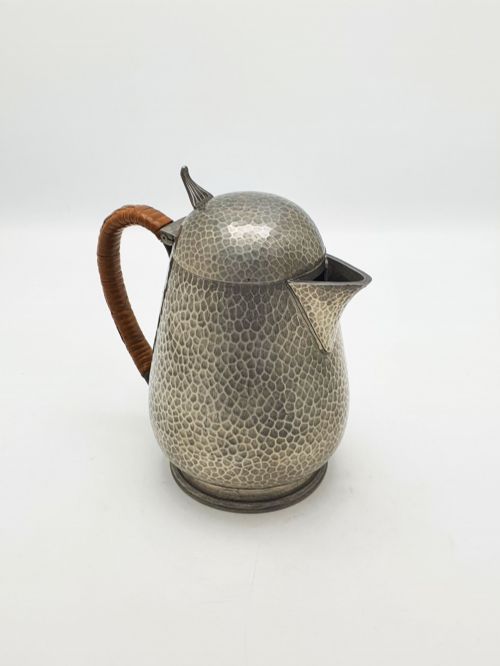
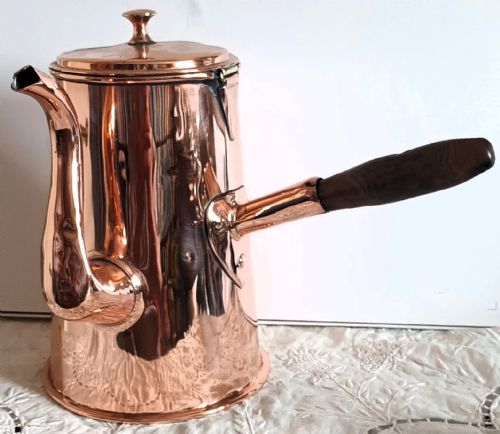
The versions most likely to appear on this page are heavy copper and brass vessels from the eighteenth and nineteenth centuries, alongside pewter pieces from the Arts and Crafts movement. Alongside these domestic jugs, ceremonial ewers and Middle Eastern aftabas surface in bronze and copper.
The functional forms reflect their original uses, from large twelve-pint containers for carrying water to smaller lidded vessels for coffee, tea, and service at table. Handles made of cane, wood, or cast metal dictate how each piece was lifted and tipped.
Materials and Construction
The physical substance of these pitchers relies heavily on hammered or spun copper, cast brass, and heavy gauge pewter, often paired with contrasting metals like silver plating or enamel. Makers formed larger bodies from heavy sheet copper, joining seams with careful soldering or dovetailing to withstand regular lifting of liquids.
Decorative elements involve applied brass mounts, chased floral reliefs, or metal inlays, while handles frequently incorporate insulating materials such as cane or turned wood to protect the hand. Surface patination develops naturally over centuries through use, polishing, and exposure to air.
Assessing Distinction
The distinction between ordinary utility items and exceptional pieces rests upon the crispness of hand-hammered detailing, the integrity of the original joints, and the harmony of proportion. Maker attribution elevates a vessel significantly, particularly when marked by recognised workshops or prominent designers.
Weight and gauge of metal dictate the structural survival of these pitchers over centuries, separating flimsy decorative items from robust service vessels meant for daily labour. Intricate handle castings, such as figural bronze or sculpted pewter motifs, demonstrate an elevated tier of craftsmanship.
Joseph Sankey·Archibald Knox·Liberty and Co·Georges Van De Voorde·Orme Evans and Co·Maison Christofle·H F Fearncombe and Co
The Antique Metal Water Pitcher Glossary
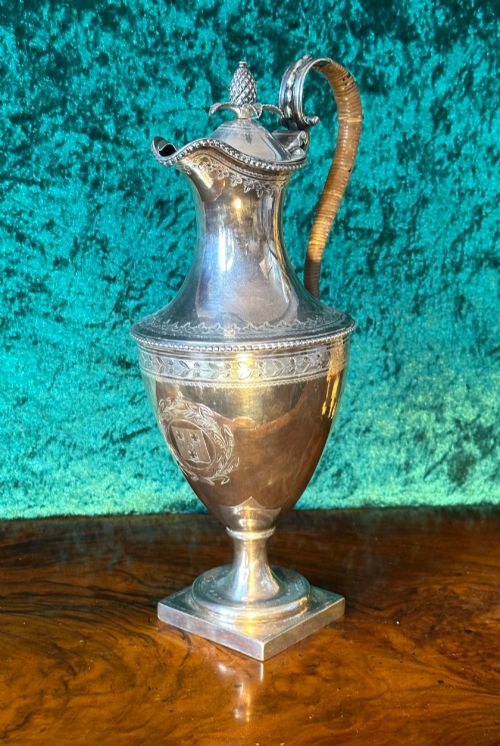
- Ewer
- A large jug or pitcher with a wide spout and curved handle, traditionally used for holding and pouring water. These vessels date from ancient ceremonial forms through to decorative nineteenth-century display pieces.
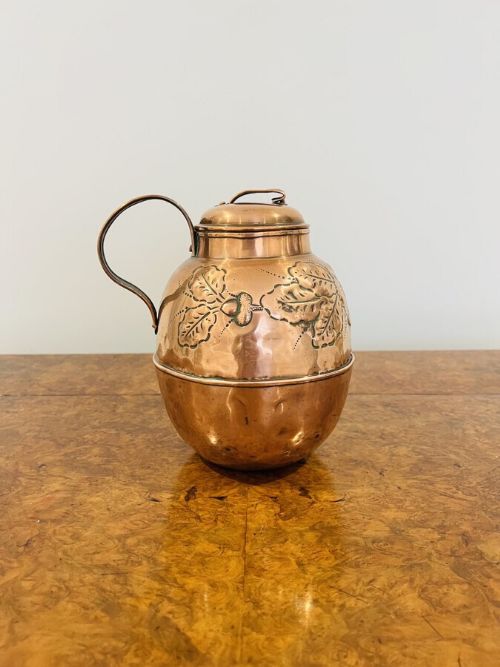
- Jersey Can
- A distinctive cylindrical metal container with a long vertical handle, originally used in the Channel Islands for storing and measuring milk. Their heavy copper construction made them popular decorative accessories in later periods.
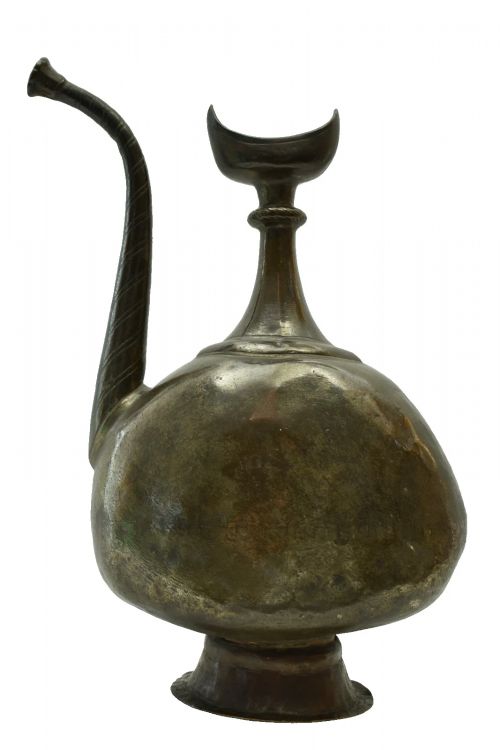
- Aftaba
- A traditional Middle Eastern metal ewer featuring a long narrow spout and a crescent moon finial on the lid. These pieces were utilised for ritual washing or serving water.
- Tudric
- A brand name used by Liberty and Co for pewterware produced during the early twentieth century. Many notable designers created vessels under this line.
- Old Sheffield Plated
- A composite material made by fusing a thin layer of silver to a thicker copper base, common in coffee pots and jugs before electroplating was invented. The technique creates a distinct warm tone as the underlying copper occasionally shows through high points.
Antique Metal Water Pitcher: Frequently Asked Questions
What were antique metal water pitchers used for?
These vessels served practical domestic roles carrying water for washing, boiling, or general kitchen tasks, as well as holding beverages at the dining table. Larger flagons and multi-pint jugs managed heavy liquid transport in busy households before modern plumbing.
Ceremonial or decorative examples also functioned as display items, reflecting the status and wealth of the household through polished metal surfaces and artistic craftsmanship.
How do I clean an antique metal water pitcher?
Maintenance depends entirely on the metal and the presence of historic patination, which many collectors prefer to leave undisturbed. Light dusting with a soft cloth keeps surfaces stable without removing the aged character built up over centuries.
Avoid aggressive modern chemical dips on copper, brass, and pewter, as harsh abrasives strip away authentic mellow tones. Gentle washing with mild soap and warm water is sufficient for everyday care.
How do I tell copper from brass on these pitchers?
Copper exhibits a distinct pinkish-orange hue and tends to be softer, allowing makers to hammer plates into smooth, deep forms. It was favored for large water carrying vessels due to its malleability and thermal properties.
Brass displays a brighter golden-yellow colour and contains an alloy of copper and zinc, making it harder and more suitable for cast handles, rims, and decorative mounts.
Can I still use an antique metal pitcher for water?
Historical pitchers, particularly those made of pewter or older copper with soldered seams, are best treated as decorative objects rather than functional drinkware. Past repairs or the composition of historical metal alloys can introduce unwanted elements into liquids.
Displaying them dry preserves the interior condition and prevents structural strain on antique joints and handles.