


Antique Metal Jewellery Casket
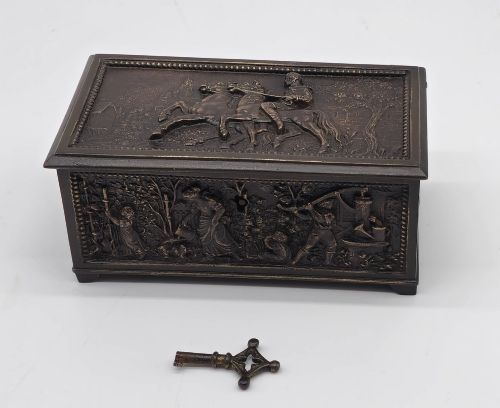
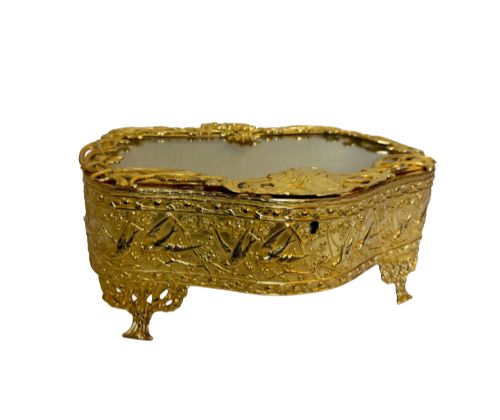
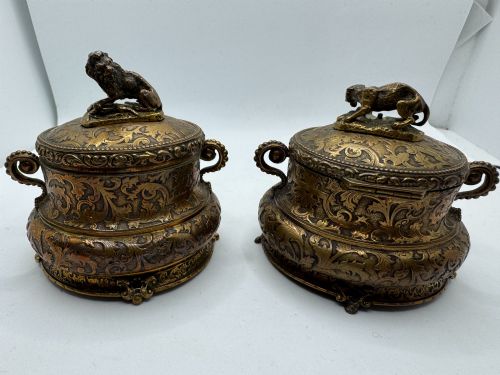
An antique metal jewellery casket guards the dressing table with heavy brass, bronze, and gilt mounts that hold small treasures.
Antique Metal Jewellery Casket
An antique metal jewellery casket stands as a substantial container designed for the safekeeping of personal valuables, rings, and trinkets on a dressing table or desk. These pieces emerge predominantly from the nineteenth century and the early decades of the twentieth century, taking forms such as jewellery boxes, decorative caskets, and small coffers.
Victorian and continental European examples dominate the selection, spanning revivalist styles from Gothic and Rococo to the flowing lines of Art Nouveau. Buyers encounter everything from simple brass trinket boxes to large, impressive bronze caskets decorated with rural scenes or dog finials.
How they were made
Artisans constructed these caskets through casting, hammering, and electro-forming metals such as bronze, brass, copper, and pewter. Cast bronze and brass provided rigid frameworks that allowed intricate surface decoration, while beaten steel and hand-beaten pewter demonstrated the tactile methods favoured by Arts and Crafts metalworkers.
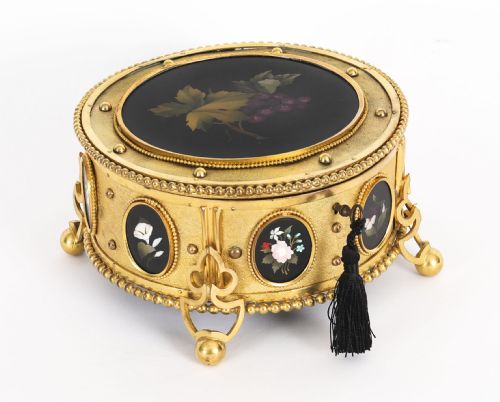
Surface ornamentation involved fire-gilding to create ormolu, silvering, and the application of vitreous coatings like champlevé and cloisonné enamel. Many models combine metal frames with thick bevelled glass panels, ceramic plaques, or pietra dura inlay, held together with rivets and secure joins.
Design styles span Victorian revivals, Gothic forms, Arts and Crafts hand-beaten metalwork, and flowing Art Nouveau contours.
What varies in quality
Quality rests upon the depth of the casting, the crispness of the hand-chased surface detail, and the integrity of the materials used in the construction. Heavy cast bronze or gilt ormolu mounts with sharply defined motifs demonstrate superior workmanship compared to lighter, plain stamped brass boxes.
The integration of decorative panels, such as genuine Limoges miniatures, hand-painted glass, or well-executed cloisonné enamel, elevates a piece significantly. Superior hinges, working locks with original keys, and undamaged glass or stonework separate standard utility boxes from exceptional collector pieces.
Walker and Hall·S Theeman·AB Paris·B Wicker
The Antique Metal Jewellery Casket Glossary
- Ormolu
- Gilded bronze or brass applied to decorative objects and furniture, popular in French nineteenth-century design. The technique involves applying a mercury and gold amalgam to the base metal before heating.
- Pietra dura
- An artistic technique using cut and fitted polished coloured stones to create mosaic images. Craftsmen embed these stone plaques directly into the lids of fine caskets.
- Champlevé enamel
- A method where troughs or cells are carved into the surface of a metal object and filled with vitreous enamel powder before firing. The resulting surface displays colourful designs flush with the surrounding metal.
- Repoussé
- A metalworking technique where a craftsman hammers the metal from the reverse side to form a raised design in relief. This method defines many Arts and Crafts copper and pewter boxes.
Antique Metal Jewellery Casket: Frequently Asked Questions
What periods do these metal caskets come from?
The listings span the nineteenth century and the early twentieth century, with concentrations in the Victorian era, the Arts and Crafts movement, and the Art Nouveau period.
European workshops in France, Germany, Britain, and Italy produced the majority of these metal boxes during the height of revivalist and modern design trends.
How were these boxes originally used?
Owners placed them on dressing tables, desks, and sideboards to store rings, brooches, cigars, and small keepsakes.
Larger caskets served as decorative display objects in wealthy Victorian and Edwardian parlours, showcasing the owner's taste in metalwork and art.
How do I care for antique bronze and brass?
Dust the metal gently with a soft, dry brush and avoid chemical polishes that strip historic patination and gilding.
Keep glass and enamel panels clean with a barely damp cloth, ensuring moisture does not seep into the internal fabric linings or joints.