




Antique Metal Frame Mirror
An antique metal frame mirror brings industrial weight and hand-worked warmth to a room, shifting light across cast brass, beaten copper, and heavy iron.
Antique Metal Frame Mirror
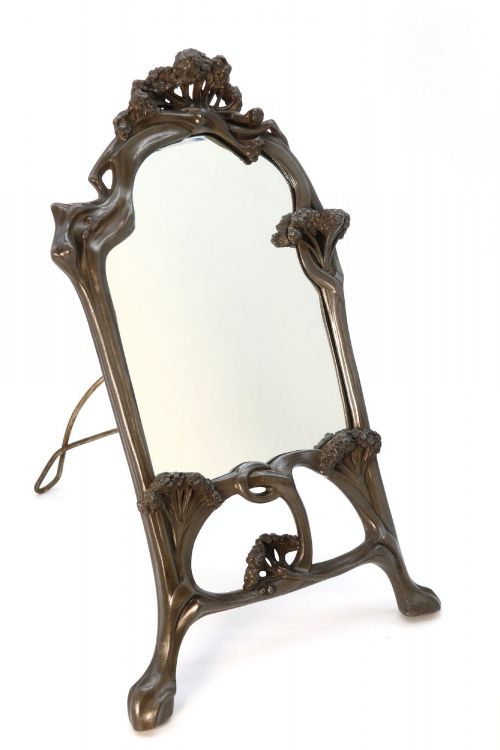
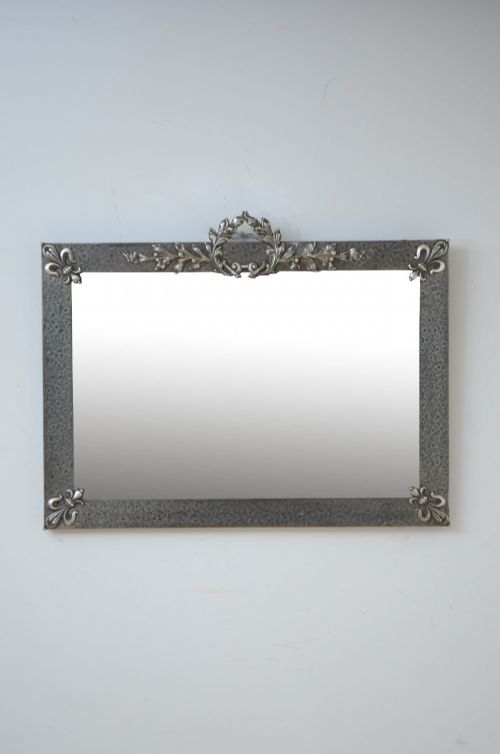
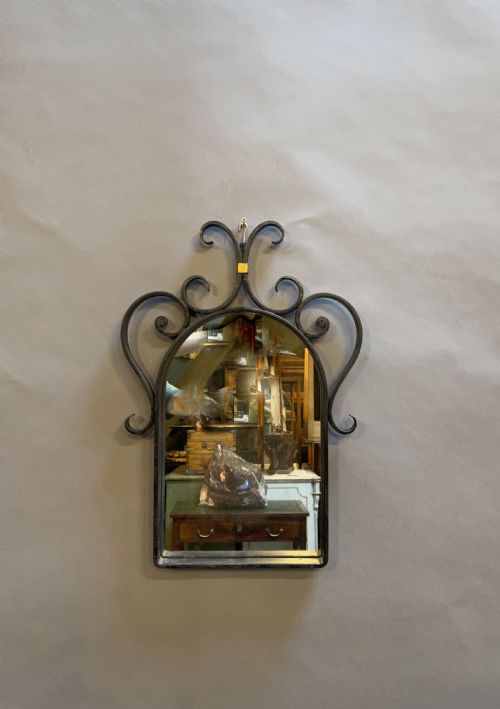
An antique metal frame mirror encompasses heavy cast pieces from the Victorian era alongside hand-hammered designs from the Arts and Crafts movement. These objects serve practical daily use while introducing distinct architectural lines to interior spaces.
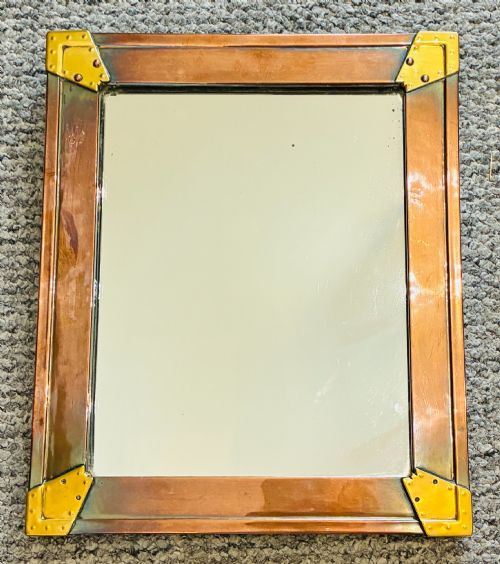
The most common examples encountered on this page date from the late nineteenth century through to the 1930s. Wall mirrors and table variants dominate the selection, often rendered in brass or copper with notable period characteristics.
How they were made
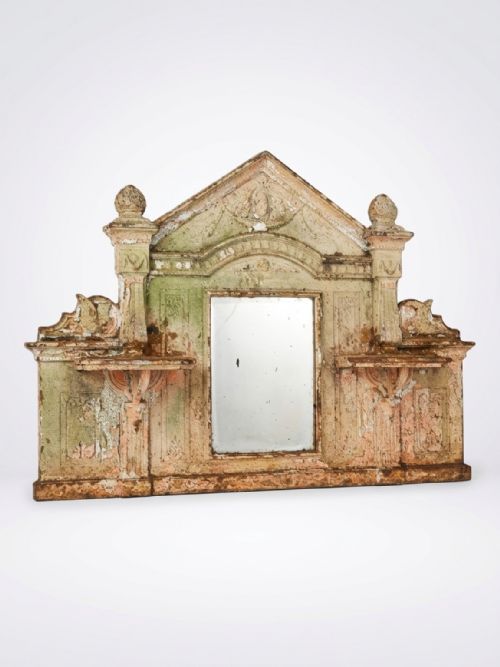
Foundries produced iron and brass frames through sand casting, creating rigid structures decorated with masks, scrolls, and crests. Artisans then polished or patinated the metal surfaces to highlight the cast relief.
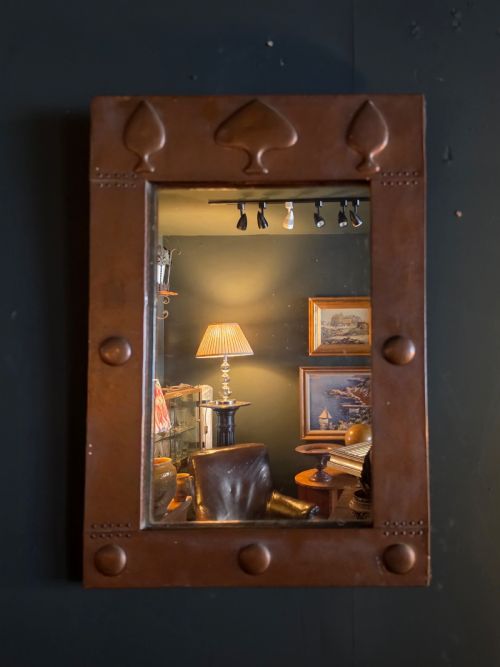
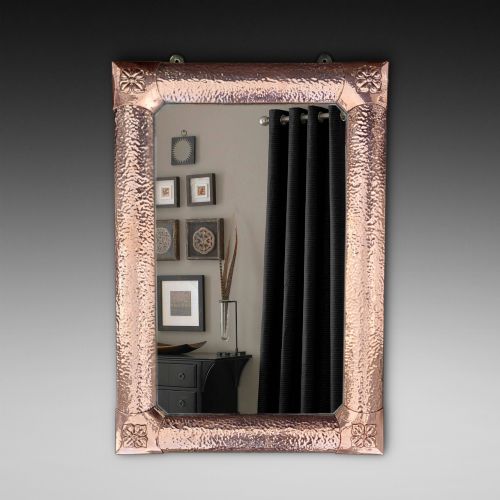
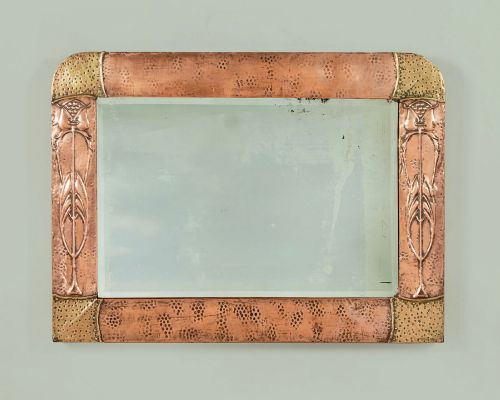
Makers of the Arts and Crafts tradition worked sheet copper by hand, using hammers to drive repoussé patterns from the reverse and riveting the metal sheets to wooden backs. Gilt bronze and champlevé techniques appeared on smaller vanity items and picture frames.
Materials span plain glass, brass, wood, copper, cast iron, gilt metal, and paint across Victorian, Arts and Crafts, Art Deco, and Art Nouveau styles.
What varies in quality
The depth and clarity of hand-hammered work define the distinction between standard production items and superior studio pieces. Crisp casting detail in brass and iron elements separates finer workshops from basic commercial output.
The integrity of the underlying backing and the preservation of the original mirror glass influence the overall standing of a piece. Integrated decorative elements, such as cabochons or enamel inserts, elevate individual examples above plain metal frames.
Liberty & Company·Louis Auguste Moreau·Coalbrookdale
The Antique Metal Frame Mirror Glossary
- Repoussé
- A metalworking technique where the artisan hammers a design from the reverse side to form raised relief on the front. This method appears frequently on copper frames from the Arts and Crafts period.
- Champlevé
- An enamelling technique where troughs or cells are sunk into a metal surface and filled with vitreous enamel before firing. It frequently decorates late nineteenth-century French frames and vanity sets.
- Cast Iron
- Molten iron poured into a mould to produce rigid forms with intricate surface decoration. Coalbrookdale examples utilise this method to create heavy mirrors bearing moulded mottos.
- Bevelled Glass
- Mirror glass with angled edges ground down to a thinner profile around the perimeter. This treatment refracts light and distinguishes higher-grade looking glasses from plain plate glass.
- Cabochon
- A polished gemstone or coloured glass set uncut into a metal mount without facets. Ruskin copper mirrors use these circular ceramic or stone elements as focal points.
Antique Metal Frame Mirror: Frequently Asked Questions
How do I hang a heavy cast iron mirror?
Heavy cast iron and brass frames require direct anchorage into wall studs or solid masonry using appropriate fixings.
Avoid relying on plasterboard alone to support the combined weight of the metal frame and glass plate.
How do I clean an antique brass frame?
Dust the metal surface gently with a dry microfibre cloth to remove accumulated surface particles.
Avoid harsh chemical polishes that strip away the aged patina built up over decades of use.
Are these mirrors suitable for bathrooms?
High humidity can accelerate oxidation on exposed copper and brass, particularly around riveted joints.
Ensure adequate ventilation if placing these pieces in moisture-prone environments to protect the metal and backing.
How do I date a copper Arts and Crafts mirror?
Examine the construction methods, fixing nails, and the style of any repoussé decoration present on the copper surface.
okresie pieces often feature hand-beaten textures combined with riveted frames typical of workshops operating around nineteen hundred.