





Antique Metal Floor Vase
These substantial antique metal floor vases bring striking height and presence to a room, drawing the eye with rich patinas and intricate work.
Antique Metal Floor Vase
An antique metal floor vase is a commanding vessel designed to stand directly upon the floor rather than on a table or cabinet. When searching for an antique metal floor vase, buyers encounter large ornamental pieces created during the nineteenth and early twentieth centuries.
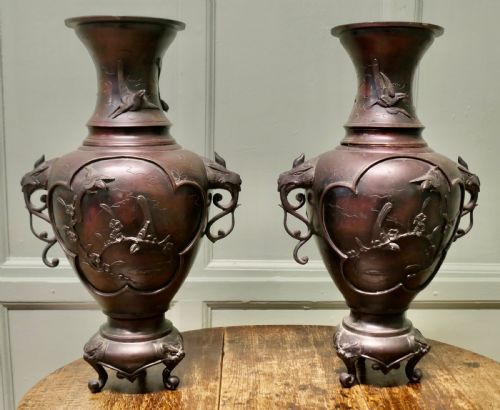
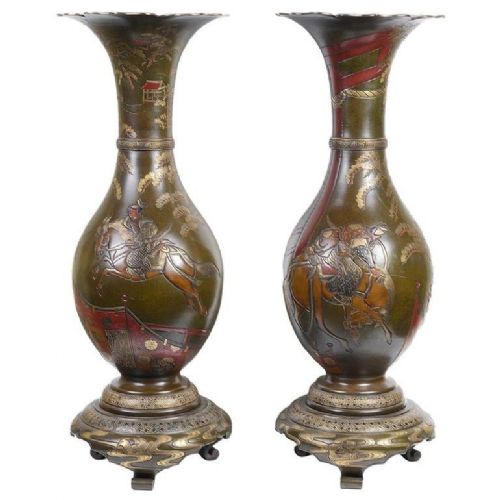
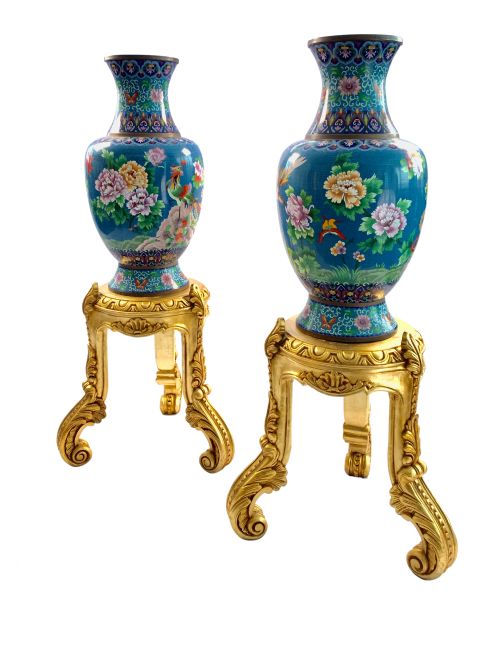
The selections available here lean heavily toward Asian craftsmanship, featuring Japanese Meiji and Edo period works alongside Chinese bronzes and cloisonne enamels. European pieces also appear, represented by French copper designs from around nineteen hundred.
These grand vessels range from substantial pairs to monumental palace vases exceeding ninety centimetres in height. Their forms include slender baluster shapes and wide bodies decorated with traditional motifs such as phoenixes, dragons, and koi.
How they were made
Bronze forms the backbone of these pieces, shaped through traditional casting methods that allowed for deep relief work and substantial physical weight. Makers utilised copper and brass alongside bronze to create varying metallic tones and structural integrity for tall vessels.
Surface ornamentation often involved cloisonne enamel, where thin metal wires created cells that were filled with coloured pigment and fired. Guilds applied gold leaf and gilding to enhance specific details against the dark bronze or enamelled ground.
Antique Metal Floor Vase Retail Price Guide 2026
Typical asking prices for metal floor vase among the pieces listed under this phrase on Sellingantiques today, from the lower quarter to the upper quarter. They describe what is for sale here now, not the wider market.
Some bronze dragons and phoenixes on these vessels stare down visitors with fiercely detailed expressions carved over a century ago.
What varies in quality
The distinction between ordinary production and finer examples lies in the crispness of the casting and the depth of the surface detail. Superior bronze vases display sharply rendered motifs, clean joints, and a stable, balanced base capable of supporting great height.
In enamelled pieces, quality shows in the regularity of the wirework cells and the smooth fusion of the coloured pigments without pitting or cracking. Larger palace vases demand exceptional technical skill to prevent warping during the firing and cooling stages.
The Antique Metal Floor Vase Glossary
- Cloisonne
- An ancient technique where metal wires are soldered to a metal body to form compartments that hold enamel paste before firing. This method produces intricate, colourful patterns across the surface of the vessel.
- Meiji Period
- A notable era in Japanese history spanning from eighteen sixty-eight to nineteen twelve, marked by intense artistic output and international trade. Works from this time frequently display naturalistic subjects and masterly metalworking.
- Palace Vase
- An exceptionally large vessel created to stand in grand halls or reception rooms. These impressive pieces often measure near a metre in height and feature complex decorative programmes.
- Edo Period
- The period of Japanese history lasting from sixteen hundred and three to eighteen sixty-seven, known for peace and refined craftsmanship. Vases from this era demonstrate early mastery of form and decorative detailing.
- Baluster
- A tall vase shape featuring a rounded body that tapers toward the neck and base. This classical silhouette provides stability for large metal vessels.
Antique Metal Floor Vase: Frequently Asked Questions
Where should I place a floor vase?
These tall vessels command attention and work best standing directly on stone, wood, or tiled flooring in spacious rooms, hallways, or entrance foyers.
Because of their substantial height and weight, they require stable ground away from heavy foot traffic to prevent accidental tipping.
Can these vases hold water?
Most antique metal floor vases are intended purely as decorative sculptural objects rather than functional containers for fresh flowers and water.
Using them dry protects the internal metal structure and delicate enamel work from moisture damage and corrosion over time.
How do I clean an antique metal vase?
Dusting gently with a dry, soft cloth is sufficient for routine maintenance of bronze, copper, and cloisonne surfaces.
Avoid commercial metal polishes and harsh chemical cleaners, as these can strip away the aged patina and damage delicate enamel or gold leaf.
How do I identify the period of a bronze vase?
Dating relies on examining the casting style, the type of surface patina, and any traditional motifs or period signatures incorporated into the metal.
Comparing the weight, proportion, and decorative techniques against documented examples helps distinguish nineteenth-century works from later productions.