





Antique Mercury Tube
An antique mercury tube is the precise core of a stick barometer or wall thermometer, reading atmospheric pressure through silvered metal columns.
Antique Mercury Tube
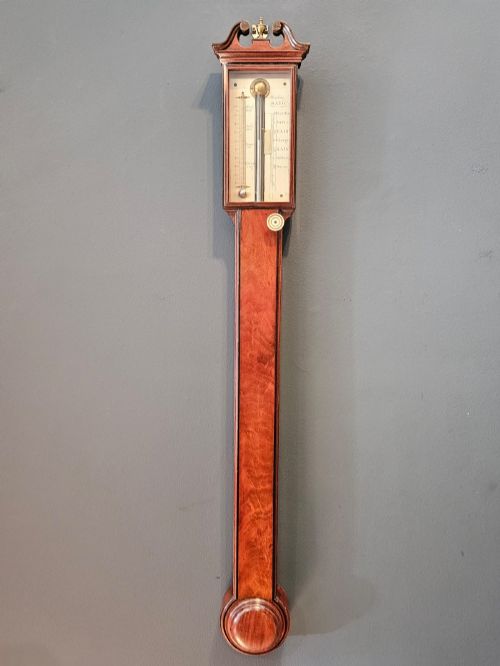
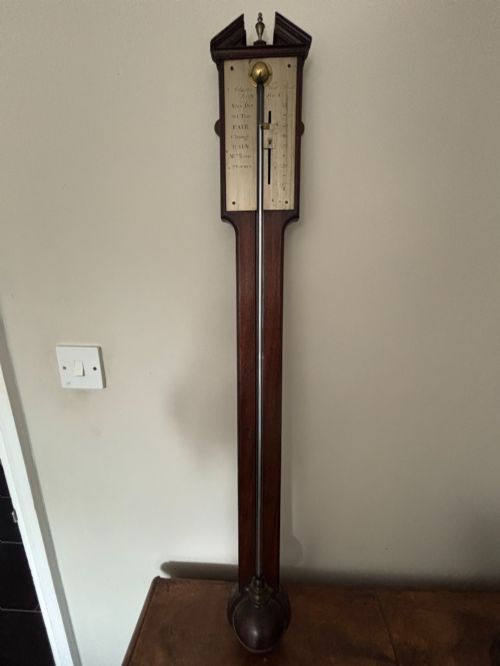
An antique mercury tube operates inside barometers and wall thermometers originating from Georgian, Regency, and Victorian periods. Most examples encountered here take the form of stick barometers housed in mahogany, rosewood, oak, or ebonised cases.
The objects measure barometric pressure or temperature for domestic forecasting, appearing in configurations ranging from simple wall-hung instruments to elaborate weather stations. Makers from London, provincial towns, and continental workshops signed these precision scientific pieces.
How they were made
Craftsmen built the enclosing cases from dense hardwoods like mahogany and oak, often incorporating carved details, bone scale plates, and brass cistern covers. Glass tubes were filled with elemental mercury and mounted alongside engraved silvered brass or metal scales.
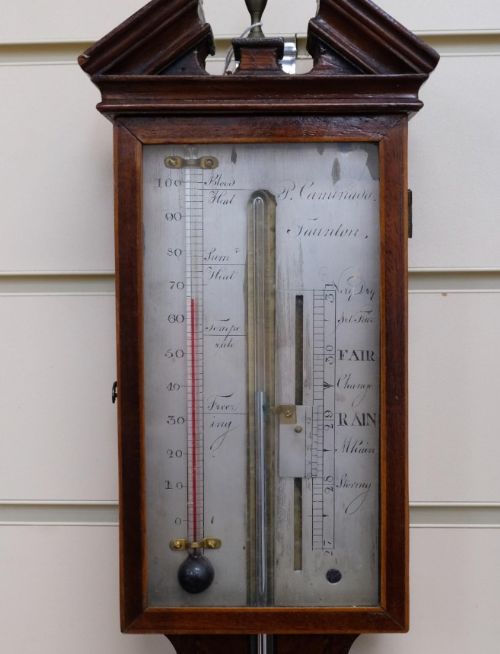
Maker signatures and locations were engraved directly onto the metal plates or subsidiary dials, whilst specialised glass blowers formed the delicate angles and reservoirs required for accurate pressure readings.
Makers from Milan to Exeter ensured that even British weather could be tracked with continental flair.
What varies in quality
Distinction across the range lies in the caliber of the cabinetwork and the renown of the instrument maker. Signed London and provincial examples with figured mahogany or rosewood veneers demonstrate superior workshop execution compared to anonymous output.
The legibility and fineness of the engraved metal scales, alongside the retention of original brass fittings and glass components, separate standard domestic instruments from masterwork pieces.
P. Caminada Taunton·George Adams London·Negretti and Zambra London·S and B Solomons·James Gatty London·Ciresa of Milan·J Hicks of London·Charles Aiano London·Tarone Gally and Co·Corti of Exeter
The Antique Mercury Tube Glossary
- Stick barometer
- A vertical instrument utilising a mercury-filled glass tube against a scale to measure atmospheric pressure. These tall, slender pieces typically hang on domestic walls.
- Cistern
- The small reservoir at the base of the mercury tube that exposes the liquid metal to atmospheric pressure. Variations in design here affect the instrument's sensitivity.
- Silvered brass
- A metal plate treated with a silver compound to produce a bright, reflective surface for engraved markings. Graduations and maker names appear clearly upon this material.
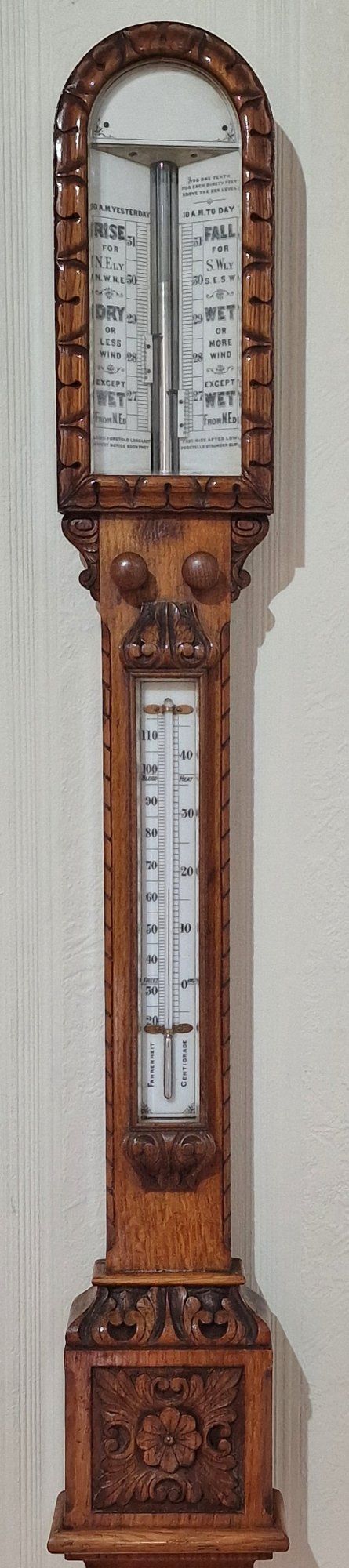
- Admiral Fitzroy storm barometer
- A Victorian weather-predicting instrument design incorporating extended instructions and multiple indicators alongside the main tube. These pieces often feature carved oak cases.
Antique Mercury Tube: Frequently Asked Questions
How do I read an antique mercury tube barometer?
Observe the level of the silvered liquid inside the glass column against the engraved scale plate. Higher positions indicate rising pressure and settled weather.
Compare the primary column reading with any secondary vernier scale to track precise millibar or inch adjustments over the course of the day.
Where should I place a stick barometer at home?
Mount the instrument on an interior wall away from direct sunlight, radiators, and heavy vibrations. Stable ambient temperatures ensure the internal mechanism functions accurately.
Ensure the wall construction supports the weight of the hardwood case securely, hanging the piece at eye level for straightforward daily viewing.
How can I date an antique barometer?
Examine the timber used for the case, noting the shift from Georgian mahogany grains to Victorian oak or rosewood. Cabinet styles and dial layouts offer clear chronological markers.
Look for engraved signatures on the metal plates, as recorded maker operating dates provide a reliable window of manufacture.
Can these barometers still measure weather accurately?
Many surviving instruments retain functional mercury columns capable of responding to local barometric shifts. Professional calibration may be required after transit.
Treat the delicate glass and mercury components with caution, maintaining the instrument as a working scientific antique rather than a modern utility.