



Antique Mercury Thermometer Barometer
An antique mercury thermometer barometer reads the weather with precision while anchoring a room in rich mahogany, oak, or walnut.
Antique Mercury Thermometer Barometer
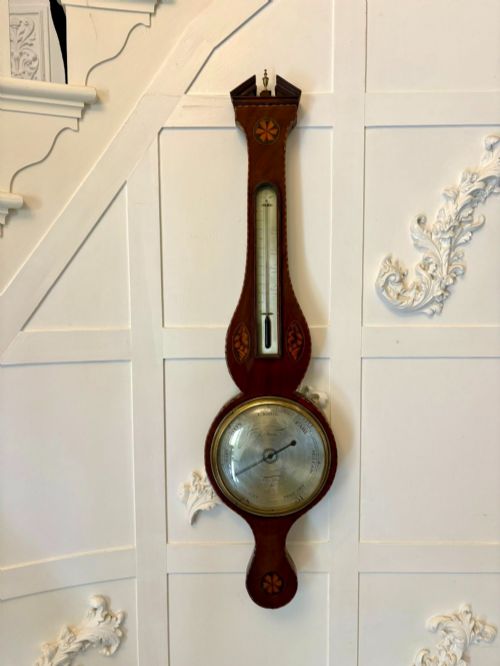
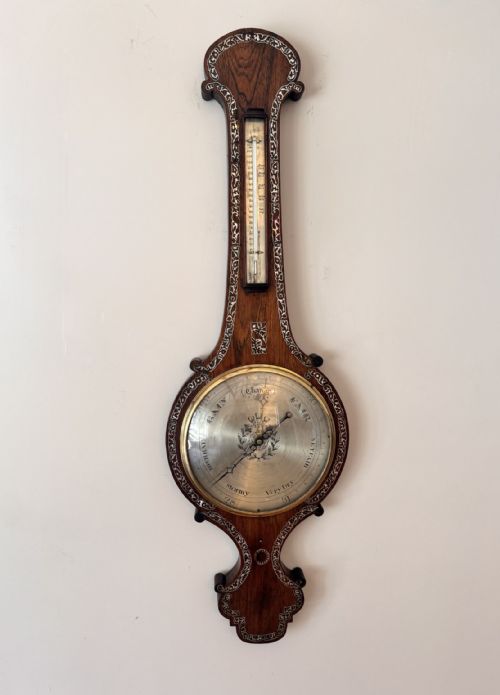
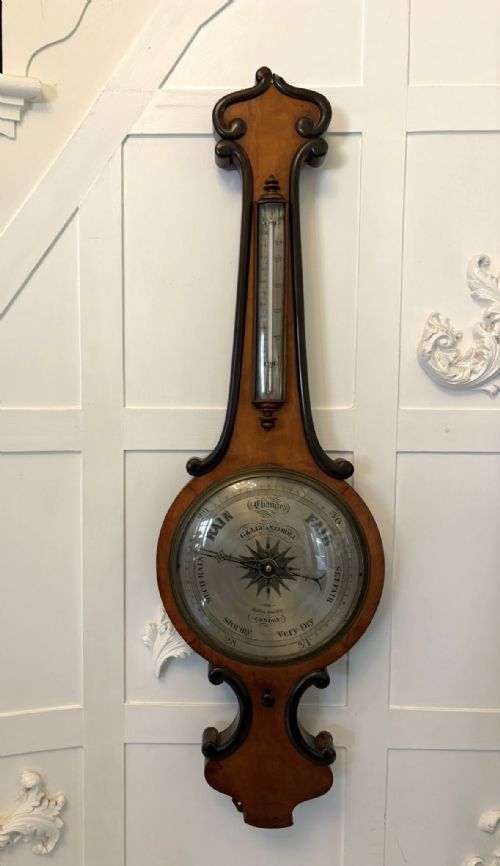
An antique mercury thermometer barometer combines atmospheric pressure measurement with temperature tracking, housed in timber wall cases or desk units. When you search for an antique mercury thermometer barometer, you encounter instruments designed to ornament domestic and public spaces across the Georgian, Regency, and Victorian periods.
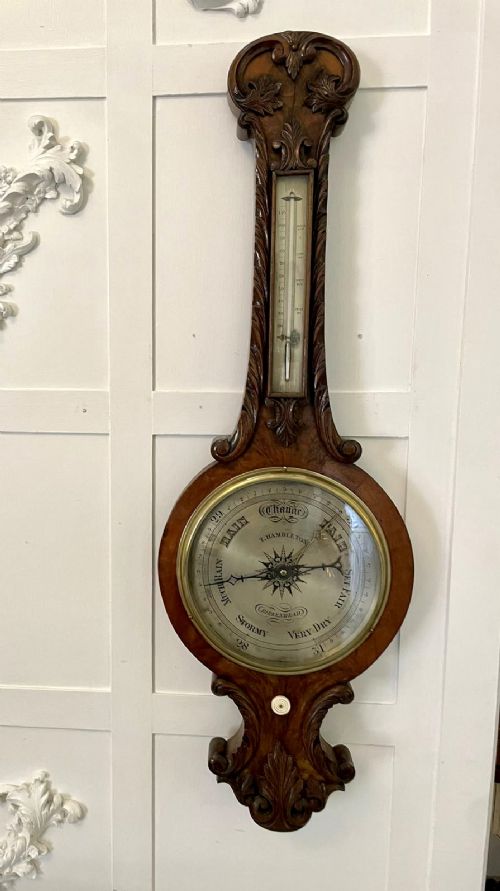
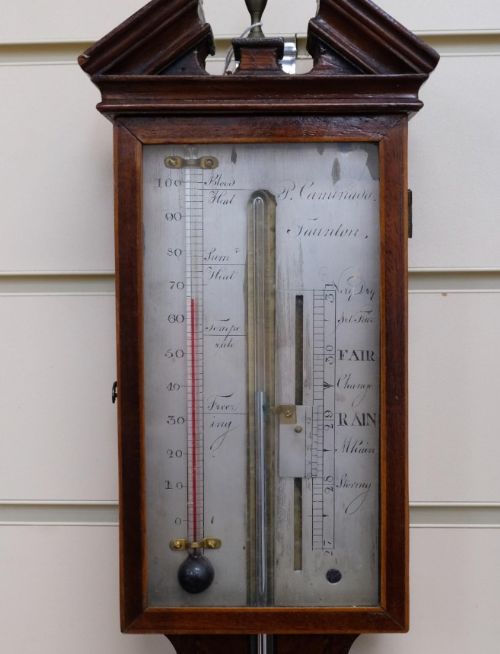
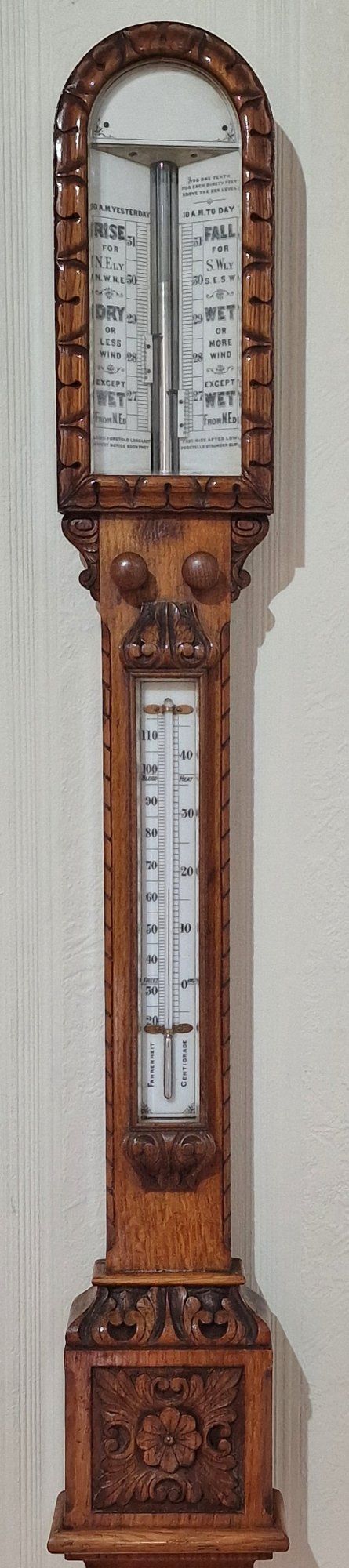
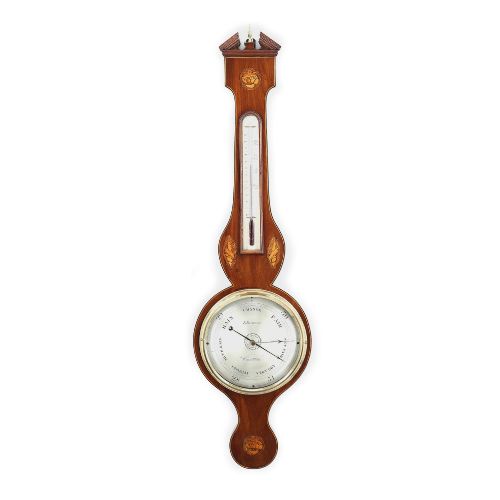
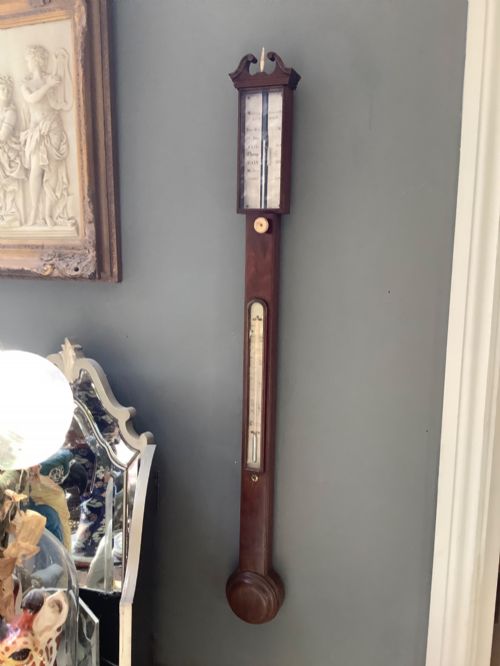
The banjo barometer form dominates the selection, distinguished by its curved top and widened base containing the main dial. Stick barometers appear alongside wheel barometers and combined clock station pieces, spanning dates from the eighteenth century into the twentieth century.
How they were made
Cabinet makers utilised solid timbers including mahogany, oak, rosewood, walnut, and burr walnut for the outer housings, often applying shell marquetry, mother-of-pearl inlay, or brass fittings. Glass protects the dials and thermometer tubes, while bone scales provide legible markings.
Glass tubes filled with liquid mercury respond to atmospheric shifts, connected to internal mechanical linkages that move the indicator needles on engraved dials.
Listings span the Georgian, Regency, and Victorian periods, utilising mahogany, oak, rosewood, and walnut.
What varies in quality
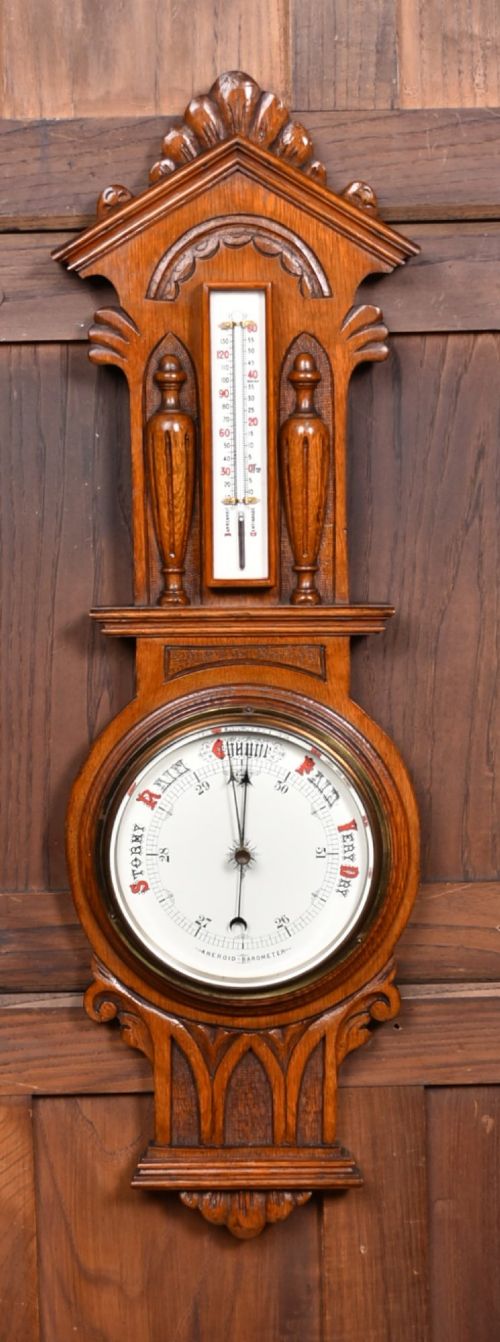
The refinement of the cabinet work dictates the standing of a piece, from plain architectural oak frames to intricately carved burr walnut and rosewood cases with detailed shell inlays. The crispness of the engraved brass or bone register plates and the prominence of the maker sign on the dial set superior examples apart.
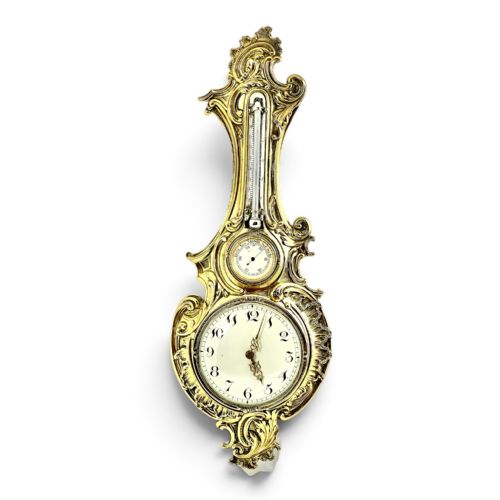
The ambition of the design influences the piece, ranging from straightforward stick barometers to elaborate wheel barometers and multi-function clock and thermometer stations signed by known makers.
P. Caminada·B. Besozzi·G & L Guanziroli·Prada·Molton·Luisetti·Giana·Jenkins·J Hughes·James H Kelly·W.E. Pain·Vecchio & Co·J Groce
The Antique Mercury Thermometer Barometer Glossary
- Banjo barometer
- A wall barometer shaped like a banjo, featuring a circular dial at the base and a long stem holding the thermometer. This form offers a broad surface for wood veneers and marquetry.
- Stick barometer
- A tall, narrow wall instrument where the mercury tube remains largely visible behind glass within a slender wooden trunk. It represents the earlier, more scientific approach to pressure reading.
- Wheel barometer
- An instrument utilising a siphon tube and a float connected to a pulley wheel that turns the pointer on a round dial. It translates small mercury movements into wide needle rotations.
- Aneroid barometer
- A barometer that measures pressure without liquid, using a flexible metal box instead. These appear in later nineteenth and twentieth century pieces.
- Register plate
- The engraved scale plate, often made of brass or bone, displaying the weather descriptions and numerical measurements. It allows the user to read the barometric pressure change.
Antique Mercury Thermometer Barometer: Frequently Asked Questions
How do I read an antique mercury barometer?
Observe the position of the indicator needle against the engraved weather descriptions on the dial face. A rising needle points toward fair weather, while a falling needle indicates approaching rain or storm conditions.
Many instruments include a secondary pointer set by hand to track movement relative to the primary needle. Comparing these positions reveals whether pressure is increasing or decreasing since the last check.
Where should I hang a wall barometer?
Select an interior wall away from direct sunlight, radiators, and exterior doors to minimise temperature swings. Stable thermal conditions ensure the wood case and internal mercury column remain unaffected by external heat sources.
Secure the instrument firmly to a stud or use appropriate wall fixings, as the dense timbers and glass components carry substantial weight.
What is the difference between a stick and wheel barometer?
A stick barometer displays the vertical mercury column directly within a narrow wooden trunk, following seventeenth and eighteenth century scientific traditions. It provides a direct reading of the barometric height.
A wheel barometer encloses the tube mechanism and translates the mercury movement through a pulley to a large circular dial at the base. This format became popular during the Georgian and Victorian eras for decorative domestic interiors.
How do I date a barometer?
Examine the timber species, case silhouette, dial ornamentation, and any signature engraved on the face. Georgian examples frequently feature mahogany with delicate shell marquetry, whereas Victorian pieces often employ burr walnut, rosewood, or heavier carvings.
Makers' names listed on the register plates provide direct links to working periods and trade directories. Stylistic shifts from neoclassical lines to Victorian revivalism further narrow the decade of manufacture.