






Antique Mercury Instrument
An antique mercury instrument measures atmospheric change or temperature through responsive metal and glass chemistry.
Antique Mercury Instrument
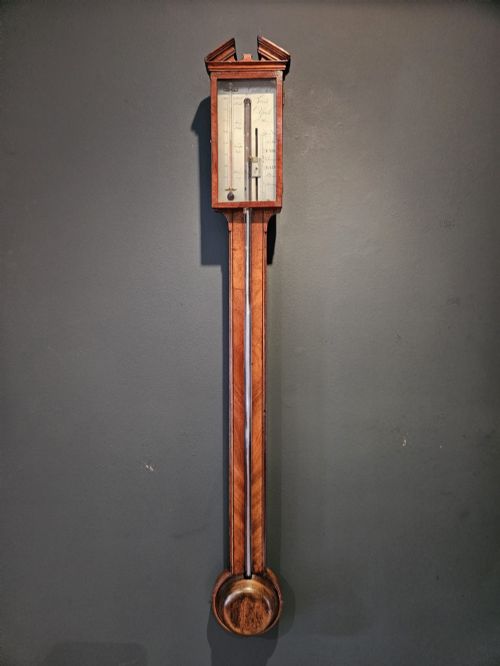
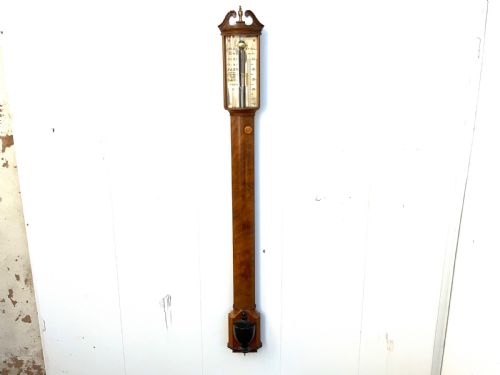
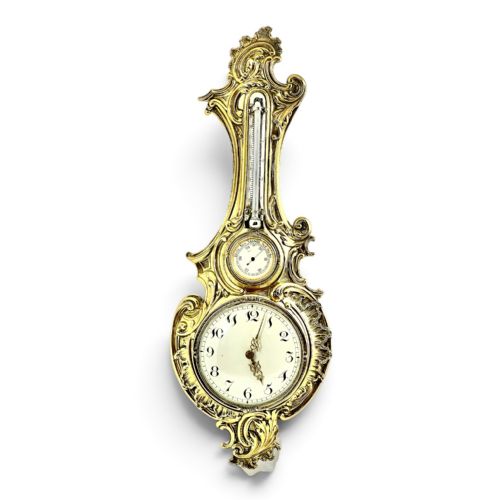
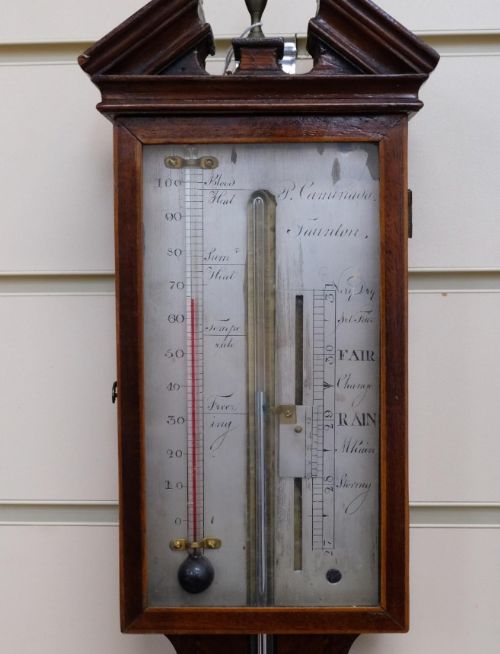
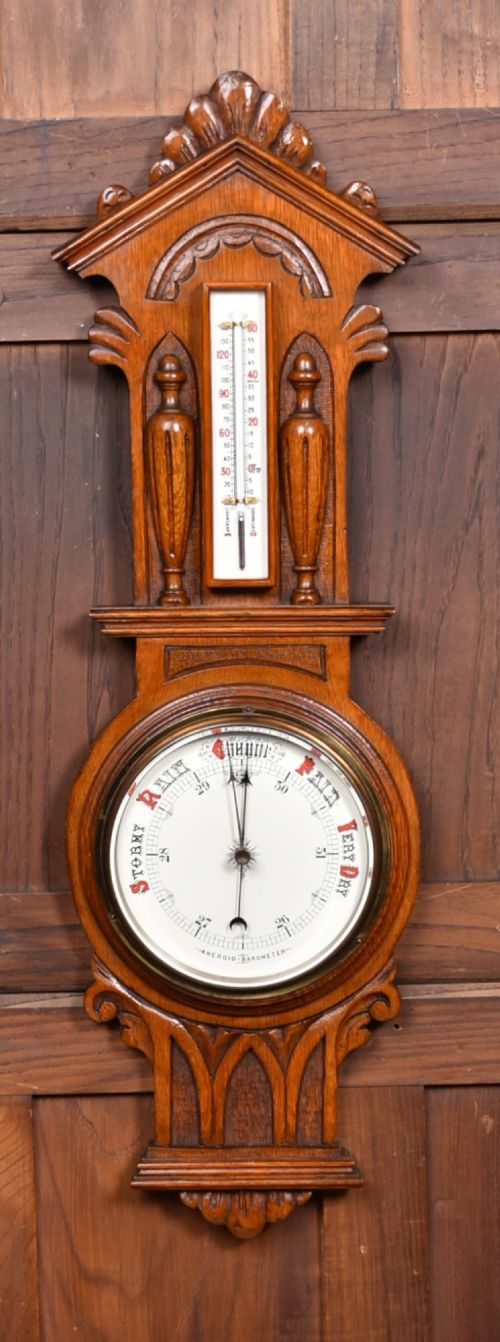
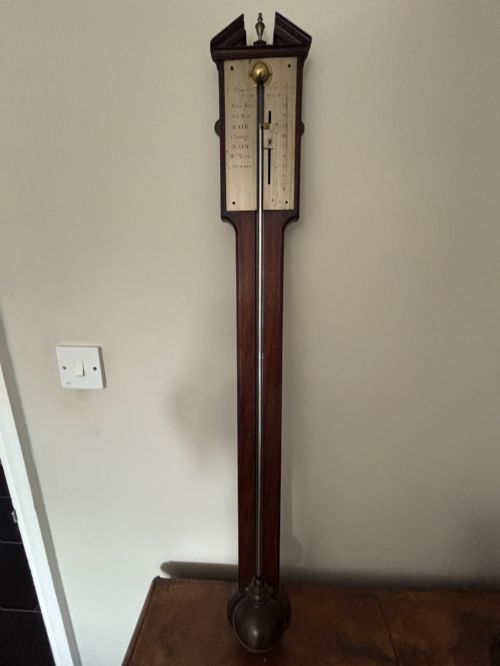
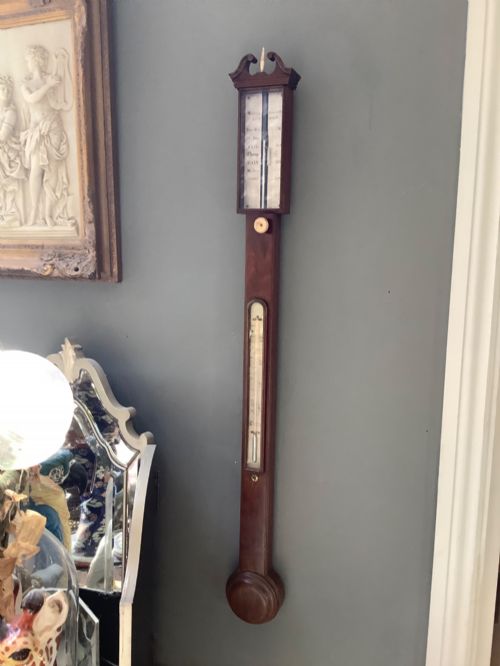
When you search for an antique mercury instrument, you encounter barometers and thermometers housed in wooden cases designed for domestic or marine use. These pieces record atmospheric pressure or temperature fluctuations using liquid metal sealed inside glass columns.
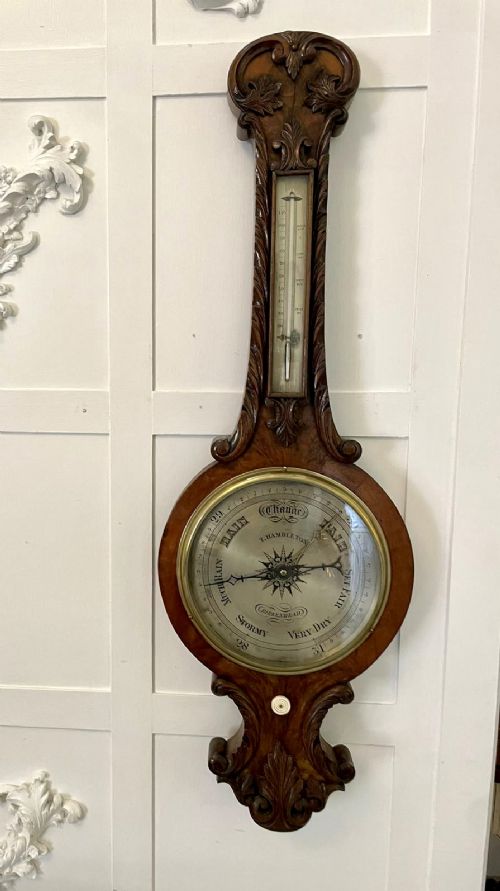
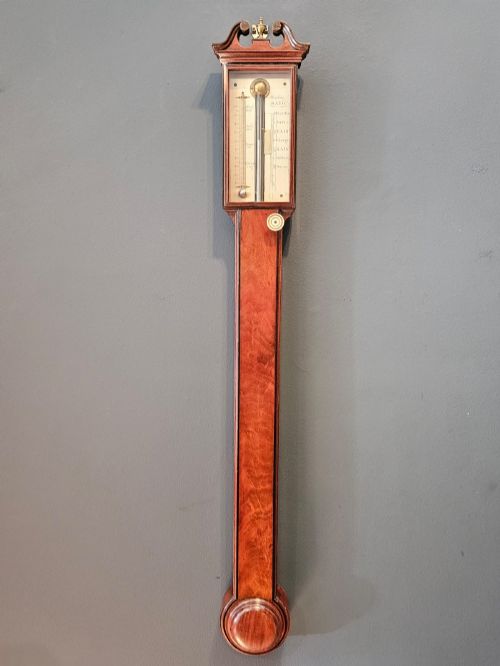
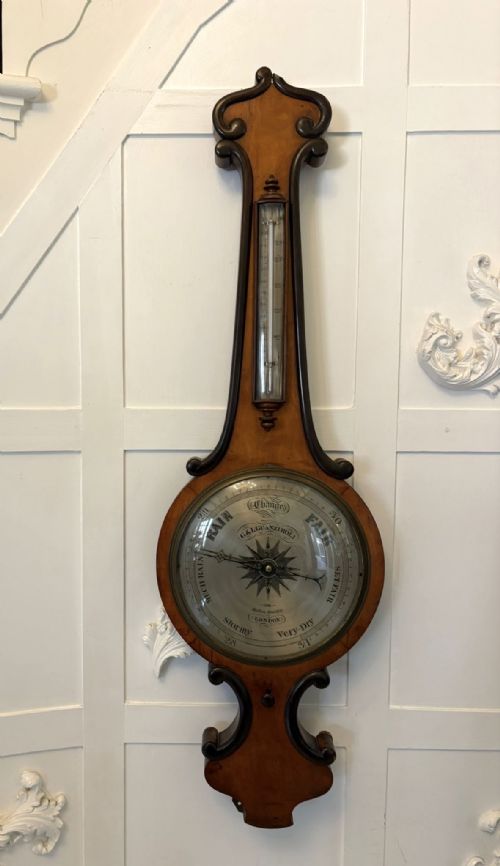
The most common examples on this page are stick barometers and wheel barometers fashioned from mahogany, rosewood, or oak. Georgian and Victorian workshops produced these functional objects to hang upon interior walls or stand in hallways.
Makers shaped the timber housings into architectural facades, banjo profiles, or marine configurations with exposed scales. Each instrument combined practical scientific utility with the cabinetmaker's craft of the period.
Materials and construction methods
Craftsmen built the structural housings using dense hardwoods like mahogany, rosewood, walnut, and oak, often shaping the timber with bowed fronts, carved crests, or marquetry inlay. These wooden chassis protected the delicate interior tubes and supported the engraved dials.
Makers utilised silvered brass or silvered metal for the register plates and measurement scales, engraving the numerals and weather terminology by hand. Glass tubes contained the heavy fluid, sealed to allow atmospheric response while preventing loss.
Makers integrated bone, mother-of-pearl, or contrasting stringing into the timber surfaces for decoration. Cast brass bezels, frames, and cistern covers completed the mechanical assembly.
Antique Mercury Instrument Retail Price Guide 2026
Typical asking prices for mercury instrument among the pieces listed under this phrase on Sellingantiques today, from the lower quarter to the upper quarter. They describe what is for sale here now, not the wider market.
The documented makers span London workshops as well as regional centres including Norwich, Taunton, and High Wycombe.
Distinctions in construction and execution
The degree of refinement in the woodwork and the legibility of the engraved silvered scale dictate the standing of an antique mercury instrument. Architectural proportions on stick barometers and crisp, deep carving on walnut wheel models separate standard production from superior examples.
Signed instruments bearing the names of established London and provincial makers command greater attention due to the documented skill of their workshops. The preservation of original glass tubes, mercury charges, and intact brass fittings maintains the integrity of the piece.
P Caminada Taunton·George Adams London·G and L Guanziroli London·Negretti and Zambra·Dollond of London·Ganthony of London·Molton of Norwich·Alexander Wright·Bate of London
The Antique Mercury Instrument Glossary
- Stick barometer
- A tall, narrow wall instrument where the mercury column rises and falls within an exposed or partially glazed scale to indicate atmospheric pressure. These linear designs represent the earliest domestic barometric forms.
- Wheel barometer
- A banjo-shaped wall instrument utilising a siphon tube and a pulley weight system to turn a pointer around a circular dial. This form became popular during the Georgian and Victorian eras for its decorative presence.
- Silvered brass
- A copper and zinc alloy treated with a silver compound to create a matte white metallic surface for engraved graduations. This material provides high contrast against dark instrument housings.
- Cistern
- The reservoir at the base of a barometer tube that holds the reserve of liquid metal. Enclosed or exposed cistern designs varied according to the maker and the intended marine or domestic environment.
Antique Mercury Instrument: Frequently Asked Questions
How do these barometers work?
The instrument responds to changes in atmospheric pressure acting upon the exposed surface of the liquid metal inside the cistern. This pressure variation forces the column within the sealed glass tube to rise or fall against the engraved scale.
Observers read the numerical graduations and weather descriptions inscribed on the silvered brass plate to determine meteorological trends. The mechanical linkage in wheel models translates this fluid movement into rotational pointer action.
Where should I hang a stick barometer?
These wall-mounted instruments require a stable interior location away from direct sunlight, heating vents, and exterior doors. Fluctuating room temperatures can affect the wood housing and the internal mechanics.
Select a wall at comfortable eye level where the silvered scale receives adequate ambient light for reading the engraved figures. Ensure the mounting brackets securely support the weight of the hardwood case.
How do I date a mahogany barometer?
Cabinet styles and dial layouts offer primary clues for determining the age of a wooden mercury instrument. Georgian pieces typically feature restrained architectural lines, flat topped cornices, and understated brass scales.
Victorian examples often introduce heavier carved decoration, rosewood or walnut veneers, and expanded thermometer attachments above the main dial. Signatures engraved on the metal plates further pinpoint the active years of the maker.
What is the difference between an aneroid and mercury barometer?
A mercury barometer relies upon a liquid column balanced against atmospheric pressure inside a sealed glass tube. This traditional method forms the basis of the historical instruments listed on this page.
An aneroid barometer utilises a flexible sealed metal capsule that expands or contracts with pressure changes, operating entirely without liquid. This mechanical alternative gained widespread production toward the end of the nineteenth century.