




Antique Meiji Carved Lacquer
Antique meiji carved lacquer pieces bring intricate Japanese craftsmanship into a room, offering tactile depth and rich surface detail.
Antique Meiji Carved Lacquer
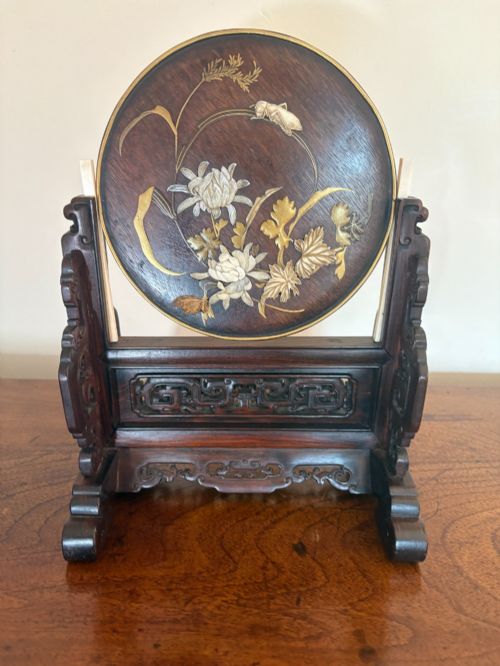
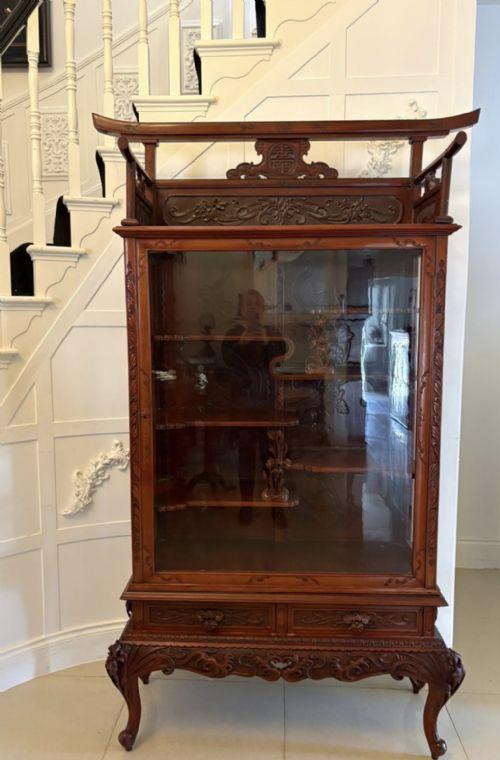
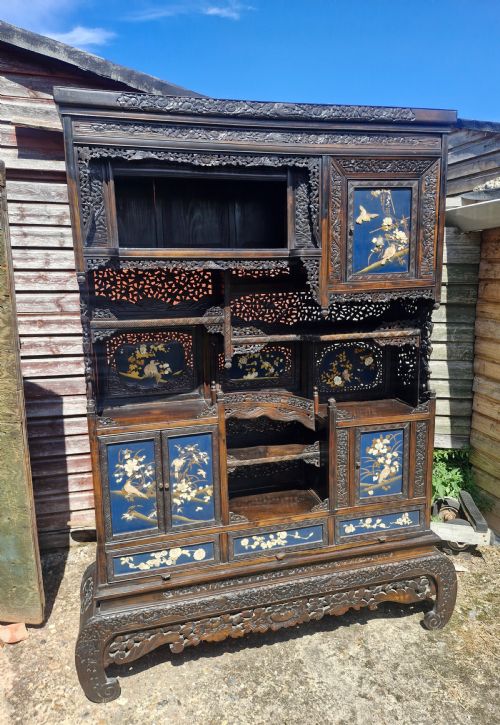
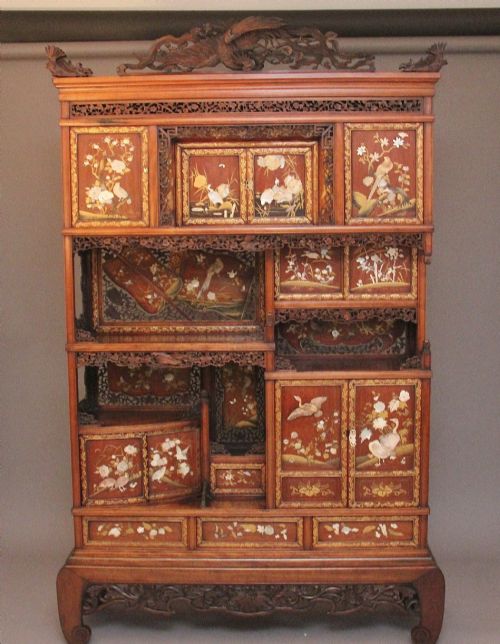
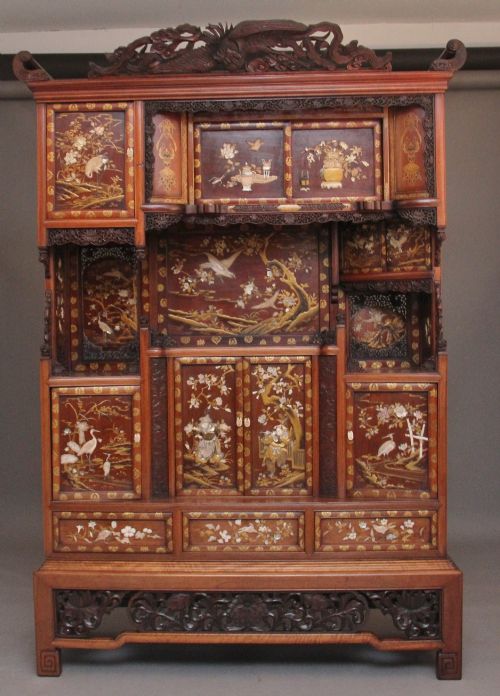
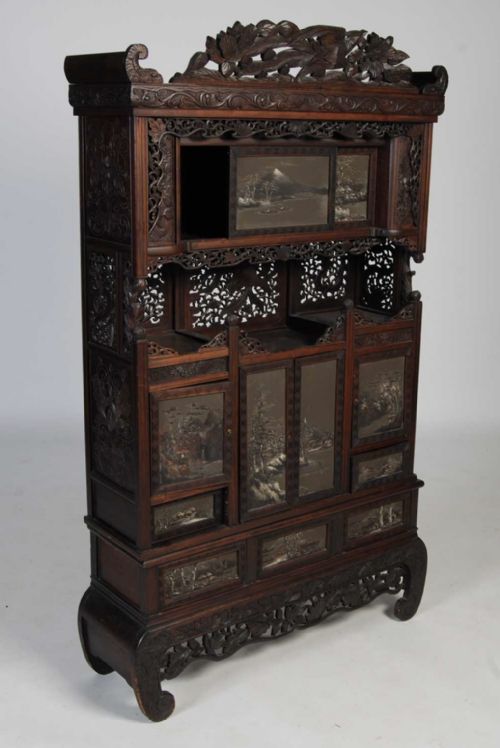
When searching for antique meiji carved lacquer, collectors encounter items spanning the nineteenth and early twentieth centuries, reflecting the artistic output of the Meiji period and related revivals. The forms range from decorative plaques, table screens, and masks to complex cabinets such as the shodana.
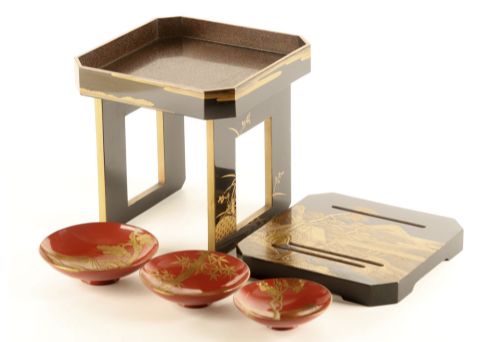
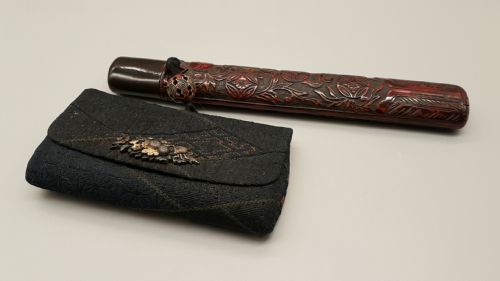
Smaller personal items also appear among these listings, including inro, sake sets, and spectacle cases. Hardwood frames often support the lacquer work, while bone, mother-of-pearl, and gold leaf provide contrasting highlights.
How they were made
The construction relies on wood or hardwood substrates built up with layers of lacquer. Artisans carved deep relief designs into the hardened surface, sometimes revealing contrasting underlayers such as cinnabar or black lacquer.
Inlaid elements of bone and mother-of-pearl integrate into the panels, alongside applications of gold leaf and ceramic components. This combination of carving and inlay demands meticulous hand execution across every surface.
Carp swim across lacquer surfaces, frozen mid-leap on okimono carvings alongside soaring Ho-o birds.
What varies in quality
Quality rests in the precision and depth of the carving and the stability of the underlying wood and lacquer. Tighter relief work and cleaner transitions between the carved layers distinguish finer examples from simpler production.
The integration of secondary materials such as bone and mother-of-pearl influences the overall refinement. Superior pieces maintain crisp detail across complex cabinet structures and display screens without surface distortion.
Haruyama Shunzan
The Antique Meiji Carved Lacquer Glossary
- Tsuikoku
- Carved black lacquer. This technique involves building up thick layers of black lacquer before carving pictorial scenes into the surface.
- Shodana
- A Japanese tabletop or floor cabinet with asymmetrical shelving. These storage pieces frequently feature detailed lacquer panels and woodwork.
- Shibayama
- A style of inlay using delicate pieces of shell, bone, ivory, and coral set into wood or lacquer grounds. It often depicts figures, flora, and fauna.
- Inro
- A traditional Japanese small case for carrying small items, suspended from a sash. They comprise multiple nested compartments secured by a cord and ojime bead.
- Okimono
- A small Japanese standalone carving intended for display in an alcove or on a shelf. These sculptural figures often depict animals or subjects from nature.
Antique Meiji Carved Lacquer: Frequently Asked Questions
What is a shodana cabinet used for?
A shodana served as a display piece in traditional Japanese interiors for small art objects and curiosities. Their asymmetrical shelves accommodated varied display items.
Today, they function as tabletop or floor cabinets in homes, housing small collections or standing alone as decorative furniture.
How do I care for carved lacquer?
Carved lacquer requires protection from direct sunlight, extreme temperature shifts, and high humidity to prevent the wood and lacquer layers from separating. Dusting gently with a dry, soft cloth preserves the surface finish.
Avoid chemical polishes and abrasive cleaners, which can dull or scratch the carved details and delicate inlays.
What is an inro?
An inro is a traditional tiered container used to carry small personal items like medicines or seals. They hang from a sash using a silk cord secured by a bead.
These portable containers demonstrate fine craftsmanship through miniature carving, lacquer work, and delicate inlay.
How do I identify Meiji period pieces?
Meiji period items date from eighteen sixty-eight to nineteen twelve, aligning with the reign of Emperor Meiji. The era saw a surge in intricate decorative arts produced for both domestic use and export.
Stylistic markers include high-relief carving, extensive inlay of bone and shell, and forms like the shodana cabinet and table screen.