

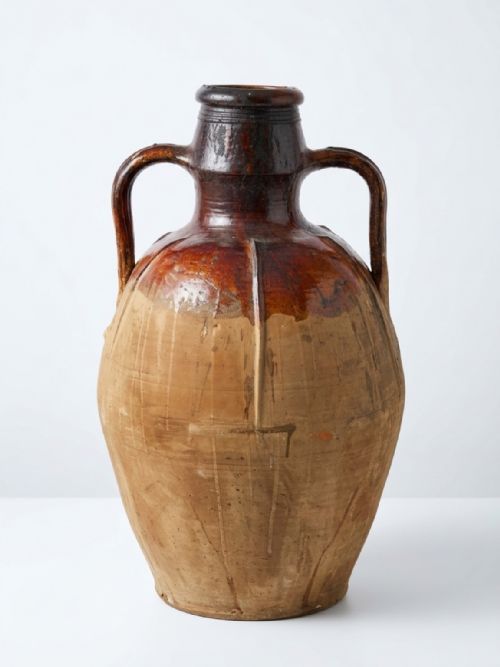


Antique Mediterranean Jar
An antique mediterranean jar brings rustic warmth to a room, offering practical earthenware forms from the nineteenth century and the early twentieth century.
Antique Mediterranean Jar
When you search for an antique mediterranean jar, you encounter robust terracotta and earthenware vessels designed for practical tasks like storing oil, wine, and water across the Mediterranean. These pieces originate from Italy, Turkey, and Portugal, capturing regional folk traditions and rustic farmhouse aesthetics.
The most common forms on this page include large oil jars, amphorae, and garden planters dating from the Victorian era up to 1920. Many examples arrive with painted finishes, lime wash, or wrought iron stands, reflecting their transition from utility to decorative display.
How they were made
Potters shaped these vessels from local clay and terracotta, throwing or building them by hand to create thick, durable walls capable of holding liquids. Surface finishes varied from simple glazed ceramic to weathered lime wash and painted details applied over porous earthenware.
Many storage vessels incorporated sturdy wrought iron elements, such as stands for display or handles for lifting heavy loads. Natural weathering over decades in southern European climates left characteristic patinas on the unglazed and glazed surfaces.
Antique Mediterranean Jar Retail Price Guide 2026
Typical asking prices for mediterranean jar among the pieces listed under this phrase on Sellingantiques today, from the lower quarter to the upper quarter. They describe what is for sale here now, not the wider market.
Materials span terracotta, earthenware, and glazed ceramic, often complemented by lime wash and wrought iron.
What varies in quality
The distinction between ordinary and exceptional pieces lies in the integrity of the form and the character of the surface patina. Strong proportions and intact wrought iron stands elevate certain vessels above standard utility items.
Original surface treatments, such as surviving layers of lime wash or early paint, separate basic terracotta pots from more desirable folk art examples. The subtlety of kiln-fired glazes and the balance of the vessel silhouette also define the upper tier.
The Antique Mediterranean Jar Glossary
- Terracotta
- A porous, brownish-red fired clay used extensively for utilitarian vessels and garden planters. This material forms the foundation of most items in this category.
- Amphora
- A two-handled jar with a narrow neck used in antiquity and later revived for storage and decoration. These vessels often feature tapered bases designed to sit in sand or special stands.
- Lime wash
- A traditional coating made from slaked lime and water, frequently applied to exterior walls and storage jars. It provides a chalky, breathable white or tinted finish that weathers softly.
- Earthenware
- Pottery fired at relatively low temperatures that remains porous unless glazed. It represents the primary ceramic medium for traditional country vessels.
- Wrought iron
- Iron beaten into shape by hand, utilised for the stands and supports that accompany heavy storage jars. This material adds structural support and industrial contrast to the warm clay.
Antique Mediterranean Jar: Frequently Asked Questions
What is an antique mediterranean jar?
These are hand-thrown terracotta and earthenware vessels originating from southern European regions like Italy, Turkey, and Portugal.
They were built during the nineteenth century and early twentieth century for agricultural storage.
How were these jars used originally?
Farmers and merchants utilised these large vessels to store and transport essential commodities such as olive oil, wine, and water.
Their thick clay walls helped maintain cooler temperatures for the liquids stored within.
Can I use them in the garden?
Many of these pieces function well as garden urns and planters, provided local frost conditions are managed carefully.
Porous terracotta requires protection during freezing weather to prevent cracking from expanding moisture.
How do I date an old jar?
Dating relies on examining the forming techniques, tool marks, and characteristic wear patterns visible across the terracotta body.
Stylistic clues from Victorian and early twentieth-century periods also help place the piece within a specific era.