





Antique Martini Shaker
An antique martini shaker brings the geometric precision and confident glamour of the cocktail age straight to your bar.
Antique Martini Shaker
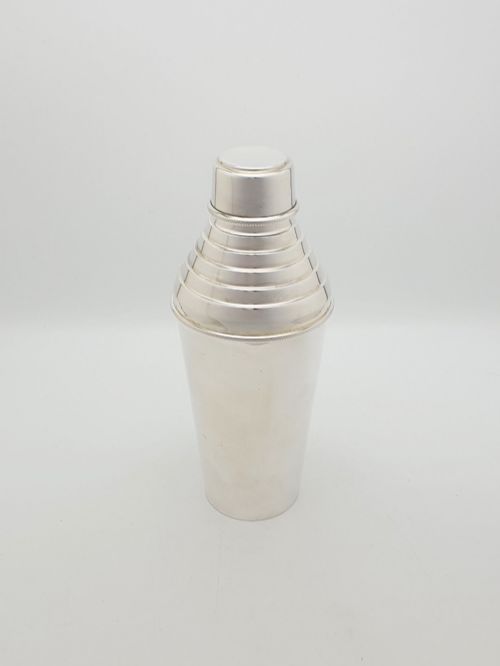
When you search for an antique martini shaker, you encounter barware fashioned primarily during the 1920s, 1930s, and 1940s. These pieces belong firmly to the Art Deco movement, capturing an era defined by streamlined silhouettes and cocktail culture.
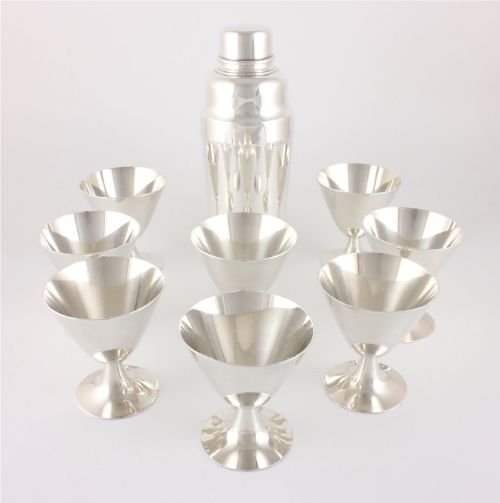
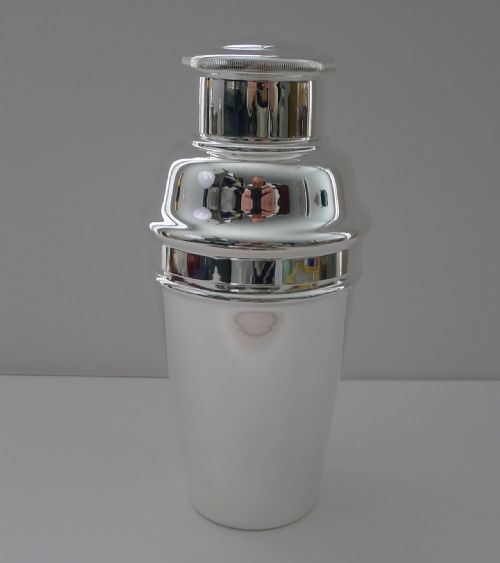
The most common version met on this page is the silver plated cocktail shaker, often featuring cylindrical or bottle shapes. Many examples incorporate clever internal mechanics such as rolling mixer recipes, integral lemon squeezers, and reamers.
Geographic origins vary widely across these listings, spanning English, French, American, Swiss, and Norwegian workshops. Makers produced everything from standard pint measures to large multi-pint vessels accompanied by matching beakers.
Materials and construction
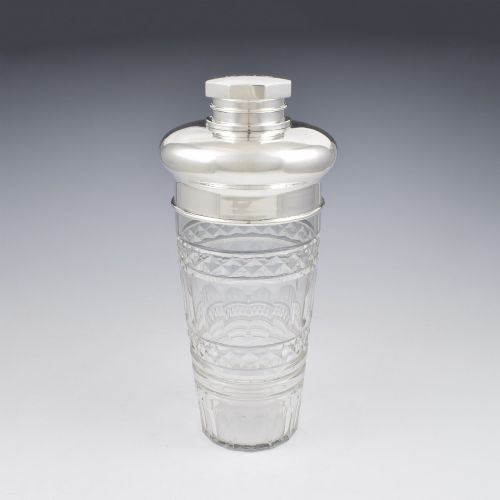
Makers utilised silver plate, electroplated nickel silver, and sterling silver as the primary metallic surfaces for these vessels. Workshops also combined metal with cut glass bodies, or accented silver with guilloche enamel.
Surface ornamentation relied on mechanical techniques like engine turning and hammering to create texture and catch the light. Specialised components such as lemon squeezers were integrated directly into the upper compartments during manufacture.
Antique Martini Shaker Retail Price Guide 2026
Typical asking prices for martini shaker among the pieces listed under this phrase on Sellingantiques today, from the lower quarter to the upper quarter. They describe what is for sale here now, not the wider market.
Some vintage shakers include built-in mechanical recipe rollers, letting hosts read cocktail proportions right off the spinning metal barrel.
Distinctions in quality
Quality rests on the weight of the metal and the precision of the mechanics, from screw threads on caps to the fit of internal strainers. Maker attribution significantly shifts status, with pieces by renowned silversmiths displaying sharper proportions and crisper execution.
Hukin & Heath·J. B. Chatterley & Sons·William Suckling·Adie Brothers·Gaskell & Chambers·Maison Barra·William Hutton·Mappin & Webb·St. Medard·Tuttle·David Andersen
The Antique Martini Shaker Glossary
- Silver Plate
- A thin layer of silver bonded to a base metal core such as copper, brass, or nickel silver. This technique allowed makers to achieve the look of solid silver at a lower production cost.
- Engine Turned
- A decorative pattern of precise, geometric lines engraved into metal by a specialised lathe. This mechanical technique provides texture and visual depth to Art Deco surfaces.
- Guilloche Enamel
- Decorative enamel applied over a mechanically engraved metal background. The translucent coloured glass allows the underlying geometric pattern to show through.
- EPNS
- Electroplated Nickel Silver, a common base alloy used underneath silver plating. It provides durability and structure for barware vessels.
- Reamer
- A ribbed conical projection fitted into the top of a shaker to juice citrus directly into the vessel. This integral component streamlined cocktail preparation.
Antique Martini Shaker: Frequently Asked Questions
How do I use an antique cocktail shaker?
These vessels function just like modern barware, holding spirits, ice, and mixers for blending drinks. Remove the cap and built-in strainer lid to pour the contents into glasses.
Exercise care with antique plated surfaces by washing them by hand rather than placing them in a dishwasher. Avoid harsh scouring pads that might wear down the silver layer over time.
What periods do these shakers come from?
The listings span from the 1920s through the 1950s, capturing the height and aftermath of the Art Deco period. Most examples concentrate heavily in the 1930s.
Design cues shifted from sleek geometric forms in the interwar decades toward heavier, post-war sterling silver productions by the middle of the twentieth century.
How do I identify the maker?
Look for maker marks, hallmarks, or stamped company names usually located on the base of the shaker. These stamps often indicate the silversmith, manufacturing firm, or plating standard used.
Researching these specific stamp designs reveals the workshop of origin, confirming whether a piece came from English silversmiths or continental makers.
Are these shakers made of solid silver?
Many examples consist of silver plate or electroplated nickel silver over a base metal rather than solid silver. Sterling silver pieces do occur but represent a different tier of production.
Examining the base stamps clarifies the metal composition, distinguishing solid silver pieces from plated variations.