

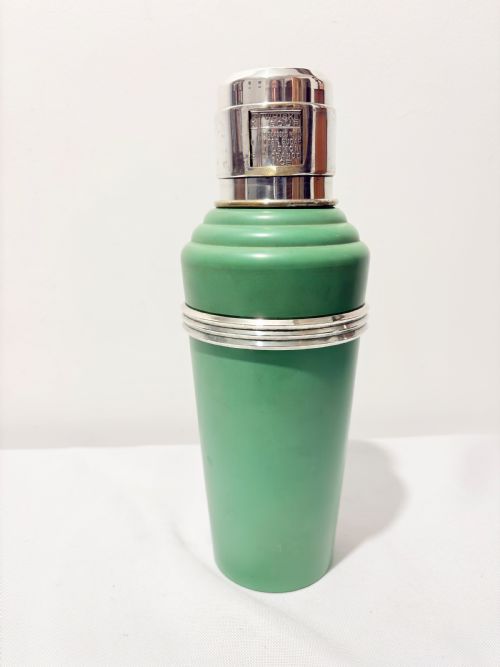


Silver Drink Shaker
A silver drink shaker brings twentieth-century barware design to the modern home, offering both decorative presence and functional service.
Silver Drink Shaker
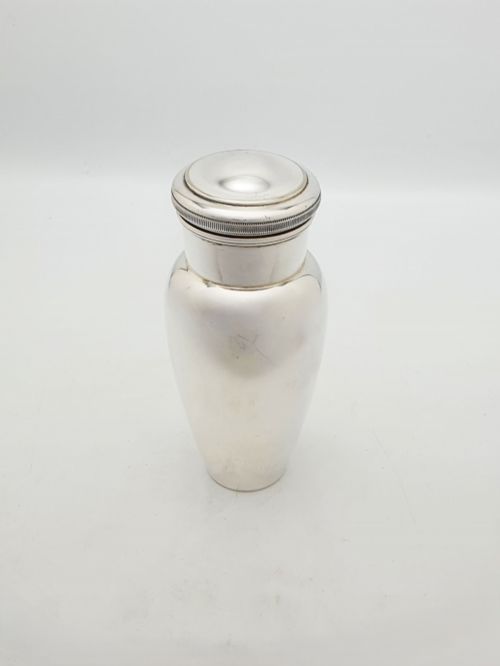
A silver drink shaker is a vessel designed for mixing cocktails, appearing predominantly in twentieth-century forms such as cocktail shakers and barware. When searching this phrase, a buyer encounters pieces originating primarily from the Art Deco and Mid-Century Modern periods, reflecting decades of entertaining culture.
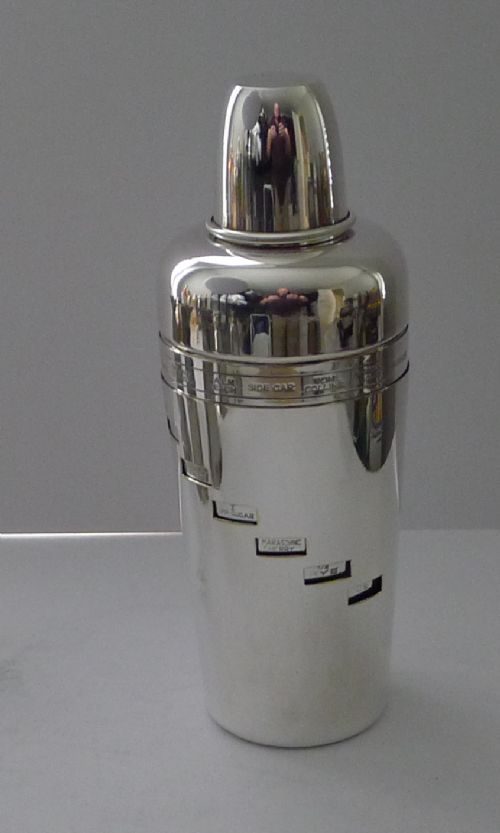
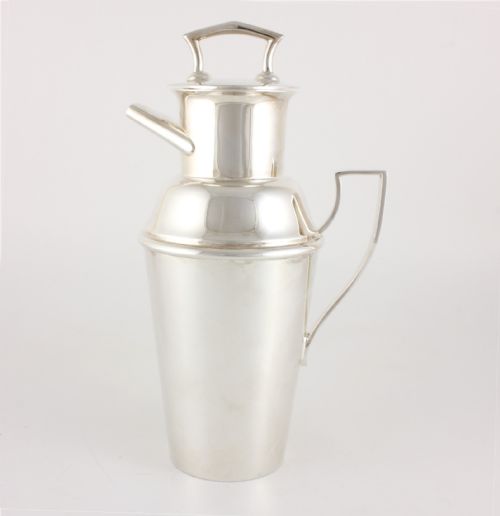
The most common examples on this page date from the 1920s to the 1940s, spanning English, French, and Italian workshops. These range from plain cylindrical metal bodies to novelty shapes like milk churns and bullets, often incorporating practical elements such as built-in ice breakers or lemon squeezers.
How they were made
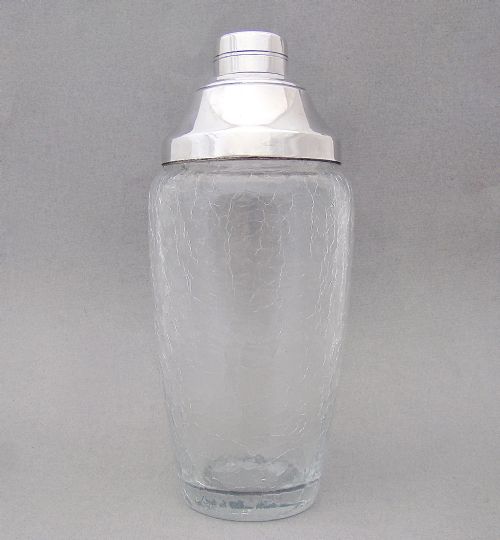
Makers constructed these pieces using silver plate, electroplated nickel silver, and sterling silver over a metal or glass body, sometimes accented with brass, cork, or Bakelite. Metal components were shaped through spinning or stamping, while glass bodies were moulded or blown before receiving metal mounts.
Surface decoration involved engine-turned geometric patterns, engraved recipe text, or applied enamelled details. Mechanical recipe shakers relied on precise inner sleeves that rotated smoothly behind outer slotted casings.
Materials recorded across the inventory include sterling silver, silver plate, EPNS, brass, glass, cork, and green Bakelite.
What varies in quality
Quality rests in the weight of the metal, the crispness of the engine-turning or engraving, and the smoothness of fit between the cap, strainer, and body. Superior pieces maintain a balanced proportion and secure seals without relying on excessive ornament.
In mechanical recipe shakers, the precision of the dial mechanism and the legibility of the lettering separate standard production items from finer workshop examples. Maker attribution also influences distinction, with signed pieces from known silversmiths demonstrating superior gauge and finish.
Asprey and Co·Hukin and Heath·James Dixon and Sons·William Suckling·Adie Brothers·C S Green and Co·Napier Company·Lino Sabattini·Christofle·J B Chatterley and Sons·Gaskell and Chambers·Angelletti
The Silver Drink Shaker Glossary
- EPNS
- Electroplated Nickel Silver. This denotes a base metal of nickel alloy coated with a layer of silver.
- Art Deco
- A design style popular in the 1920s and 1930s. It is characterised by streamlined geometric shapes, stylized motifs, and machine-age aesthetics.
- Engine-turned
- A decorative technique involving precise geometric patterns cut into metal by a lathe. It creates a textured surface that catches the light.
- Bakelite
- An early form of synthetic plastic used widely in the 1930s. It appears on handles, finials, and knobs.
- Bachelor shaker
- A smaller version of a cocktail shaker designed for single servings or intimate gatherings. These typically measure around one pint in capacity.
Silver Drink Shaker: Frequently Asked Questions
How do I use a vintage cocktail shaker?
Most vintage shakers utilise a three-piece design comprising a main body, a strainer lid, and a small cap. Simply add ice and ingredients, secure the lid firmly, and shake before removing the cap to pour.
Ensure any internal cork seals or gaskets are clean and seated properly to prevent leaks during vigorous use. Hand washing is essential to preserve the silver plate and any delicate enamel work.
How can I tell the period of a shaker?
Dating relies on stylistic clues, manufacturer marks, and patent dates stamped on the base or rim. Geometric engine-turning and stepped finials typically point to 1930s Art Deco design.
Sleek, unadorned surfaces and Italian Modernism suggest post-war manufacturing from the 1950s or 1960s. Maker hallmarks and registration numbers provide further chronological anchors.
Are glass and silver shakers fragile?
Shakers combining glass and silver plate require careful handling due to the weight of the metal mounts and the vulnerability of moulded glass bodies. They were built for household entertaining but demand gentle manual cleaning.
Avoid soaking pieces with cork components or turning metal dials under abrasive water temperatures to protect the internal mechanisms.