

Antique Maritime Watercolour Paintings
Antique maritime watercolour paintings record coastal harbours, naval vessels and fishing fleets through the delicate application of pigment on paper.
Antique Maritime Watercolour Paintings
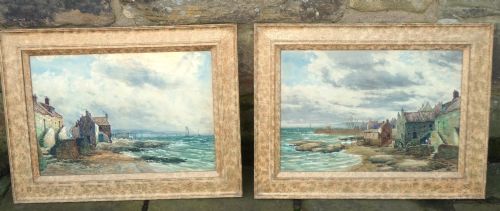
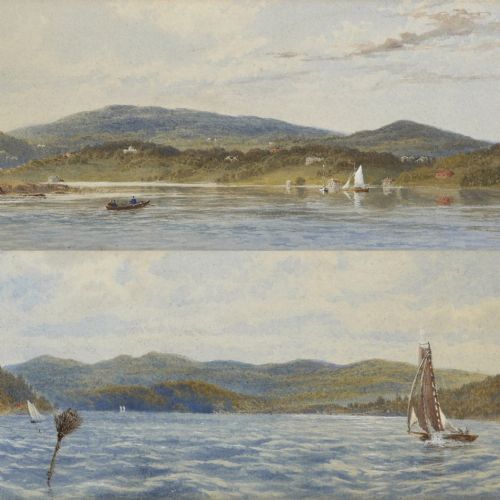
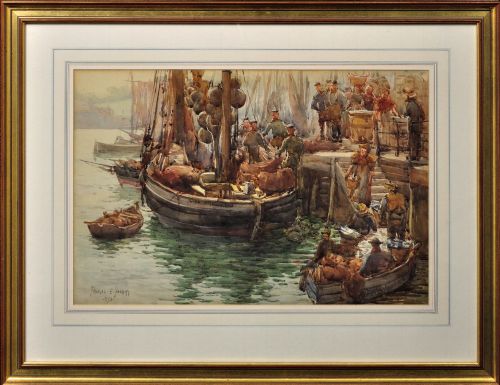
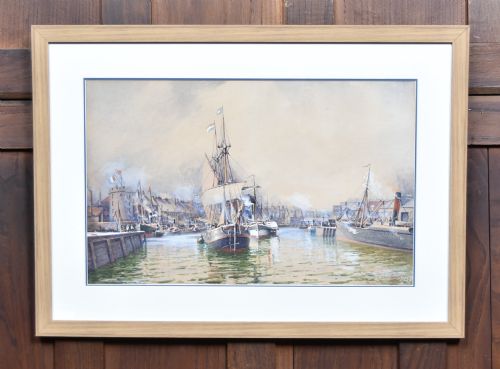
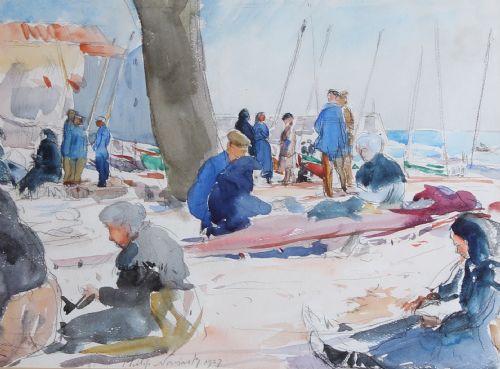
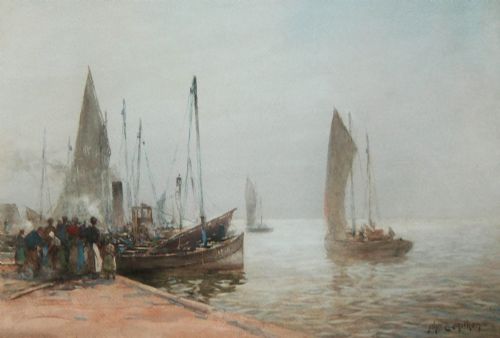
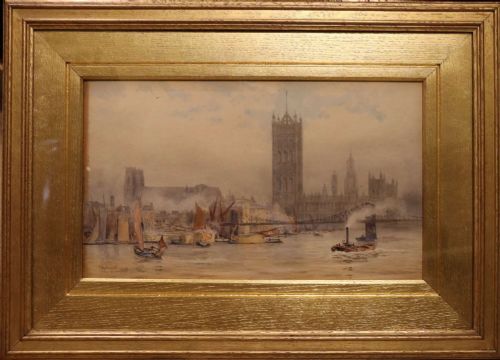
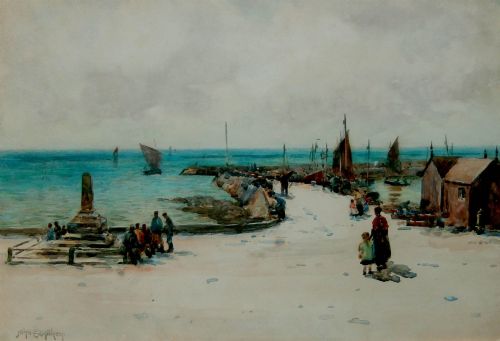
When you search for antique maritime watercolour paintings, you encounter works produced predominantly across the nineteenth and early twentieth centuries by British and European artists. These pieces capture coastal scenes, fishing ports, and naval vessels, reflecting a strong maritime heritage from locations such as Whitby, St Ives, and the Thames.
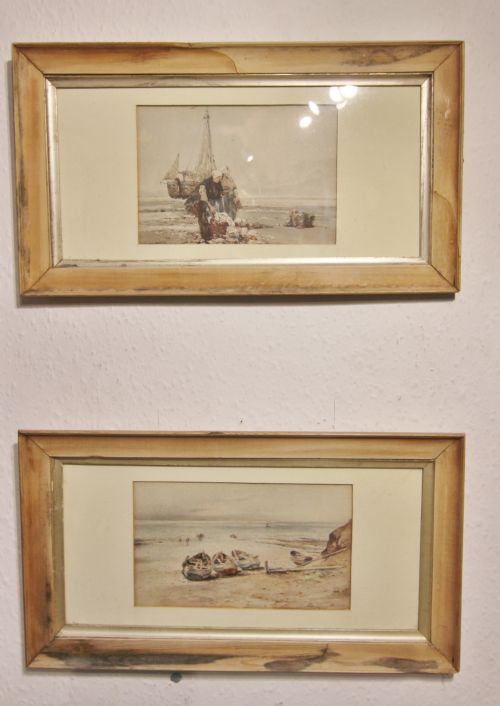
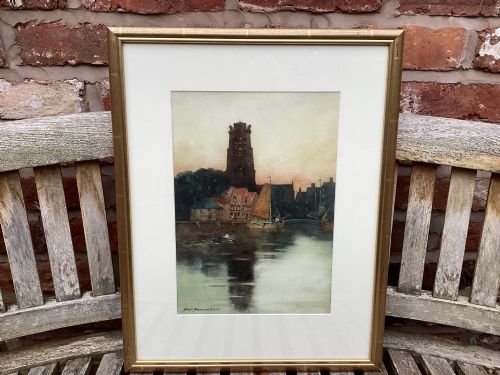
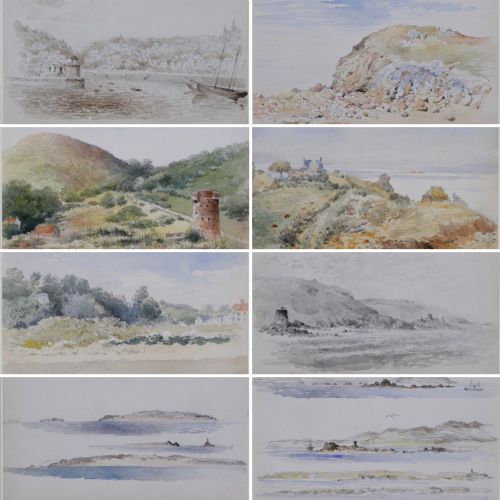
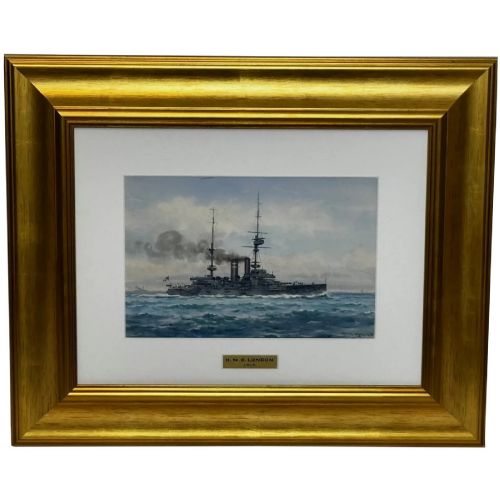
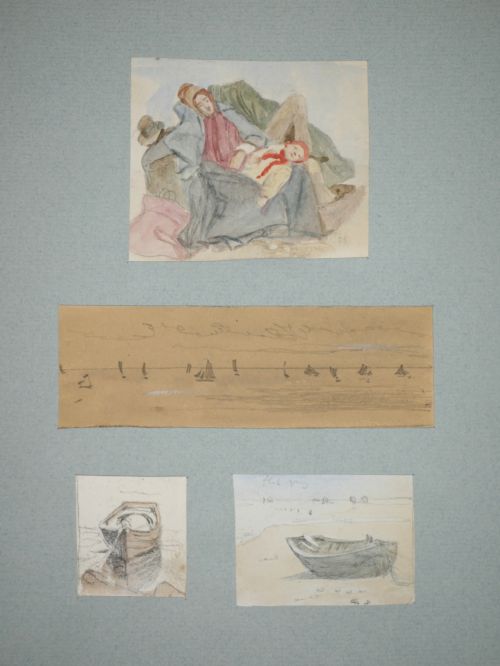
The selections available on this page include individual signed sheets, framed watercolours in pine or gilt wood, and curated sets depicting harbours, shipping vessels, and coastal landscapes. Most examples date from the Victorian and Edwardian eras through to the interwar period.
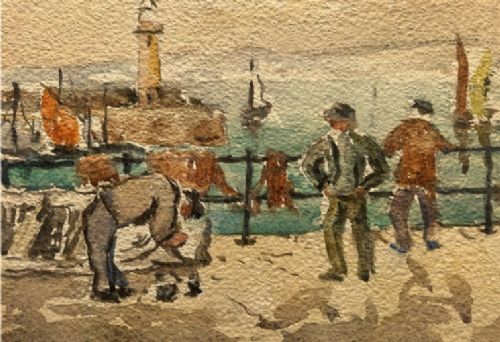
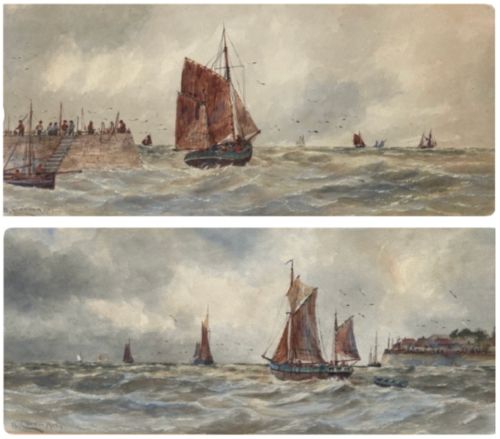
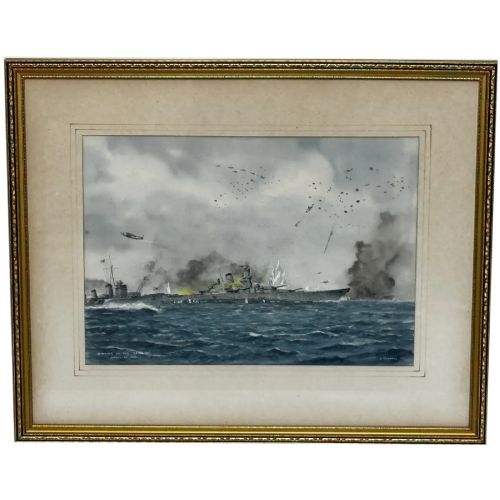
Subjects range from bustling dockyards and working luggers to serene coastal views and specific historic ships, executed in watercolour and gouache on paper.
How they were made
Artists applied watercolour pigment and occasional gouache to paper sheets, often mounting them behind glass within wooden frames utilising gold leaf or gilt wood. The techniques relied on transparent washes to capture light on water, combined with fine brushwork for rigging, architecture, and figures.
Materials commonly include watercolour pigment, paper, wood, and glass, reflecting the standard framing practices of the nineteenth and early twentieth centuries.
Antique Maritime Watercolour Paintings Retail Price Guide 2026
Typical asking prices for maritime watercolour paintings among the pieces listed under this phrase on Sellingantiques today, from the lower quarter to the upper quarter. They describe what is for sale here now, not the wider market.
A sentimental sailor on a French ironclad once painted a private naval tribute to keep his shipmates close at heart.
What varies in quality
Quality rests upon the artist's handling of light, atmosphere, and maritime detail, distinguishing accomplished topographical and marine works from standard decorative sketches. The precision of the brushwork in rendering ships, rigging, and coastal architecture determines the artistic merit of each painting.
The condition of the paper and the preservation of pigment vibrancy under glass also influence the standing of an individual piece, alongside the presence of clear signatures and period framing.
Thomas Rowlandson·Hans Jacob Hansen·Frances Emily Nesbitt·George F Pennington·William Woolard·H Medlycott·James Orrock·William Cannon·James Smetham·James E Aitken·John E Aitken·William Banks Fortescue·Frank Watson Wood·Thomas William Morley·Frank William Scarbrough·Hector Caffieri·Thomas Maidment·TB Hardy·Alfred G Morgan·George Stanfield Walters·Alexander Harwood·Paul Delvaux·Charles William Adderton·Richard Harry Carter·Vincenzo D'Esposito
The Antique Maritime Watercolour Paintings Glossary
- Watercolour
- A painting method in which the paints are made of pigments suspended in a water-based solution. These works are typically executed on absorbent paper.
- Gouache
- An opaque watercolour medium containing pigment mixed with a binding agent and a white filler. It provides heavier coverage and brighter highlights than standard watercolour.
- Lugger
- A small sailing vessel rigged with lugsails on one or two masts. These boats were common among nineteenth-century fishing communities.
- Gilt wood
- Wood that has been treated with a thin layer of gold leaf or metallic paint. It is frequently found on traditional nineteenth-century picture frames.
- Prison hulk
- A decommissioned warship used to confine prisoners in British waters during the eighteenth and nineteenth centuries.
Antique Maritime Watercolour Paintings: Frequently Asked Questions
How do I date an antique maritime watercolour?
Dating relies on stylistic clues, artist signatures, costume details of figures on the shore, and the type of vessels depicted in the composition. Framing materials and historical inscriptions on the reverse of the paper also offer reliable chronological markers.
Many works carry specific dates or fall securely within the Victorian and Edwardian periods according to the signatures and techniques employed by the artist.
What subjects appear in these watercolours?
The compositions record working fishing boats, bustling harbours, naval vessels, and coastal towns around Britain and continental Europe. Common scenes feature fleets unloading the catch, river views, and historical ships at anchor.
Artists frequently documented specific ports such as Whitby, St Ives, and London, providing a detailed record of maritime life before the mid-twentieth century.
How should I display maritime watercolours at home?
Watercolours require placement away from direct sunlight to prevent the fading of delicate pigments on paper. Framing behind glass protects the surface from atmospheric dust and moisture.
Keeping the works in stable indoor conditions ensures the preservation of both the paper substrate and any original gilt wood frames.
What is the difference between watercolour and gouache?
Traditional watercolour relies on transparent washes that allow the white of the paper to illuminate the pigment. Gouache incorporates an opaque white additive that creates solid, heavier areas of colour and sharp highlights.
Artists often combined both mediums within a single maritime painting to render foaming water, cloudy skies, and bright ship hulls with greater opacity.